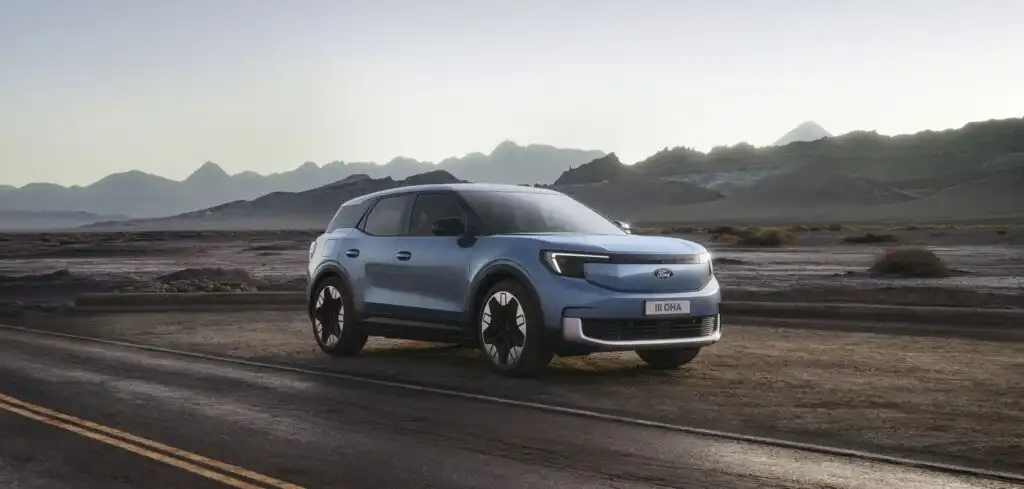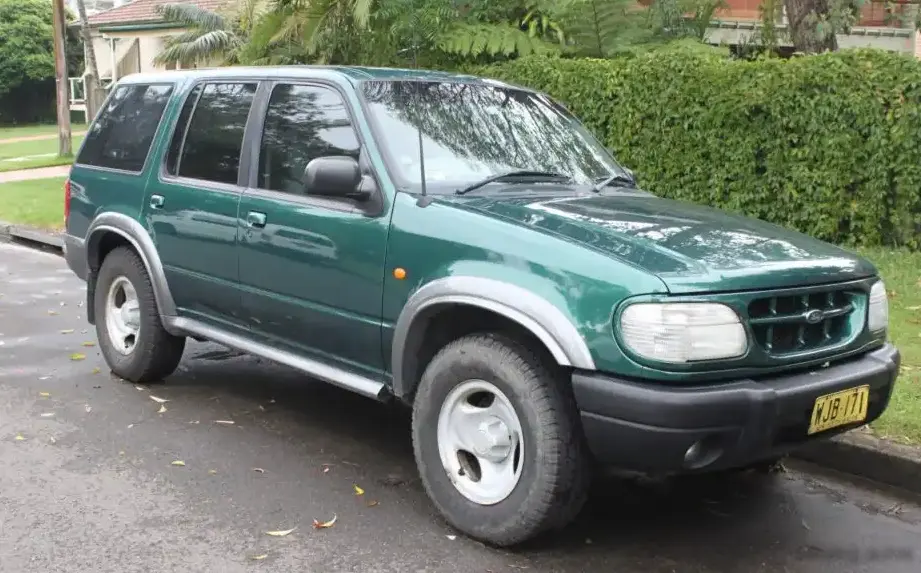
The Ford Explorer V, specifically the facelifted version produced from 2016 to 2018, represented a significant evolution of Ford’s popular SUV. Among the various engine and drivetrain configurations offered, the 3.5 GTDI V6 EcoBoost with 340 horsepower and all-wheel drive (AWD) paired with the SelectShift automatic transmission occupied a premium position in the lineup. This variant aimed to deliver a blend of robust performance, refined comfort, and advanced technology, appealing to buyers seeking a capable and well-equipped family SUV. It built upon the foundation of the fifth-generation Explorer (introduced in 2010), addressing some criticisms of earlier models with updated styling and improved interior materials.
Technical Specifications
| Brand | Ford |
| Model | Explorer |
| Generation | Explorer V (facelift 2016) |
| Type (Engine) | 3.5 GTDI V6 EcoBoost (340 Hp) AWD SelectShift |
| Start of production | 2016 |
| End of production | 2018 |
| Powertrain Architecture | Internal Combustion engine |
| Body type | SUV |
| Seats | 7 |
| Doors | 5 |
| Fuel consumption (urban) | 14.7 l/100 km (16 US mpg, 19.2 UK mpg, 6.8 km/l) |
| Fuel consumption (extra urban) | 10.7 l/100 km (22 US mpg, 26.4 UK mpg, 9.3 km/l) |
| Fuel consumption (combined) | 13.1 l/100 km (18 US mpg, 21.6 UK mpg, 7.6 km/l) |
| Fuel Type | Petrol (Gasoline) |
| Acceleration 0 – 100 km/h | 6.4 sec |
| Acceleration 0 – 62 mph | 6.4 sec |
| Acceleration 0 – 60 mph | 6.1 sec |
| Maximum speed | 193 km/h (119.92 mph) |
| Power | 340 Hp @ 5700 rpm |
| Power per litre | 97.2 Hp/l |
| Torque | 485 Nm @ 3500 rpm (357.72 lb.-ft. @ 3500 rpm) |
| Engine layout | Front, Longitudinal |
| Engine displacement | 3497 cm3 (213.4 cu. in.) |
| Number of cylinders | 6 |
| Engine configuration | V-engine |
| Number of valves per cylinder | 4 |
| Fuel injection system | Direct injection |
| Engine aspiration | Twin-Turbo, Intercooler |
| Engine oil capacity | 5.7 l (6.02 US qt | 5.02 UK qt) |
| Coolant capacity | 12.4 l (13.1 US qt | 10.91 UK qt) |
| Trunk (boot) space – minimum | 595 l (21.01 cu. ft.) |
| Trunk (boot) space – maximum | 2313 l (81.68 cu. ft.) |
| Fuel tank capacity | 70 l (18.49 US gal | 15.4 UK gal) |
| Length | 5019 mm (197.6 in.) |
| Width | 1988 mm (78.27 in.) |
| Width with mirrors folded | 2095 mm (82.48 in.) |
| Width including mirrors | 2291 mm (90.2 in.) |
| Height | 1788 mm (70.39 in.) |
| Wheelbase | 2860 mm (112.6 in.) |
| Ride height (ground clearance) | 211 mm (8.31 in.) |
| Drive wheel | All wheel drive (4×4) |
| Number of gears and type of gearbox | 6 gears, automatic transmission SelectShift |
| Front suspension | Independent type McPherson |
| Rear suspension | Independent multi-link suspension |
| Front brakes | Ventilated discs |
| Rear brakes | Disc |
| Assisting systems | ABS (Anti-lock braking system) |
| Steering type | Steering rack and pinion |
| Power steering | Electric Steering |
| Tires size | 255/50 R20 |
| Wheel rims size | 20 |
Powertrain & Engine Architecture
The heart of this Explorer variant is the 3.5-liter EcoBoost V6 engine. This engine, designated with various codes depending on the specific year and calibration, utilizes direct fuel injection and twin turbochargers to deliver a substantial 340 horsepower and 485 Nm (357.72 lb.-ft.) of torque. The twin-turbo setup minimizes turbo lag, providing a relatively linear power delivery across a broad RPM range. The engine’s architecture is a 60-degree V-configuration with four valves per cylinder, contributing to its efficiency and power output. The SelectShift automatic transmission, a six-speed unit, is designed to handle the engine’s torque and offer both automatic and manual shift modes. This transmission allows the driver to have more control over gear selection, particularly useful when towing or navigating challenging terrain.
Driving Characteristics
The 3.5 GTDI V6 EcoBoost Explorer delivers a noticeably more spirited driving experience compared to the base V6 or the 2.3L EcoBoost four-cylinder options. Acceleration from a standstill is brisk, with 0-60 mph times consistently around 6.1 seconds. The AWD system provides excellent traction in various conditions, enhancing stability and confidence. While the transmission is generally smooth, some drivers have noted occasional hesitant shifts, particularly at lower speeds. The Explorer’s size and weight are still apparent, but the powerful engine mitigates this, making it feel surprisingly agile for a large SUV. Compared to the 2.3L EcoBoost, the 3.5 GTDI offers significantly more low-end torque, making it better suited for towing and hauling.
Equipment & Trim Levels
The 3.5 GTDI EcoBoost Explorer typically came standard with a generous array of features. These included leather upholstery, heated and ventilated front seats, a power liftgate, a premium sound system (often Sony branded), and a comprehensive suite of safety technologies like blind-spot monitoring and rear cross-traffic alert. Higher trim levels, such as the Platinum, added even more luxury features, including massaging front seats, adaptive cruise control, and a panoramic sunroof. Optional extras included a rear-seat entertainment system and various appearance packages.
Chassis & Braking
The Explorer V utilizes an independent front suspension with McPherson struts and an independent multi-link rear suspension. This setup provides a comfortable ride quality while maintaining reasonable handling characteristics. The AWD system is primarily front-biased but can dynamically shift power to the rear wheels as needed. Braking duties are handled by ventilated discs at all four corners, providing adequate stopping power for the vehicle’s weight. ABS (Anti-lock Braking System) is standard, enhancing safety during emergency braking situations. Stabilizer bars are present at both the front and rear to reduce body roll during cornering.
Market Reception & Comparison
The 3.5 GTDI EcoBoost Explorer was generally well-received by automotive critics. It was praised for its powerful engine, comfortable ride, and spacious interior. However, fuel economy was a common criticism, with the combined fuel consumption of 13.1 l/100 km (18 US mpg) being relatively high for its class. Compared to the base V6 Explorer, the 3.5 GTDI offered a significant performance upgrade but came at a higher price point. The 2.3L EcoBoost offered a compromise between performance and fuel economy, appealing to buyers who didn’t need the full power of the 3.5 GTDI.
Legacy
The 3.5 GTDI EcoBoost engine proved to be relatively reliable, although some owners have reported issues with the turbochargers and fuel injectors. Regular maintenance, including oil changes and fuel system cleaning, is crucial for ensuring long-term reliability. In the used car market, the 3.5 GTDI Explorer holds its value reasonably well, particularly well-maintained examples with low mileage. It remains a popular choice for buyers seeking a capable and well-equipped SUV with a powerful engine. The combination of performance, space, and features continues to make it a competitive option in the used SUV segment.