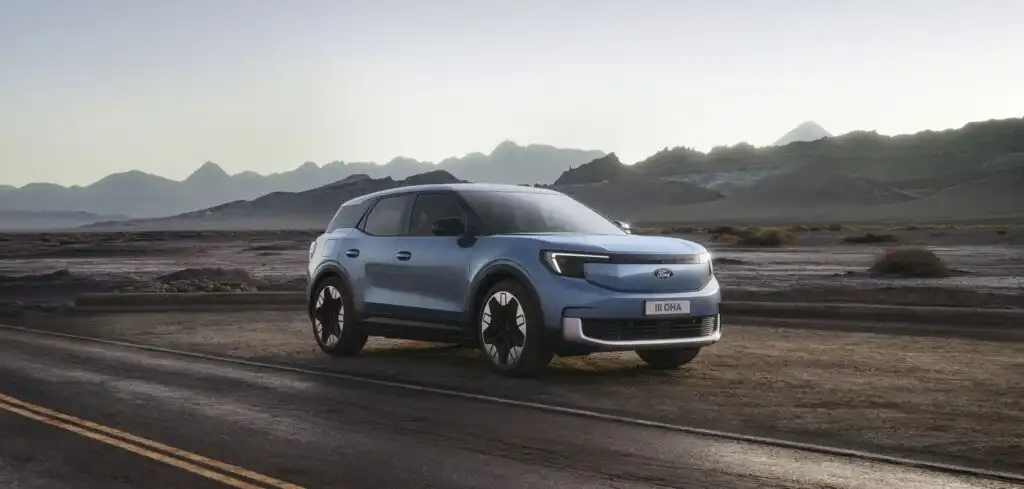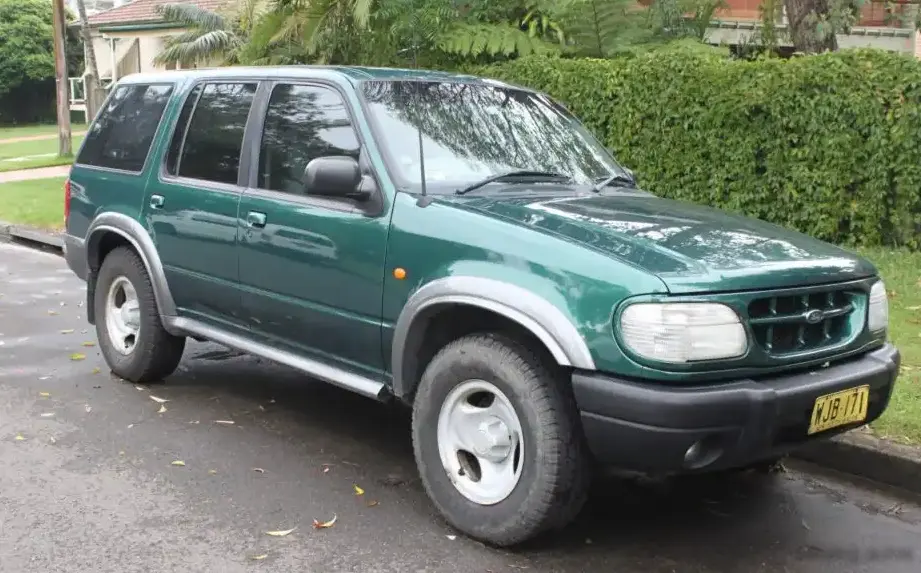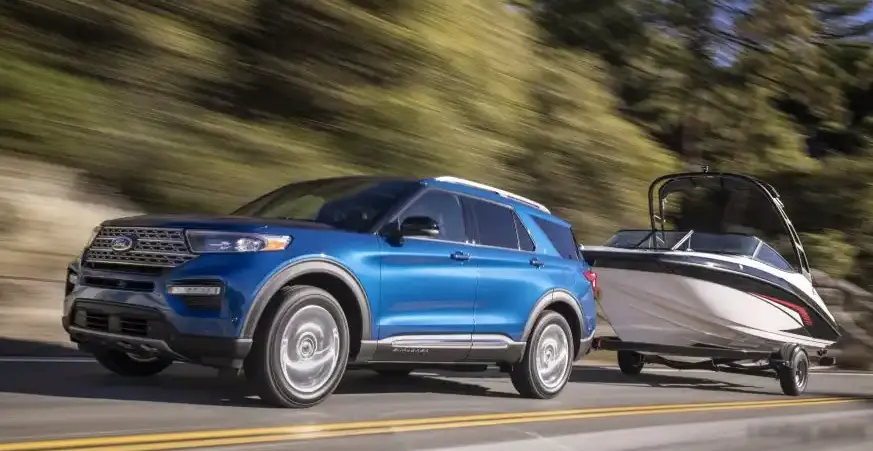
The Ford Explorer VI 2.3 EcoBoost Automatic, produced from May 2019 through February 2024, represents a significant iteration of Ford’s popular SUV. This variant occupied a key position in the Explorer lineup, offering a balance between performance, fuel efficiency, and price. It was designed to appeal to families and individuals seeking a versatile vehicle with modern technology and a comfortable driving experience. The Explorer VI generation, built on the D6 platform, marked a return to a rear-wheel-drive based architecture after several years of front-wheel-drive Explorers, aiming to improve towing capacity and driving dynamics. This 2.3L EcoBoost engine and 10-speed automatic transmission combination was a core offering within the sixth generation, positioned as a step up from the base engine while remaining more accessible than the higher-performance hybrid or the Platinum trim levels.
Technical Specifications
| Brand | Ford |
| Model | Explorer |
| Generation | Explorer VI |
| Type (Engine) | 2.3 EcoBoost (300 Hp) Automatic |
| Start of production | May, 2019 |
| End of production | February, 2024 |
| Powertrain Architecture | Internal Combustion engine |
| Body type | SUV |
| Seats | 6-7 |
| Doors | 5 |
| Fuel consumption (urban) | 11.2 l/100 km (21 US mpg, 25.2 UK mpg, 8.9 km/l) |
| Fuel consumption (extra urban) | 8.4 l/100 km (28 US mpg, 33.6 UK mpg, 11.9 km/l) |
| Fuel consumption (combined) | 9.8 l/100 km (24 US mpg, 28.8 UK mpg, 10.2 km/l) |
| Fuel Type | Petrol (Gasoline) |
| Weight-to-power ratio | 6.6 kg/Hp, 152.4 Hp/tonne |
| Weight-to-torque ratio | 4.7 kg/Nm, 213.4 Nm/tonne |
| Power | 300 Hp @ 5500 rpm |
| Power per litre | 132.7 Hp/l |
| Torque | 420 Nm @ 3500 rpm (309.78 lb.-ft. @ 3500 rpm) |
| Engine displacement | 2261 cm3 (137.97 cu. in.) |
| Number of cylinders | 4 |
| Engine configuration | Inline |
| Cylinder Bore | 87.55 mm (3.45 in.) |
| Piston Stroke | 94 mm (3.7 in.) |
| Compression ratio | 10:1 |
| Number of valves per cylinder | 4 |
| Fuel injection system | Direct injection |
| Engine aspiration | Turbocharger, Intercooler |
| Valvetrain | DOHC |
| Engine oil capacity | 4.9 l (5.18 US qt | 4.31 UK qt) |
| Coolant | 13.3 l (14.05 US qt | 11.7 UK qt) |
| Kerb Weight | 1968 kg (4338.7 lbs.) |
| Trunk (boot) space – minimum | 515 l (18.19 cu. ft.) |
| Trunk (boot) space – maximum | 2485 l (87.76 cu. ft.) |
| Fuel tank capacity | 68 l (17.96 US gal | 14.96 UK gal) |
| Permitted trailer load with brakes (12%) | 2400 kg (5291.09 lbs.) |
| Length | 5049 mm (198.78 in.) |
| Width | 2004 mm (78.9 in.) |
| Width with mirrors folded | 2100 mm (82.68 in.) |
| Width including mirrors | 2268 mm (89.29 in.) |
| Height | 1775 mm (69.88 in.) |
| Wheelbase | 3025 mm (119.09 in.) |
| Front track | 1699 mm (66.89 in.) |
| Rear (Back) track | 1699 mm (66.89 in.) |
| Front overhang | 856 mm (33.7 in.) |
| Rear overhang | 1168 mm (45.98 in.) |
| Ride height (ground clearance) | 200 mm (7.87 in.) |
| Approach angle | 21° |
| Departure angle | 22° |
| Ramp-over (brakeover) angle | 17.1° |
| Drivetrain Architecture | Rear wheel drive |
| Drive wheel | Rear wheel drive |
| Number of gears and type of gearbox | 10 gears, automatic transmission SelectShift |
| Front suspension | Independent, type McPherson with coil spring and anti-roll bar |
| Rear suspension | Independent multi-link spring suspension with stabilizer |
| Front brakes | Disc |
| Rear brakes | Disc |
| Assisting systems | ABS (Anti-lock braking system) |
| Steering type | Steering rack and pinion |
| Power steering | Electric Steering |
| Tires size | 255/65 R18; 255/55 R20; 275/45 R21 |
| Wheel rims size | 18; 20; 21 |
Powertrain & Engine Architecture
The heart of the Explorer VI 2.3 EcoBoost is Ford’s 2.3-liter inline-four cylinder engine. This engine, part of the EcoBoost family, utilizes direct fuel injection and a single turbocharger with an intercooler to deliver a robust 300 horsepower at 5500 rpm and 420 Nm (309.78 lb.-ft.) of torque at 3500 rpm. The engine features a double overhead camshaft (DOHC) valvetrain with four valves per cylinder, contributing to its efficient operation. The 10-speed SelectShift automatic transmission, co-developed with General Motors, is a key component of this powertrain. This transmission offers a wide range of gear ratios, optimizing both acceleration and fuel economy. The transmission’s sophisticated control system adapts to driving conditions and driver input, providing smooth and responsive shifts. The engine code for this configuration is typically associated with variations within the EcoBoost family, and specific calibrations were tailored for the Explorer application.
Driving Characteristics
The 2.3L EcoBoost Explorer offers a noticeable step up in performance compared to the base 2.3L non-turbocharged engine. While not as powerful as the higher-trim hybrid or the 3.5L EcoBoost V6, it provides ample power for everyday driving and towing. The 10-speed automatic transmission plays a crucial role in maximizing the engine’s output, keeping the engine in its optimal power band. Acceleration is brisk, and the Explorer feels confident on the highway. The rear-wheel-drive bias contributes to a more engaging driving experience compared to previous front-wheel-drive Explorers. However, the added weight of the vehicle does impact overall agility. The gear ratios are tuned for a balance between quick acceleration and fuel efficiency, with lower gears providing strong off-the-line performance and higher gears optimizing fuel economy during cruising.
Equipment & Trim Levels
The 2.3 EcoBoost trim typically included standard features such as Ford’s SYNC 3 infotainment system with an 8-inch touchscreen, Apple CarPlay and Android Auto compatibility, and a suite of driver-assistance technologies including automatic emergency braking, lane-keeping assist, and blind-spot monitoring. Interior upholstery was generally cloth in the base trims, with leather options available as upgrades. Higher trims within the 2.3 EcoBoost range offered features like heated and ventilated front seats, a panoramic sunroof, and a premium sound system. Optional extras included a navigation system, adaptive cruise control, and a rear-seat entertainment system.
Chassis & Braking
The Explorer VI utilizes an independent front suspension with McPherson struts and a coil spring setup, complemented by an anti-roll bar for improved handling. The rear suspension features an independent multi-link design with a stabilizer bar. This suspension configuration provides a comfortable ride while maintaining reasonable control. Braking duties are handled by disc brakes on all four wheels, providing adequate stopping power for the vehicle’s weight. The inclusion of ABS (Anti-lock Braking System) enhances safety during emergency braking situations. Steering is rack-and-pinion with electric power steering, offering a responsive and precise feel.
Market Reception & Comparison
The Explorer VI 2.3 EcoBoost Automatic was generally well-received by critics and consumers. It was praised for its combination of performance, fuel efficiency, and spacious interior. Compared to the base engine, the 2.3 EcoBoost offered a significant improvement in power and responsiveness. However, some reviewers noted that the engine could feel strained when fully loaded or during aggressive acceleration. Fuel economy figures of around 24 mpg combined were considered competitive for its class. Compared to the hybrid model, the 2.3 EcoBoost offered a lower initial price point but sacrificed some fuel efficiency. Reliability reports have been generally positive, with few major issues reported with the powertrain.
Legacy
The Ford Explorer VI 2.3 EcoBoost Automatic has established itself as a reliable and versatile SUV in the used car market. The 2.3L EcoBoost engine, when properly maintained, has proven to be durable and long-lasting. The 10-speed automatic transmission has also demonstrated good reliability. As a result, these Explorers continue to hold their value relatively well. The return to a rear-wheel-drive platform and the availability of modern technology have contributed to the Explorer’s enduring popularity, making it a sought-after choice for families and individuals alike.