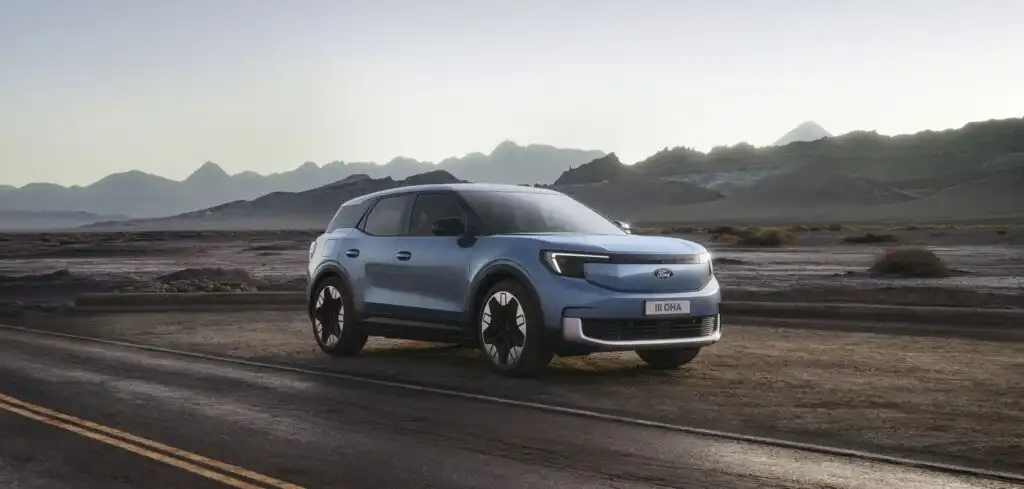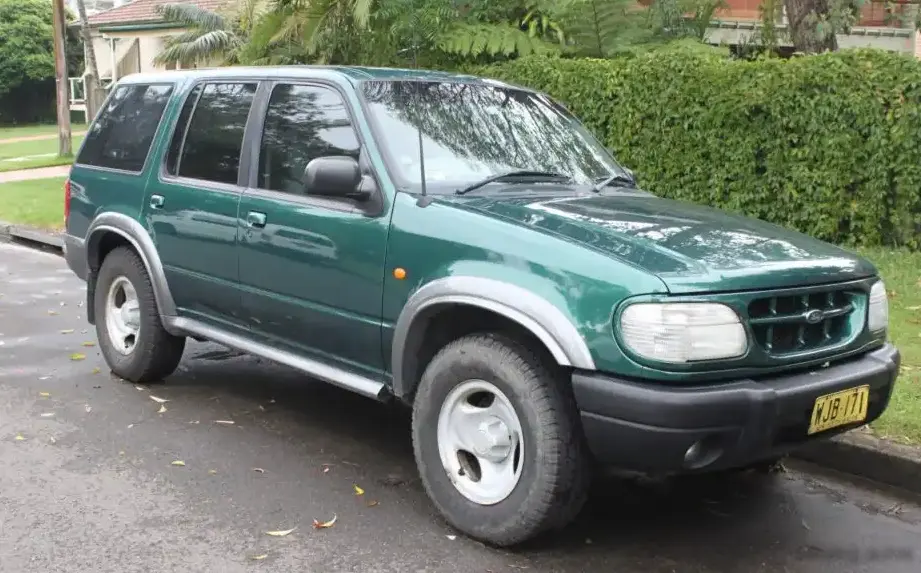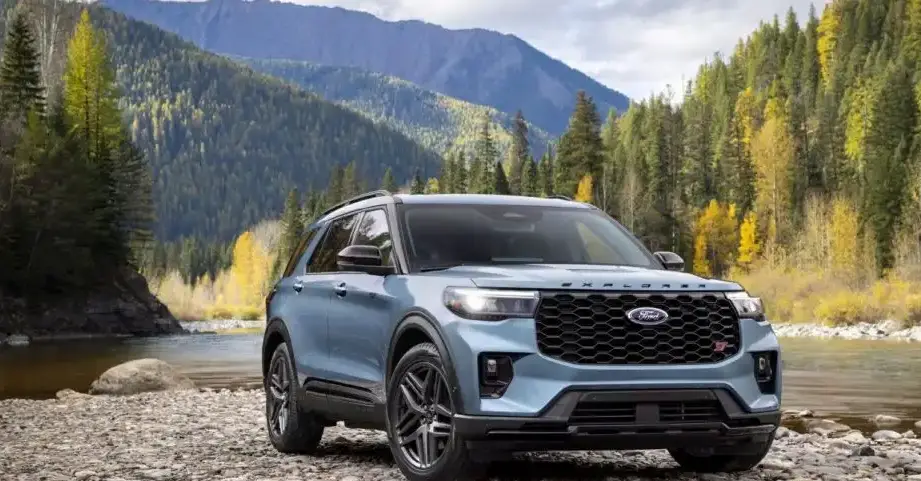
The Ford Explorer VI, specifically the 3.0 EcoBoost V6 (400 Hp) 4WD SelectShift variant, represents a significant evolution in Ford’s popular SUV lineup. Introduced with the facelift in February 2024, this model builds upon the sixth-generation Explorer (introduced in 2020) offering a blend of performance, technology, and family-oriented practicality. Positioned as a premium trim level, it caters to buyers seeking a more powerful and capable Explorer without venturing into the full luxury of the Platinum trim. This variant is primarily targeted at the North American market, where large SUVs remain highly popular, offering a compelling alternative to competitors like the Chevrolet Traverse and Honda Pilot.
Technical Specifications
| Brand | Ford |
| Model | Explorer |
| Generation | Explorer VI (facelift 2024) |
| Type (Engine) | 3.0 EcoBoost V6 (400 Hp) 4WD SelectShift |
| Start of production | February, 2024 |
| Powertrain Architecture | Internal Combustion engine |
| Body type | SUV |
| Seats | 6-7 |
| Doors | 5 |
| Fuel Type | Petrol (Gasoline) |
| Power | 400 Hp |
| Power per litre | 135.3 Hp/l |
| Torque | 563 Nm / 415.25 lb.-ft. |
| Engine layout | Front, Longitudinal |
| Engine Model/Code | EcoBoost |
| Engine displacement | 2956 cm3 / 180.39 cu. in. |
| Number of cylinders | 6 |
| Engine configuration | V-engine |
| Cylinder Bore | 85.4 mm / 3.36 in. |
| Piston Stroke | 86 mm / 3.39 in. |
| Compression ratio | 10.5:1 |
| Number of valves per cylinder | 4 |
| Fuel injection system | Direct injection |
| Engine aspiration | Twin-Turbo, Intercooler |
| Valvetrain | DOHC, TI-VCT |
| Engine oil capacity | 6.2 l / 6.55 US qt | 5.46 UK qt |
| Coolant | 16.4 l / 17.33 US qt | 14.43 UK qt |
| Trunk (boot) space – minimum | 462 l / 16.32 cu. ft. |
| Trunk (boot) space – maximum | 2415 l / 85.28 cu. ft. |
| Fuel tank capacity | 76 l / 20.08 US gal | 16.72 UK gal |
| Permitted trailer load with brakes (12%) | 2268 kg / 5000.08 lbs. |
| Length | 5047 mm / 198.7 in. |
| Width | 2004 mm / 78.9 in. |
| Width with mirrors folded | 2101 mm / 82.72 in. |
| Width including mirrors | 2268 mm / 89.29 in. |
| Height | 1773-1783 mm / 69.8 – 70.2 in. |
| Wheelbase | 3025 mm / 119.09 in. |
| Front track | 1699 mm / 66.89 in. |
| Rear (Back) track | 1699 mm / 66.89 in. |
| Front overhang | 853 mm / 33.58 in. |
| Rear overhang | 1169 mm / 46.02 in. |
| Ride height (ground clearance) | 198-208 mm / 7.8 – 8.19 in. |
| Approach angle | 19.7-20.5° |
| Departure angle | 20.6-21.1° |
| Ramp-over (brakeover) angle | 16.8-17.6° |
| Drivetrain Architecture | The Internal combustion engine (ICE) drives the rear wheels permanently, and the front wheels are driven through an electrically or mechanically operated clutch if necessary. |
| Drive wheel | All wheel drive (4×4) |
| Number of gears and type of gearbox | 10 gears, automatic transmission SelectShift |
| Front brakes | Ventilated discs |
| Rear brakes | Ventilated discs |
| Assisting systems | ABS (Anti-lock braking system) |
| Steering type | Steering rack and pinion |
| Power steering | Electric Steering |
| Tires size | 255/55 R20; 275/45 R21 |
| Wheel rims size | 20; 21 |
Powertrain & Engine Architecture
At the heart of the Explorer VI 3.0 EcoBoost 4WD lies Ford’s 3.0-liter twin-turbocharged V6 engine. This engine, part of the EcoBoost family, utilizes direct fuel injection and a sophisticated DOHC, TI-VCT (Twin Independent Variable Camshaft Timing) valvetrain to optimize performance and efficiency. The twin-turbocharger setup provides a broad torque curve and minimizes turbo lag, delivering responsive acceleration. The engine produces 400 horsepower and 563 Nm (415.25 lb.-ft.) of torque. The engine is longitudinally mounted, driving all four wheels through Ford’s 10-speed SelectShift automatic transmission. This transmission is known for its smooth shifts and wide gear ratio spread, contributing to both fuel economy and performance. The SelectShift functionality allows drivers to manually control gear changes via paddle shifters or the gear selector.
Driving Characteristics
The 3.0 EcoBoost V6 paired with the 10-speed automatic delivers a noticeably more spirited driving experience compared to the base 2.3L EcoBoost engine. Acceleration is brisk, and the engine provides ample power for highway merging and overtaking. The 10-speed transmission effectively manages the engine’s power, keeping it within its optimal torque band. While not as overtly sporty as some competitors, the Explorer offers a comfortable and confident ride. The 4WD system provides enhanced traction in various weather conditions. Compared to earlier Explorer generations, the VI offers improved handling and a more refined driving experience, thanks to its independent rear suspension. The gear ratios are tuned for a balance between acceleration and fuel efficiency, with lower gears providing quick off-the-line response and higher gears optimizing highway cruising.
Equipment & Trim Levels
The 3.0 EcoBoost 4WD trim typically includes a generous array of standard features. These often include leather upholstery, heated and ventilated front seats, a premium sound system (often from Sony or B&O), a large touchscreen infotainment system with Apple CarPlay and Android Auto compatibility, and a suite of advanced driver-assistance systems (ADAS) such as adaptive cruise control, lane-keeping assist, and automatic emergency braking. Optional extras can include a panoramic sunroof, power-folding third-row seats, and upgraded interior trim materials. The overall interior design emphasizes comfort and functionality, with ample space for passengers and cargo.
Chassis & Braking
The Explorer VI utilizes a steel unibody construction with independent front and rear suspension. The rear suspension is a key improvement over previous generations, contributing to a more comfortable ride and improved handling. The 3.0 EcoBoost models typically feature larger brakes with ventilated discs at all four corners, providing ample stopping power. The steering system is an electric power-assisted rack-and-pinion setup, offering precise and responsive steering feel. Stabilizer bars are fitted to both the front and rear axles to reduce body roll during cornering. Ride height is generally around 8 inches, providing adequate ground clearance for light off-road use.
Market Reception & Comparison
The Explorer VI 3.0 EcoBoost 4WD has generally received positive reviews from automotive critics. Praise has been directed towards its powerful engine, smooth transmission, and spacious interior. Some criticisms have focused on the infotainment system’s complexity and the vehicle’s relatively large size, which can make it challenging to maneuver in tight spaces. Compared to the base 2.3L EcoBoost engine, the 3.0 EcoBoost offers significantly more performance, but at the cost of slightly lower fuel economy. The 3.0 EcoBoost is positioned above the 2.3L in terms of price and features, appealing to buyers who prioritize performance and luxury.
Legacy
The 3.0 EcoBoost engine has proven to be a relatively reliable powertrain in other Ford vehicles, and early indications suggest that the Explorer VI version will follow suit. However, as with any modern vehicle, regular maintenance is crucial for long-term reliability. The 10-speed automatic transmission has also demonstrated good durability. In the used car market, the Explorer VI 3.0 EcoBoost 4WD is expected to hold its value well due to its desirable combination of performance, features, and practicality. Its robust engine and capable 4WD system make it a compelling choice for families and individuals seeking a versatile and reliable SUV.