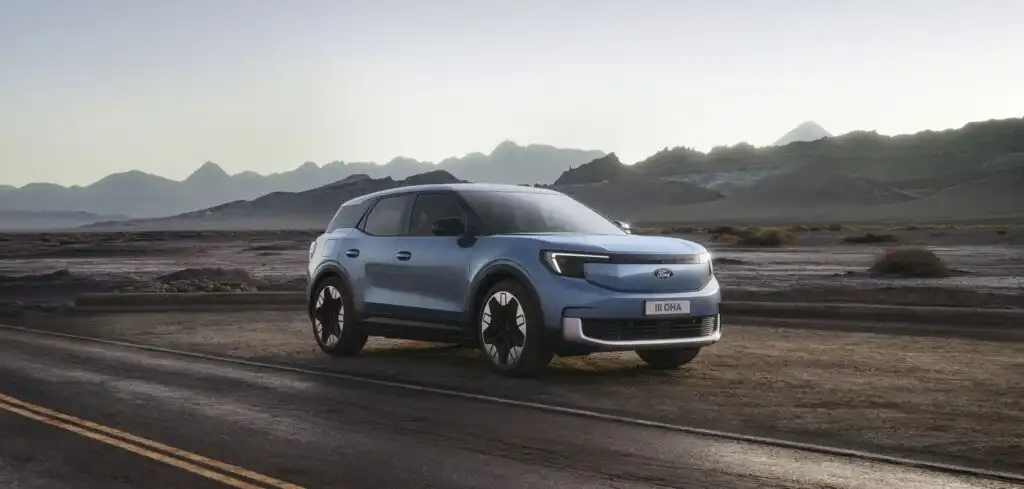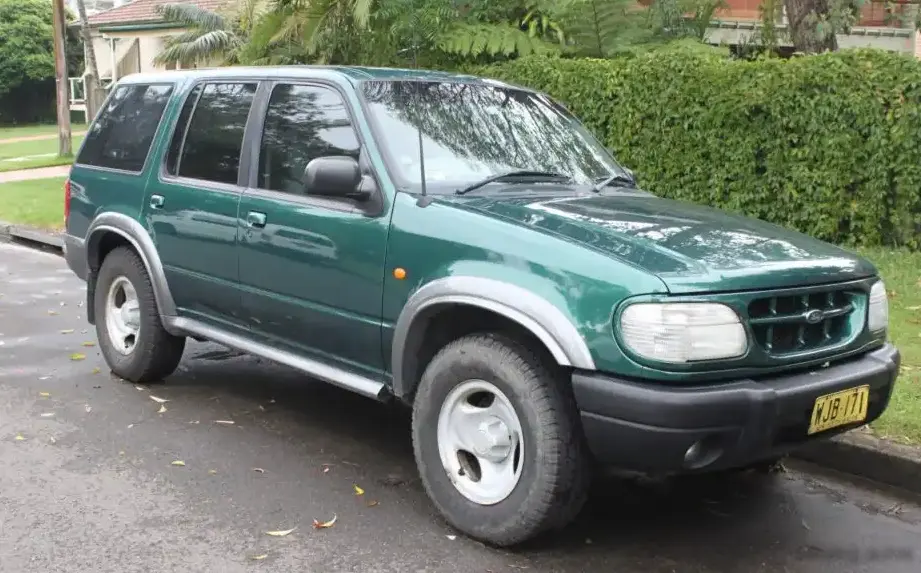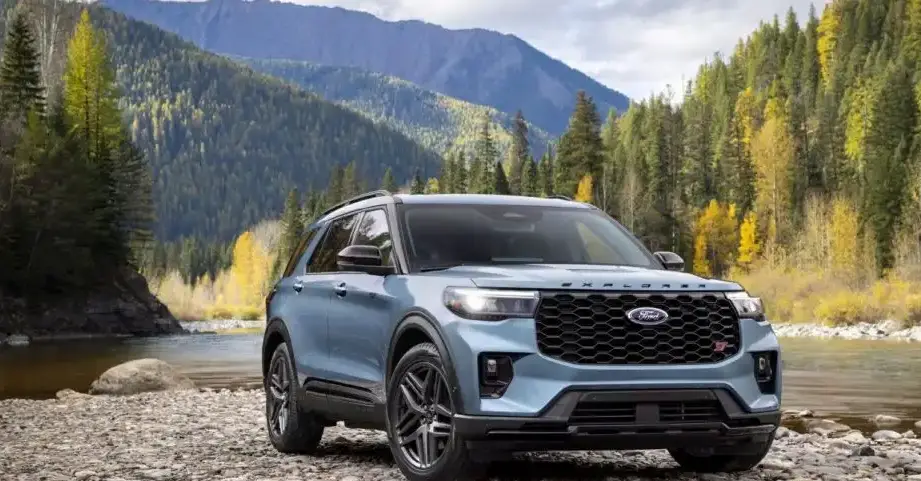
The Ford Explorer VI, specifically the facelifted 2024 model equipped with the 3.0 EcoBoost V6 engine producing 400 horsepower and paired with the SelectShift 10-speed automatic transmission, represents a significant offering in Ford’s mid-size SUV lineup. Introduced in February 2024, this variant occupies the premium end of the Explorer range, positioned above the base EcoBoost 2.3L and hybrid options. It builds upon the sixth-generation Explorer (introduced in 2020), incorporating styling updates and technological enhancements. The Explorer, a cornerstone of Ford’s SUV history since its original introduction in 1991, continues to be a major player in the American family SUV market.
Technical Specifications
| Brand | Ford |
| Model | Explorer |
| Generation | Explorer VI (facelift 2024) |
| Type (Engine) | 3.0 EcoBoost V6 (400 Hp) SelectShift |
| Start of production | February, 2024 |
| Powertrain Architecture | Internal Combustion engine |
| Body type | SUV |
| Seats | 6-7 |
| Doors | 5 |
| Fuel Type | Petrol (Gasoline) |
| Power | 400 Hp |
| Power per litre | 135.3 Hp/l |
| Torque | 563 Nm / 415.25 lb.-ft. |
| Engine layout | Front, Longitudinal |
| Engine Model/Code | EcoBoost |
| Engine displacement | 2956 cm3 / 180.39 cu. in. |
| Number of cylinders | 6 |
| Engine configuration | V-engine |
| Cylinder Bore | 85.4 mm / 3.36 in. |
| Piston Stroke | 86 mm / 3.39 in. |
| Compression ratio | 10.5:1 |
| Number of valves per cylinder | 4 |
| Fuel injection system | Direct injection |
| Engine aspiration | Twin-Turbo, Intercooler |
| Valvetrain | DOHC, TI-VCT |
| Engine oil capacity | 6.2 l / 6.55 US qt | 5.46 UK qt |
| Coolant | 16.4 l / 17.33 US qt | 14.43 UK qt |
| Trunk (boot) space – minimum | 462 l / 16.32 cu. ft. |
| Trunk (boot) space – maximum | 2415 l / 85.28 cu. ft. |
| Fuel tank capacity | 76 l / 20.08 US gal | 16.72 UK gal |
| Permitted trailer load with brakes (12%) | 2268 kg / 5000.08 lbs. |
| Length | 5047 mm / 198.7 in. |
| Width | 2004 mm / 78.9 in. |
| Width with mirrors folded | 2101 mm / 82.72 in. |
| Width including mirrors | 2268 mm / 89.29 in. |
| Height | 1773-1783 mm / 69.8 – 70.2 in. |
| Wheelbase | 3025 mm / 119.09 in. |
| Front track | 1699 mm / 66.89 in. |
| Rear (Back) track | 1699 mm / 66.89 in. |
| Front overhang | 853 mm / 33.58 in. |
| Rear overhang | 1169 mm / 46.02 in. |
| Ride height (ground clearance) | 198-208 mm / 7.8 – 8.19 in. |
| Approach angle | 19.7-20.5° |
| Departure angle | 20.6-21.1° |
| Ramp-over (brakeover) angle | 16.8-17.6° |
| Drivetrain Architecture | The Internal combustion engine (ICE) drives the rear wheels of the vehicle. |
| Drive wheel | Rear wheel drive |
| Number of gears and type of gearbox | 10 gears, automatic transmission SelectShift |
| Front brakes | Ventilated discs |
| Rear brakes | Ventilated discs |
| Assisting systems | ABS (Anti-lock braking system) |
| Steering type | Steering rack and pinion |
| Power steering | Electric Steering |
| Tires size | 255/55 R20; 275/45 R21 |
| Wheel rims size | 20; 21 |
Powertrain & Engine Architecture
The heart of this Explorer variant is the 3.0-liter EcoBoost V6 engine. This engine utilizes a twin-turbocharged configuration, employing two turbochargers to deliver increased power and torque across a wider RPM range. Direct fuel injection is employed for precise fuel delivery and improved combustion efficiency. The engine features a double overhead camshaft (DOHC) valvetrain with Ford’s Twin Independent Variable Camshaft Timing (TI-VCT) technology, optimizing valve timing for enhanced performance and fuel economy. The 10-speed SelectShift automatic transmission is a key component, offering a wide range of gear ratios for improved acceleration, towing capability, and fuel efficiency. This transmission allows for smooth and responsive shifting, and includes paddle shifters for manual control. The engine is longitudinally mounted, driving the rear wheels as standard, with available four-wheel drive options.
Driving Characteristics
The 400 horsepower and 415 lb.-ft. of torque generated by the 3.0 EcoBoost V6 provide robust acceleration and effortless cruising. The 10-speed transmission is well-tuned to maximize the engine’s output, providing quick and decisive shifts. Compared to the base 2.3L EcoBoost engine, the 3.0L offers a significantly more powerful driving experience, particularly noticeable during highway merging and overtaking maneuvers. While the 2.3L prioritizes fuel economy, the 3.0L focuses on performance. The rear-wheel-drive configuration contributes to a more balanced feel, although the Explorer’s substantial weight (around 4,600 lbs) is still apparent. The SelectShift transmission allows drivers to take more control, but in automatic mode, it generally selects the appropriate gear for the driving conditions.
Equipment & Trim Levels
The 3.0 EcoBoost V6 typically comes in higher trim levels such as ST-Line, Platinum, and King Ranch. Standard features generally include leather upholstery, heated and ventilated front seats, a premium sound system (often Bang & Olufsen), a large touchscreen infotainment system with Apple CarPlay and Android Auto compatibility, and a suite of advanced driver-assistance systems (ADAS) like adaptive cruise control, lane-keeping assist, and automatic emergency braking. Optional extras can include a panoramic sunroof, power-folding third-row seats, and a rear-seat entertainment system. The Platinum and King Ranch trims add even more luxurious features, such as quilted leather, unique interior trim, and premium exterior accents.
Chassis & Braking
The Explorer VI utilizes a steel unibody construction. The suspension consists of independent front suspension with a multi-link setup and an independent rear suspension. The braking system features ventilated discs on all four wheels, providing ample stopping power. The higher trim levels, like the 3.0 EcoBoost, often include larger brake rotors and more aggressive brake pads for improved performance. The Explorer’s chassis is tuned to balance ride comfort and handling, providing a relatively smooth ride on most road surfaces. Stabilizer bars are fitted front and rear to reduce body roll during cornering.
Market Reception & Comparison
The 2024 Explorer 3.0 EcoBoost V6 has been generally well-received by automotive critics. Praise is often directed towards its powerful engine, smooth transmission, and comfortable ride. However, some reviewers note the Explorer’s relatively high price compared to competitors like the Toyota Highlander and Honda Pilot. Fuel economy, while respectable for a vehicle of its size and performance, is not class-leading. Compared to the Explorer’s other engine options, the 3.0L EcoBoost offers a significant performance upgrade but comes at a higher cost and with slightly lower fuel efficiency. The hybrid version provides better fuel economy, while the 2.3L EcoBoost offers a more affordable entry point.
Legacy
The EcoBoost engine family has become a mainstay of Ford’s powertrain lineup, known for its blend of power and efficiency. The 3.0L EcoBoost V6, while relatively new, is expected to offer good long-term reliability, building on the reputation of its predecessors. In the used car market, Explorers equipped with this engine are likely to hold their value well due to their desirable performance characteristics. The 2024 facelifted model, with its updated styling and technology, represents a refinement of the Explorer formula, continuing its legacy as a popular and versatile family SUV.