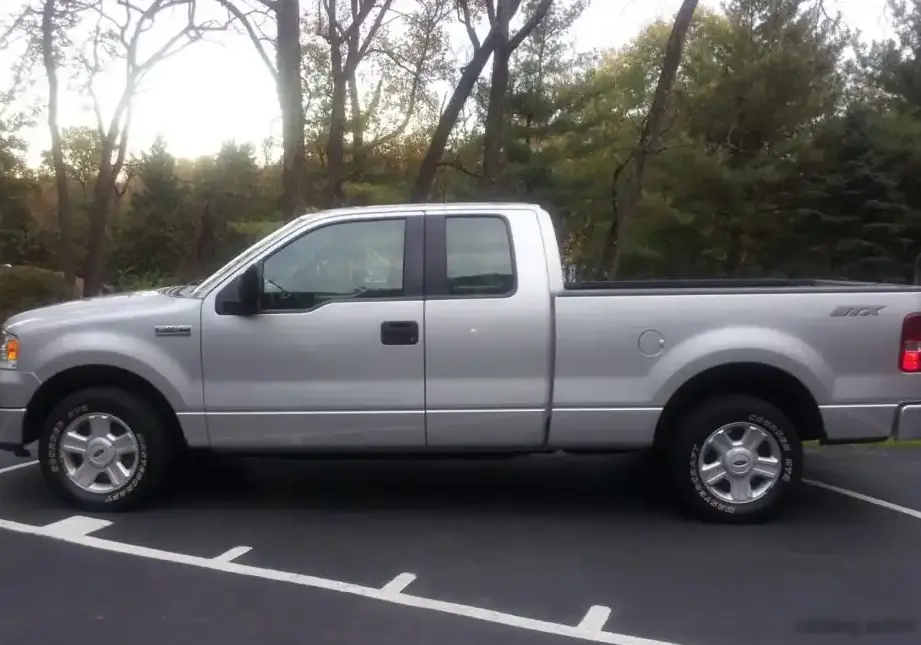
The Ford F-150 XI SuperCab, produced from 2007 through mid-2008, represented a continuation of the twelfth generation (2004-2008) of Ford’s immensely popular F-Series pickup truck. This iteration specifically featured the 4.6-liter Triton V8 engine paired with a four-speed automatic transmission and a four-wheel-drive system. Positioned as a mid-range offering within the F-150 lineup, it aimed to balance capability with affordability, appealing to buyers needing a versatile truck for both work and personal use. The “XI” designation denoted a specific trim level, offering a step up in features compared to the base XL model, but falling short of the luxury appointments found in the higher-end XLT and Lariat trims.
Technical Specifications
| Brand | Ford |
| Model | F-Series F-150 |
| Generation | F-Series F-150 XI SuperCab |
| Type (Engine) | 4.6 V8 Triton (248 Hp) 4×4 Automatic |
| Start of production | 2007 |
| End of production | July, 2008 |
| Powertrain Architecture | Internal Combustion engine |
| Body type | Pick-up |
| Seats | 5-6 |
| Doors | 2 |
| Fuel consumption (urban) | 15.7 l/100 km (15 US mpg, 18 UK mpg) |
| Fuel consumption (extra urban) | 12.4 l/100 km (19 US mpg, 22.8 UK mpg) |
| Fuel Type | Petrol (Gasoline) |
| Weight-to-power ratio | 9.5 kg/Hp |
| Power | 248 Hp @ 4750 rpm |
| Torque | 399 Nm @ 4000 rpm (294.29 lb.-ft. @ 4000 rpm) |
| Engine layout | Front, Longitudinal |
| Engine displacement | 4605 cm3 (281.01 cu. in.) |
| Number of cylinders | 8 |
| Engine configuration | V-engine |
| Cylinder Bore | 90.17 mm (3.55 in.) |
| Piston Stroke | 89.92 mm (3.54 in.) |
| Compression ratio | 9.4:1 |
| Number of valves per cylinder | 2 |
| Fuel injection system | Multi-port manifold injection |
| Engine aspiration | Naturally aspirated |
| Engine oil capacity | 5.7 l (6.02 US qt | 5.02 UK qt) |
| Coolant capacity | 19.4 l (20.5 US qt | 17.07 UK qt) |
| Kerb Weight | 2348-2388 kg (5176.45 – 5264.64 lbs.) |
| Max. weight | 3152 kg (6948.97 lbs.) |
| Max load | 764-804 kg (1684.33 – 1772.52 lbs.) |
| Fuel tank capacity | 98-135 l (25.89 – 35.66 US gal | 21.56 – 29.7 UK gal) |
| Permitted trailer load with brakes (12%) | 3039 kg (6699.85 lbs.) |
| Length | 5532-5837 mm (217.8 – 229.8 in.) |
| Width | 2004 mm (78.9 in.) |
| Height | 1920-1943 mm (75.59 – 76.5 in.) |
| Wheelbase | 3366-3670 mm (132.52 – 144.49 in.) |
| Front track | 1702 mm (67.01 in.) |
| Rear track | 1702 mm (67.01 in.) |
| Minimum turning circle | 13.3-14.1 m (43.64 – 46.26 ft.) |
| Drivetrain | All wheel drive (4×4) |
| Number of gears | 4 |
| Gearbox type | Automatic transmission |
| Front suspension | Double wishbone |
| Rear suspension | Leaf spring |
| Front brakes | Ventilated discs, 330 mm |
| Rear brakes | Ventilated discs, 348 mm |
| Assisting systems | ABS (Anti-lock braking system) |
| Steering type | Steering rack and pinion |
| Power steering | Electric |
| Tires size | 235/70 R17; 275/65 R18 |
| Wheel rims size | 17; 18 |
Powertrain & Engine Architecture
The heart of the F-150 XI SuperCab was the 4.6-liter Triton V8 engine. This engine, part of Ford’s modular engine family, featured a cast-iron block with aluminum cylinder heads. The engine code varied, but commonly seen were variations of the 2V (two valves per cylinder) configuration. Fuel delivery was handled by a multi-port fuel injection system, providing adequate, though not exceptional, performance. The single overhead camshaft (SOHC) design kept the engine relatively simple and reliable. The four-speed 4R70W automatic transmission was chosen for its durability and cost-effectiveness. While not offering the smoothness or efficiency of more modern transmissions, it was well-suited to the truck’s intended use. The 4×4 system employed an electronically controlled transfer case, allowing the driver to switch between two-wheel drive and four-wheel drive modes as needed.
Driving Characteristics
The 4.6-liter V8, producing 248 horsepower and 294 lb-ft of torque, provided adequate power for everyday driving and moderate towing. However, compared to the available 5.4-liter Triton V8 or the diesel options, the 4.6-liter felt noticeably less powerful, especially when fully loaded or tackling steep inclines. The four-speed automatic transmission, while reliable, lacked the close gear ratios of newer transmissions, resulting in slightly slower acceleration and higher engine speeds at highway cruising. The gear ratios were optimized for towing and hauling, prioritizing low-end torque over outright speed. The ride quality was typical of a body-on-frame truck, offering a comfortable but somewhat bouncy experience.
Equipment & Trim Levels
The F-150 XI SuperCab offered a step up from the base XL trim. Standard features typically included air conditioning, a basic audio system, power windows and locks, and a tilt steering wheel. The SuperCab configuration added extra rear seating, though the space was somewhat limited, making it more suitable for occasional passengers. Optional extras included upgraded audio systems, power seats, alloy wheels, and a towing package. Interior upholstery was typically cloth, with vinyl flooring. The dashboard layout was functional and straightforward, prioritizing usability over aesthetics.
Chassis & Braking
The F-150 XI SuperCab utilized a traditional body-on-frame construction. The front suspension featured an independent double wishbone setup, while the rear suspension employed leaf springs. This configuration provided a good balance of ride comfort and load-carrying capacity. Brakes consisted of ventilated discs on all four wheels, with ABS (Anti-lock Braking System) as standard equipment. The braking performance was adequate for the truck’s weight class, but not particularly sporty. The steering system was a rack-and-pinion setup with power assist, providing reasonably precise steering feel.
Market Reception & Comparison
The 4.6-liter F-150 was generally well-received as a capable and affordable work truck. Critics noted its adequate power and reliability, but also pointed out its lack of refinement compared to some competitors. Fuel economy was a common complaint, typical for a full-size pickup truck of that era. Compared to the 5.4-liter Triton V8, the 4.6-liter offered lower performance but better fuel economy. The diesel options provided superior towing capacity and fuel efficiency, but at a higher initial cost. The 4.6-liter automatic combination appealed to buyers who prioritized value and practicality over outright performance.
Legacy
The 4.6-liter Triton V8, in its various iterations, proved to be a durable and reliable engine. While not without its issues (such as potential spark plug breakage in earlier versions), it generally provided years of dependable service. Today, used F-150s equipped with this engine are readily available and relatively affordable. They remain popular choices for those seeking a capable and practical truck for work or recreational use. However, potential buyers should be aware of the engine’s age and mileage, and perform a thorough inspection before purchasing. The 4R70W transmission, while robust, may require maintenance or rebuilding after extended use.