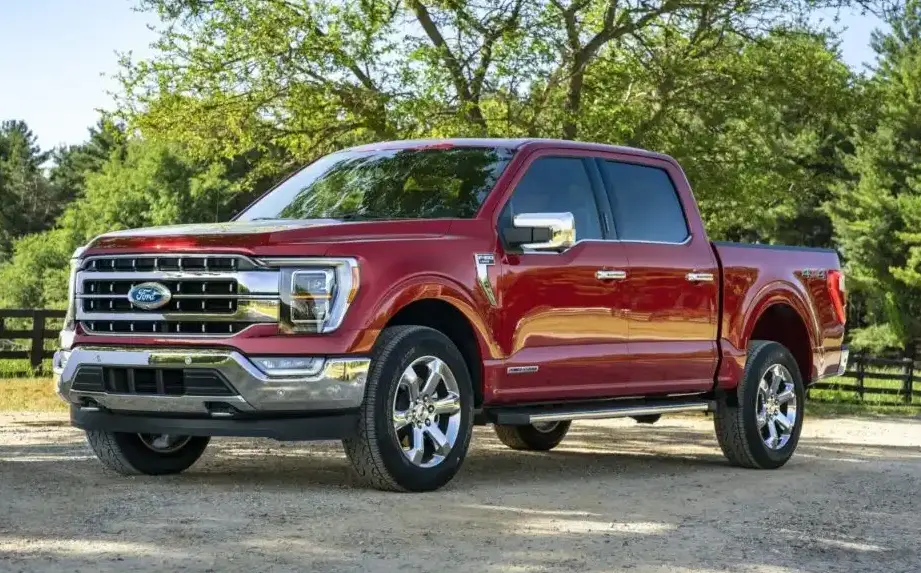
The Ford F-150 XIV SuperCrew, equipped with the 3.0 Power Stroke V6 turbodiesel engine producing 250 horsepower and paired with a 10-speed automatic transmission and a four-wheel drive system, represents a significant offering in the full-size pickup truck segment. Introduced for the 2021 model year and continuing through 2023, this variant aimed to provide a balance of capability, fuel efficiency, and refinement for buyers seeking a diesel-powered F-150 without the larger, more expensive Power Stroke V8 options. It falls within the fourteenth generation (F-150 XIV) of the iconic F-Series, known for its robust construction and versatility.
Technical Specifications
| Brand | Ford |
| Model | F-Series F-150 |
| Generation | F-Series F-150 XIV SuperCrew |
| Type (Engine) | 3.0 Power Stroke V6 (250 Hp) 4×4 Automatic |
| Start of production | October, 2020 |
| End of production | 2023 |
| Powertrain Architecture | Internal Combustion engine |
| Body type | Pick-up |
| Seats | 5-6 |
| Doors | 4 |
| Fuel consumption (urban) | 11.8 l/100 km (19.9 US mpg) |
| Fuel consumption (extra urban) | 8.7 l/100 km (27 US mpg) |
| Fuel consumption (combined) | 10.2 l/100 km (23.1 US mpg) |
| Fuel Type | Diesel |
| Weight-to-power ratio | 9.5 kg/Hp |
| Weight-to-torque ratio | 4 kg/Nm |
| Power | 250 Hp @ 3250 rpm |
| Power per litre | 83.3 Hp/l |
| Torque | 597 Nm @ 1750 rpm (440.32 lb.-ft. @ 1750 rpm) |
| Engine layout | Front, Longitudinal |
| Engine displacement | 3000 cm3 (183.07 cu. in.) |
| Number of cylinders | 6 |
| Engine configuration | V-engine |
| Cylinder Bore | 84.07 mm (3.31 in.) |
| Piston Stroke | 89.92 mm (3.54 in.) |
| Compression ratio | 16:1 |
| Fuel injection system | Diesel Commonrail |
| Engine aspiration | Turbocharger, Intercooler |
| Engine oil capacity | 6.1 l (6.45 US qt | 5.37 UK qt) |
| Coolant capacity | 13 l (13.74 US qt | 11.44 UK qt) |
| Kerb Weight | 2378-2400 kg (5242.59 – 5291.09 lbs.) |
| Max. weight | 3221 kg (7101.09 lbs.) |
| Max load | 821-843 kg (1810 – 1858.5 lbs.) |
| Trunk (boot) space – minimum | 1495-1764 l (52.8 – 62.3 cu. ft.) |
| Fuel tank capacity | 98 l (25.89 US gal | 21.56 UK gal) |
| Permitted trailer load with brakes (12%) | 5488 kg (12098.97 lbs.) |
| Length | 5885-6185 mm (231.69 – 243.5 in.) |
| Width | 2029 mm (79.88 in.) |
| Width with mirrors folded | 2123 mm (83.58 in.) |
| Width including mirrors | 2431 mm (95.71 in.) |
| Height | 1961-1971 mm (77.2 – 77.6 in.) |
| Wheelbase | 3693-3993 mm (145.39 – 157.2 in.) |
| Front track | 1725 mm (67.91 in.) |
| Rear (Back) track | 1735 mm (68.31 in.) |
| Front overhang | 955 mm (37.6 in.) |
| Rear overhang | 1234 mm (48.58 in.) |
| Ride height (ground clearance) | 224-239 mm (8.82 – 9.41 in.) |
| Minimum turning circle (turning diameter) | 14.6-15.6 m (47.9 – 51.18 ft.) |
| Approach angle | 24-24.3° |
| Departure angle | 25.3-26.3° |
| Ramp-over (brakeover) angle | 19-20° |
| Drivetrain Architecture | All wheel drive (4×4). ICE drives rear wheels, front wheels engaged via clutch. |
| Number of gears and type of gearbox | 10 gears, automatic transmission SelectShift |
| Front suspension | Double wishbone |
| Rear suspension | Leaf spring |
| Front brakes | Ventilated discs, 350×34 mm |
| Rear brakes | Ventilated discs, 336×20 mm |
| Assisting systems | ABS (Anti-lock braking system) |
| Steering type | Steering rack and pinion |
| Power steering | Electric Steering |
| Tires size | 245/70 R17 110T; 265/70 R17 115T; 265/60 R18 110T; 275/65 R18 116T; 275/60 R20 115T |
| Wheel rims size | 7.5J x 17; 7.5J x 18; 8.5J x 20 |
Powertrain & Engine Architecture
The heart of this F-150 variant is the 3.0-liter Power Stroke V6 diesel engine, internally designated as the third-generation “Lion” engine. This engine utilizes a common-rail direct fuel injection system, delivering fuel at extremely high pressures for optimized combustion. A variable geometry turbocharger with intercooling enhances both power and efficiency. The engine’s architecture features a robust cast iron block and aluminum cylinder heads. The 16:1 compression ratio is typical for diesel engines, contributing to their inherent efficiency. The engine is longitudinally mounted in the chassis, driving all four wheels through the advanced 10-speed SelectShift automatic transmission. This transmission, co-developed with General Motors, provides a wide range of gear ratios for improved acceleration, towing capability, and fuel economy.
Driving Characteristics
The 3.0 Power Stroke V6 in the F-150 delivers a different driving experience compared to the gasoline-powered EcoBoost engines or the larger 6.7-liter Power Stroke V8. While not offering the outright acceleration of the EcoBoost, the diesel provides a substantial 440 lb-ft of torque at a low 1750 rpm, making it exceptionally capable for towing and hauling. The 10-speed automatic transmission is well-tuned, providing smooth shifts and keeping the engine in its optimal power band. Compared to a manual transmission, the automatic prioritizes ease of use and convenience, though it may slightly diminish driver engagement. The 4×4 system provides confident traction in various conditions, making it suitable for both on-road and off-road use.
Equipment & Trim Levels
The 3.0 Power Stroke V6 was offered across several F-150 trim levels, including XL, XLT, Lariat, King Ranch, and Platinum. Standard equipment on lower trims like the XL and XLT typically included basic features such as air conditioning, a rearview camera, and a basic infotainment system. Higher trims like the Lariat, King Ranch, and Platinum added luxury features such as leather upholstery, heated and ventilated seats, a premium sound system, and advanced driver-assistance systems like adaptive cruise control and lane-keeping assist. Optional extras included a panoramic sunroof, a bed liner, and various towing packages.
Chassis & Braking
The F-150 XIV utilizes a high-strength steel frame and an aluminum alloy body, contributing to its overall durability and reduced weight. The front suspension features an independent double-wishbone design, while the rear suspension employs a leaf spring setup, optimized for load-carrying capacity. Braking duties are handled by ventilated discs on all four wheels, providing ample stopping power. The rear brakes are slightly smaller in diameter than the front brakes. Anti-lock braking system (ABS) is standard. The suspension tuning is geared towards providing a comfortable ride while maintaining good handling characteristics, even when the truck is loaded.
Market Reception & Comparison
The 3.0 Power Stroke V6 F-150 received generally positive reviews, with critics praising its fuel efficiency and towing capability. It offered a compelling alternative to the gasoline engines, particularly for buyers who frequently tow or haul heavy loads. Compared to the larger 6.7-liter Power Stroke V8, the 3.0L offered a lower price point and better fuel economy, but lacked the V8’s sheer power. Fuel economy figures averaged around 23 mpg combined, making it a competitive option in the diesel truck segment. Reliability reports have been mixed, with some owners reporting issues with the turbocharger and fuel injection system, while others have experienced trouble-free ownership.
Legacy
The 3.0 Power Stroke V6 F-150 represents a significant step in Ford’s diesel engine offerings, providing a more accessible and efficient option for buyers. While the engine was discontinued after the 2023 model year, it remains a popular choice in the used truck market. Its combination of capability, fuel economy, and refinement continues to appeal to a wide range of buyers. The long-term reliability of this powertrain remains a topic of discussion among F-150 owners, but well-maintained examples are expected to provide many years of service. The engine’s introduction paved the way for further advancements in Ford’s diesel technology, solidifying its position as a leader in the full-size pickup truck segment.