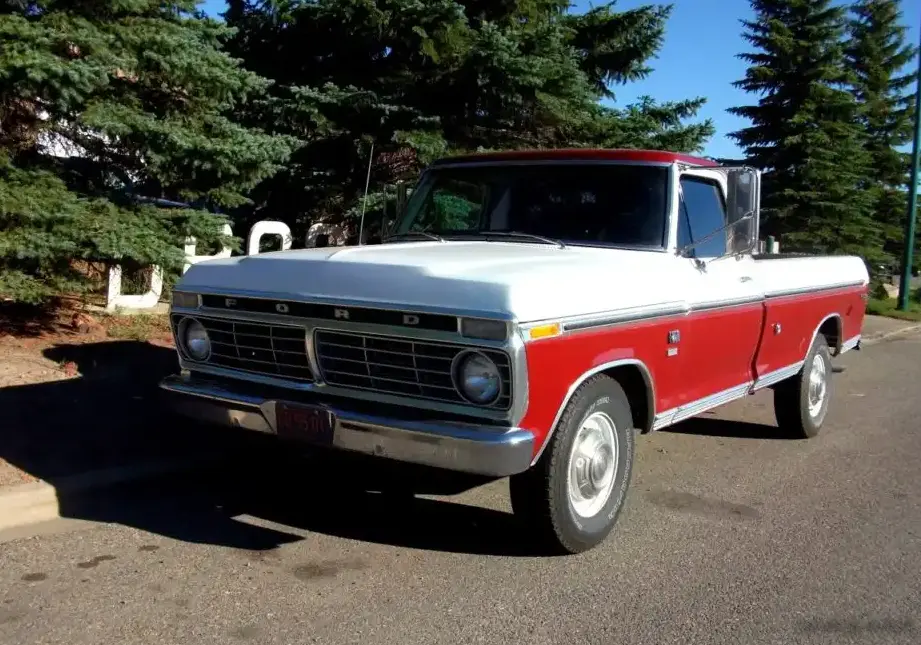
The Ford F-250 VI Regular Cab, specifically equipped with the 5.8-liter (351 cubic inch) V8 engine producing 160 horsepower and paired with an automatic transmission, was a mainstay of Ford’s heavy-duty truck lineup from 1977 to 1979. This iteration falls within the sixth generation of the F-Series (1973-1979), a period marked by increased size and comfort features compared to earlier models. Positioned as a workhorse, this F-250 offered a balance between capability and affordability, serving as a popular choice for farmers, ranchers, and tradesmen needing a robust pickup truck. It represented a step up in capacity from the F-150, while remaining more accessible than the heavier-duty F-350.
Technical Specifications
| Brand | Ford |
| Model | F-Series F-250 |
| Generation | F-Series F-250 VI Regular Cab |
| Type (Engine) | 5.8 351 V8 (160 Hp) Automatic |
| Start of production | 1977 |
| End of production | 1979 |
| Powertrain Architecture | Internal Combustion engine |
| Body type | Pick-up |
| Seats | 3 |
| Doors | 2 |
| Fuel Type | Petrol (Gasoline) |
| Power | 160 Hp |
| Power per litre | 27.8 Hp/l |
| Engine displacement | 5752 cm3 |
| Engine displacement (cu. in.) | 351.01 cu. in. |
| Number of cylinders | 8 |
| Engine configuration | V-engine |
| Cylinder Bore | 101.6 mm (4 in.) |
| Piston Stroke | 88.9 mm (3.5 in.) |
| Number of valves per cylinder | 2 |
| Fuel injection system | Carburettor |
| Engine aspiration | Naturally aspirated engine |
| Max. weight | 3583 kg (7899.16 lbs.) |
| Trunk (boot) space – minimum | 2084 l (73.6 cu. ft.) |
| Fuel tank capacity | 73 l (19.28 US gal | 16.06 UK gal) |
| Length | 5215 mm (205.31 in.) |
| Wheelbase | 3378 mm (132.99 in.) |
| Wading depth | 681 mm (26.81 in.) |
| Drivetrain Architecture | Rear wheel drive. Internal Combustion engine (ICE) drives the rear wheels. |
| Drive wheel | Rear wheel drive |
| Number of gears and type of gearbox | 4 gears, automatic transmission Cruise-O-Matic |
| Front suspension | Independent coil spring, Transverse stabilizer |
| Rear suspension | Transverse stabilizer, Leaf spring |
| Front brakes | Disc |
| Rear brakes | Drum |
| Power steering | Electric Steering |
| Tires size | 215/85 R16.5 |
| Wheel rims size | 6J x 16.5 |
Powertrain & Engine Architecture
The heart of this F-250 was the 5.8-liter (351 cubic inch) Ford Windsor V8 engine. This engine, designated as the 351W, was a staple of Ford’s lineup for many years, known for its relatively compact size and robust construction. The 160 horsepower output was achieved through a two-barrel carburetor, a relatively simple fuel delivery system for the era. The engine featured a cast iron block and cylinder heads, with a 2-valve per cylinder configuration operated by a hydraulic lifter camshaft. The automatic transmission was the Ford Cruise-O-Matic, a three-speed unit known for its smooth operation and durability. This transmission was a popular choice for truck buyers who preferred the convenience of an automatic over a manual gearbox, especially for demanding work applications.
Driving Characteristics
The 160 horsepower and automatic transmission combination resulted in a truck that prioritized usability over outright performance. Acceleration was modest, and the Cruise-O-Matic transmission was geared for towing and hauling rather than quick acceleration. The 351W engine delivered its peak torque at relatively low RPMs, making it suitable for moving heavy loads. However, passing maneuvers on the highway required careful planning. Compared to the optional larger engines (like the 460 cubic inch V8), this 351 offered a more economical driving experience, but at the cost of significant power. The automatic transmission, while convenient, did sap some engine power compared to a manual transmission equipped model.
Equipment & Trim Levels
The F-250 VI Regular Cab with the 351 V8 and automatic transmission typically fell into the mid-range of available trim levels. Standard features included a basic vinyl interior, a simple dashboard layout with essential gauges, and a sturdy steel bed. Optional extras included air conditioning, an upgraded radio, power steering (often standard by this point), and various bed covers or toolboxes. The interior was functional and durable, designed to withstand the rigors of work truck use. Upholstery was typically a durable vinyl, and the floor was often covered with a rubber mat. Higher trim levels offered more luxurious features like cloth upholstery and additional chrome trim.
Chassis & Braking
The F-250 chassis was built for heavy-duty use. It featured a robust ladder frame construction, designed to withstand significant loads. The front suspension utilized independent coil springs with a transverse stabilizer bar, providing a relatively comfortable ride for a truck of this size. The rear suspension employed leaf springs, which were ideal for supporting heavy payloads. Braking was accomplished with disc brakes on the front axle and drum brakes on the rear. Power steering was often included, making maneuvering the large truck easier. The 215/85 R16.5 tires were chosen for their durability and load-carrying capacity.
Market Reception & Comparison
The F-250 with the 351 V8 and automatic transmission was generally well-received by buyers seeking a capable and reliable work truck. Critics noted its solid construction and adequate power for most tasks. However, some reviewers pointed out that the 160 horsepower engine was somewhat underpowered for heavier loads or demanding applications. Compared to the F-150, the F-250 offered a significant increase in payload and towing capacity. Compared to the larger-engined F-250s and F-350s, it provided a more affordable entry point into the heavy-duty truck market, albeit with a compromise in performance. Fuel economy, while not a primary concern for truck buyers at the time, was reasonable for a vehicle of its size and capability.
Legacy
The Ford F-250 VI Regular Cab with the 351 V8 and automatic transmission has become a popular choice among classic truck enthusiasts. The 351W engine is known for its reliability and relative ease of maintenance, and parts are still readily available. While not the most powerful or luxurious F-250 variant, it represents a sweet spot for those seeking a usable and affordable classic truck. These trucks are often found in good condition, having been well-maintained by their original owners. Today, they are valued for their simplicity, durability, and classic American truck styling. The Cruise-O-Matic transmission, while aging, is generally considered a durable unit when properly maintained. The overall robustness of the powertrain contributes to the continued desirability of this particular F-250 configuration in the used vehicle market.