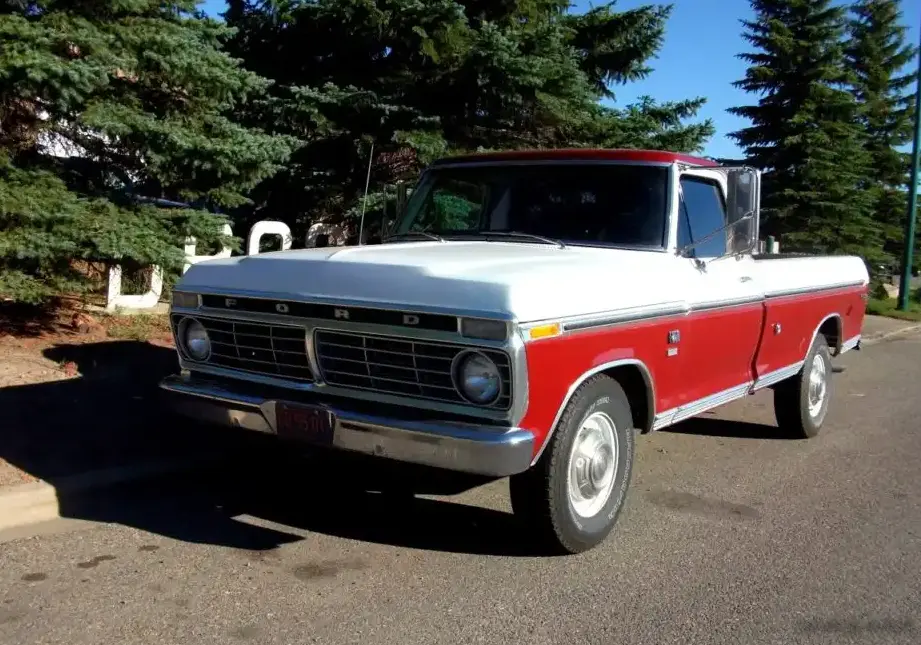
The Ford F-Series F-250 VI Regular Cab, equipped with the 7.5-liter 460 cubic inch V8 engine producing 220 horsepower, represents a significant iteration in Ford’s long-running and immensely popular F-Series pickup truck lineage. Produced from 1977 through 1979, this variant occupied a middle ground within the F-250 range, offering a balance between capability and affordability for buyers needing a heavy-duty truck for work or personal use. It was part of the sixth generation (1973-1979) of the F-Series, a generation known for its increased size, improved comfort, and expanded feature options compared to its predecessors.
Technical Specifications
| Brand | Ford |
| Model | F-Series F-250 |
| Generation | F-Series F-250 VI Regular Cab |
| Type (Engine) | 7.5 460 V8 (220 Hp) |
| Start of production | 1977 |
| End of production | 1979 |
| Powertrain Architecture | Internal Combustion engine |
| Body type | Pick-up |
| Seats | 3 |
| Doors | 2 |
| Fuel Type | Petrol (Gasoline) |
| Power | 220 Hp |
| Power per litre | 29.2 Hp/l |
| Engine displacement | 7538 cm3 / 460 cu. in. |
| Number of cylinders | 8 |
| Engine configuration | V-engine |
| Piston Stroke | 97.79 mm / 3.85 in. |
| Number of valves per cylinder | 4 |
| Fuel injection system | Carburettor |
| Engine aspiration | Naturally aspirated engine |
| Max. weight | 3583 kg / 7899.16 lbs. |
| Trunk (boot) space – minimum | 2084 l / 73.6 cu. ft. |
| Fuel tank capacity | 73 l / 19.28 US gal | 16.06 UK gal |
| Length | 5215 mm / 205.31 in. |
| Wheelbase | 3378 mm / 132.99 in. |
| Wading depth | 681 mm / 26.81 in. |
| Drivetrain Architecture | The Internal combustion engine (ICE) drives the rear wheels of the vehicle. |
| Drive wheel | Rear wheel drive |
| Number of gears and type of gearbox | 3 gears, manual transmission |
| Front suspension | Independent coil spring, Transverse stabilizer |
| Rear suspension | Transverse stabilizer, Leaf spring |
| Front brakes | Disc |
| Rear brakes | Drum |
| Power steering | Electric Steering |
| Tires size | 215/85 R16.5 |
| Wheel rims size | 6J x 16.5 |
Powertrain & Engine Architecture
The heart of this F-250 variant is Ford’s 460 cubic inch (7.5-liter) V8 engine. This engine, a mainstay of Ford’s heavy-duty lineup for many years, is a robust, cast-iron block design with a 97.79mm (3.85 inch) bore and stroke. The engine utilizes a two-valve per cylinder configuration and is fed by a carburetor, typical for the era. While 220 horsepower might seem modest by modern standards, it provided ample torque for hauling and towing in the late 1970s. The 460 V8 was known for its low-end grunt, making it well-suited for the demands of truck work. The engine is longitudinally mounted in the chassis, driving the rear wheels through a three-speed manual transmission. This transmission, while durable, offered relatively simple gear ratios, prioritizing torque multiplication over outright speed.
Driving Characteristics
Behind the wheel, the F-250 with the 460 V8 and manual transmission delivers a distinctly analog driving experience. Acceleration is adequate, but not brisk, with the engine’s strength lying in its ability to maintain speed while loaded. The three-speed manual transmission requires deliberate shifting, and the gear ratios are spaced to maximize pulling power. Compared to potential upgrades like the larger engine options available in the F-250 lineup, this 220 hp version prioritized usability and fuel economy (relatively speaking for a truck of this size). The suspension, while capable, is tuned for work rather than comfort, resulting in a firm ride, especially when unladen. Steering is accomplished through a power steering system, which assists in maneuvering this large vehicle, but lacks the precision of more modern systems.
Equipment & Trim Levels
The F-250 Regular Cab in this configuration was typically a work-oriented trim. Standard features were relatively basic, focusing on functionality over luxury. The interior typically featured a vinyl bench seat, a simple dashboard layout with basic gauges, and minimal sound insulation. Options included upgraded upholstery, a radio, and various convenience items like a heater and defroster. The Regular Cab configuration offered a single row of seating, prioritizing cargo space over passenger comfort. The exterior trim was also functional, with minimal chrome accents and durable paint finishes. This trim level was aimed at buyers who needed a tough, reliable truck for work and weren’t concerned with frills.
Chassis & Braking
The F-250’s chassis is a traditional body-on-frame construction, providing a robust and durable platform. The front suspension utilizes independent coil springs with a transverse stabilizer bar, while the rear suspension employs leaf springs and a transverse stabilizer bar. This setup provides a reasonable balance between ride quality and load-carrying capacity. Braking duties are handled by disc brakes at the front and drum brakes at the rear. While adequate for the time, the braking system lacks the stopping power and control of modern systems. The truck rides on 6J x 16.5 inch wheels fitted with 215/85 R16.5 tires, chosen for their durability and load-carrying capacity.
Market Reception & Comparison
The F-250 with the 460 V8 and manual transmission was generally well-received by buyers who needed a capable and affordable heavy-duty truck. Critics praised its durability and towing capacity, but noted its relatively basic interior and lack of refinement. Compared to other F-250 trims, such as those equipped with larger engines or automatic transmissions, this variant offered a more economical option for buyers who didn’t require maximum power or convenience. Fuel economy, while not a primary concern for truck buyers at the time, was slightly better with the smaller engine and manual transmission compared to the larger engine/automatic combinations. Reliability was generally good, although the carburetor required periodic maintenance.
Legacy
The 1977-1979 Ford F-250 with the 460 V8 and manual transmission remains a popular choice among classic truck enthusiasts and collectors. The 460 V8 engine is known for its durability and relative simplicity, making it a relatively easy engine to maintain and repair. While parts availability can be a challenge, a robust aftermarket supports these trucks. Today, these F-250s are often found in restored condition or used as work trucks, demonstrating their enduring appeal and capability. The combination of a robust engine, durable chassis, and simple mechanicals has ensured that many of these trucks continue to operate reliably decades after they were first built. They represent a bygone era of truck design, prioritizing functionality and durability over modern conveniences.