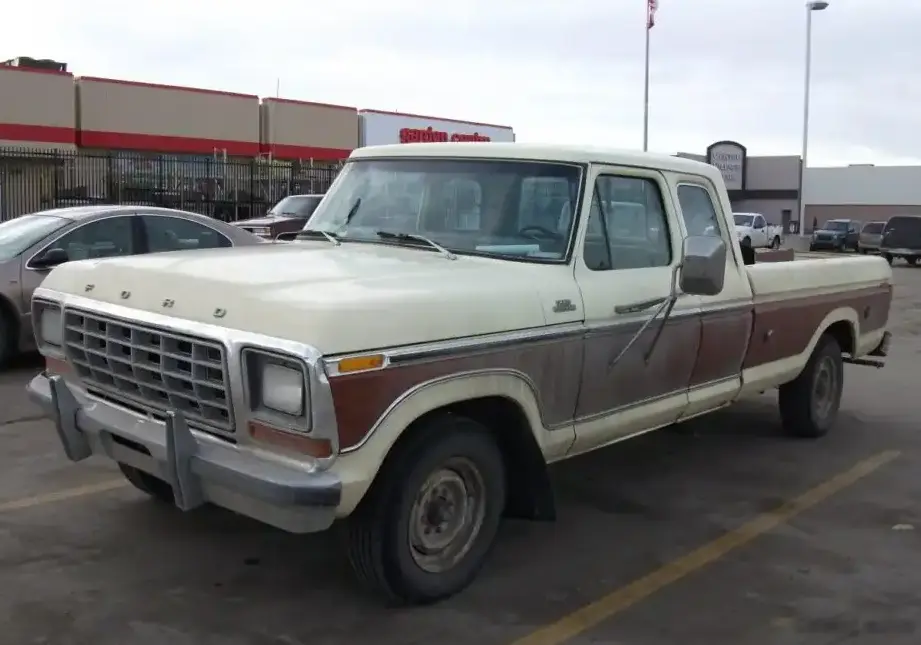
The Ford F-250 VI SuperCab, equipped with the 4.9-liter (300 cubic inch) inline-six engine and a Cruise-O-Matic automatic transmission, represents a practical configuration within the sixth generation of the Ford F-Series trucks, manufactured from 1975 through 1979. This variant occupied the entry-level position within the F-250 range, providing a balance between affordability and capability for buyers who needed more than the F-100 offered, but didn’t require the full towing capacity of the larger V8 engine options. The “SuperCab” designation indicated an extended passenger cabin, offering increased interior space compared to the standard cab models.
Technical Specifications
| Brand | Ford |
| Model | F-Series F-250 |
| Generation | F-Series F-250 VI SuperCab |
| Engine Type | 4.9 300 Six (113 Hp) Automatic |
| Start of production | 1975 |
| End of production | 1979 |
| Powertrain Architecture | Internal Combustion engine |
| Body type | Pick-up |
| Seats | 6 |
| Doors | 2 |
| Fuel Type | Petrol (Gasoline) |
| Power | 113 Hp |
| Power per litre | 23 Hp/l |
| Engine displacement | 4916 cm3 / 299.99 cu. in. |
| Number of cylinders | 6 |
| Engine configuration | Inline |
| Cylinder Bore | 101.6 mm / 4 in. |
| Piston Stroke | 101.09 mm / 3.98 in. |
| Fuel injection system | Carburettor |
| Engine aspiration | Naturally aspirated engine |
| Max. weight | 3674 kg / 8099.78 lbs. |
| Trunk (boot) space – minimum | 1727-2084 l / 60.99 – 73.6 cu. ft. |
| Length | 5362-5773 mm / 211.1 – 227.28 in. |
| Wheelbase | 3531-3937 mm / 139.02 – 155 in. |
| Wading depth | 673-678 mm / 26.5 – 26.69 in. |
| Drivetrain Architecture | The Internal combustion engine (ICE) drives the rear wheels of the vehicle. |
| Drive wheel | Rear wheel drive |
| Number of gears and type of gearbox | automatic transmission Cruise-O-Matic |
| Front suspension | Independent coil spring |
| Rear suspension | Leaf spring |
| Front brakes | Disc |
| Rear brakes | Drum |
| Power steering | Electric Steering |
| Tires size | 215/85 R16.5 |
| Wheel rims size | 16.5 |
Powertrain & Engine Architecture
The F-250 variant’s powertrain centers around the 4.9-liter (299 cubic inch) inline-six cylinder engine, popularly known as the “300 Six.” Internally designated as the 300 I6, this engine is celebrated for its inherent simplicity and exceptional durability. It features a cast iron block and cylinder head, with fuel delivery managed by a two-barrel carburetor. The valvetrain employs a traditional pushrod design. While not engineered for high performance, the 300 Six generated 113 horsepower and approximately 195 lb-ft of torque. This torque, available at relatively low engine speeds, made it well-suited for hauling and towing applications. The engine is mounted longitudinally within the chassis. The automatic transmission is a Ford Cruise-O-Matic, a three-speed unit recognized for its smooth operation and reliability. It was a favored choice for buyers who preferred the convenience of an automatic transmission over a manual.
Driving Characteristics
The F-250 equipped with the 4.9L engine and Cruise-O-Matic transmission delivered a distinct driving experience compared to the larger V8-powered models or those with manual transmissions. Acceleration was moderate, and the truck wasn’t designed for rapid acceleration. The Cruise-O-Matic’s gear ratios were optimized for towing and hauling, resulting in the engine operating at relatively higher RPMs at highway speeds. However, this also provided sufficient power for maintaining speed on inclines. In contrast to the manual transmission versions, the automatic offered a more relaxed driving experience, particularly in urban traffic. The 300 Six’s low-end torque helped compensate for the horsepower deficit, enabling it to handle moderate loads without undue strain. It wasn’t a particularly fast truck, but it was a capable and dependable one.
Equipment & Trim Levels
The F-250 SuperCab 4.9L Automatic typically included a fairly basic standard equipment package, reflecting its position as an entry-level or mid-range offering. Standard features included a vinyl bench seat, fundamental instrumentation (speedometer, fuel gauge, temperature gauge), and a heater. The SuperCab configuration added extra rear seating, increasing its passenger capacity alongside cargo. Optional extras included air conditioning, an upgraded radio, power steering, and various trim packages. Interior upholstery was typically vinyl, although cloth options were available. The dashboard layout was functional and straightforward, prioritizing practicality over luxury.
Chassis & Braking
The F-250 chassis utilized a traditional body-on-frame construction, providing a robust and durable platform. The front suspension incorporated independent coil springs, offering a relatively comfortable ride quality. The rear suspension employed leaf springs, which were well-suited for supporting heavy loads. Braking was provided by disc brakes at the front and drum brakes at the rear. Power steering was often an optional feature, but became increasingly common. The truck rode on 16.5-inch wheels, typically fitted with 215/85 R16.5 tires. The rear axle ratio varied depending on the specific configuration and intended use, with numerically higher ratios favored for towing and hauling applications.
Market Reception & Comparison
The F-250 4.9L Automatic was generally well-received by buyers who required a capable truck without the added expense of the larger V8 engines. Critics acknowledged its durability and fuel efficiency (for a truck of its size), but also noted its limited performance capabilities. Compared to the 302 or 390 cubic inch V8 options, the 300 Six offered significantly less horsepower and acceleration. However, it also delivered improved fuel economy and lower maintenance costs. The 300 Six was often preferred by buyers who prioritized reliability and longevity over outright power. In comparison to the diesel options, the 4.9L gasoline engine was quieter and less expensive to purchase, but lacked the diesel’s superior torque and fuel efficiency.
Legacy
The Ford 300 Six engine has earned a legendary reputation for its durability and longevity. Numerous examples remain in service today, often having accumulated hundreds of thousands of miles. The Cruise-O-Matic transmission, while not as technologically advanced as modern automatics, is also known for its reliability. The F-250 SuperCab 4.9L Automatic continues to be a popular choice among collectors and enthusiasts who appreciate its simplicity and ruggedness. In the used car market, these trucks are often sought after for their affordability and potential for restoration. While not a high-performance vehicle, the F-250 4.9L Automatic represents a solid and dependable work truck that has proven its resilience over time.