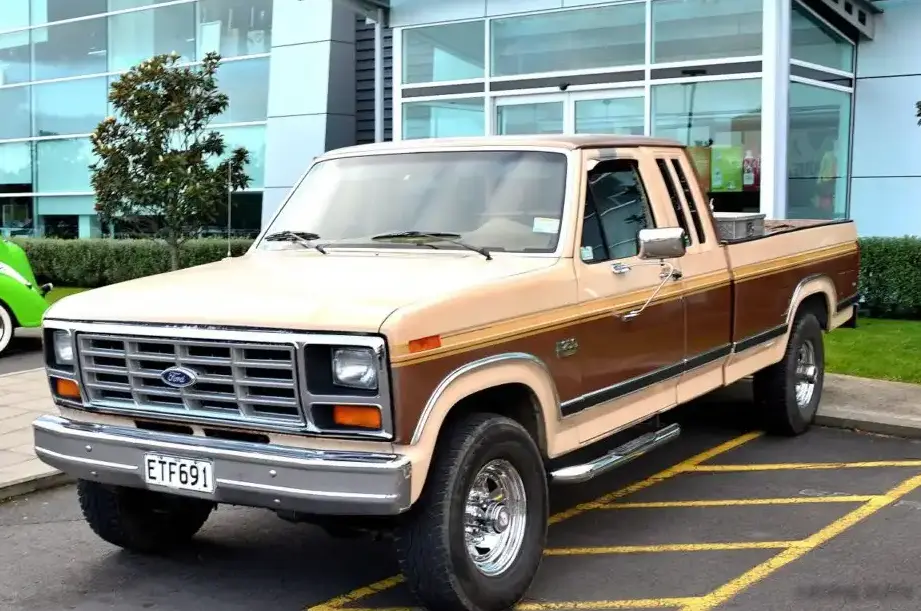
The Ford F-Series F-250 VII SuperCab, equipped with the 4.9-liter inline-six engine producing 125 horsepower, represents a significant workhorse offering from Ford during the 1981-1986 model years. This variant occupied a crucial position in the F-250 lineup, serving as the base engine option for buyers prioritizing affordability and durability over outright performance. It was part of the seventh generation of the F-Series (1980-1986), a generation known for its refinement and increased comfort compared to its predecessors, while still maintaining the ruggedness expected of a Ford truck. The SuperCab configuration, offering extended cab space, added practicality for families or crews.
Technical Specifications
| Brand | Ford |
| Model | F-Series F-250 |
| Generation | F-Series F-250 VII SuperCab |
| Type (Engine) | 4.9 Six (125 Hp) |
| Start of production | 1981 |
| End of production | 1986 |
| Powertrain Architecture | Internal Combustion engine |
| Body type | Pick-up |
| Seats | 5-6 |
| Doors | 2 |
| Fuel Type | Petrol (Gasoline) |
| Power | 125 Hp |
| Power per litre | 25.4 Hp/l |
| Torque | 339 Nm / 250.03 lb.-ft. |
| Engine layout | Front, Longitudinal |
| Engine displacement | 4916 cm3 / 299.99 cu. in. |
| Number of cylinders | 6 |
| Engine configuration | Inline |
| Fuel injection system | Multi-port manifold injection |
| Engine aspiration | Naturally aspirated engine |
| Max. weight | 3583 kg / 7899.16 lbs. |
| Fuel tank capacity | 72-144 l / 19.02 – 38.04 US gal | 15.84 – 31.68 UK gal |
| Length | 5850 mm / 230.31 in. |
| Width | 1778 mm / 70 in. |
| Height | 1885 mm / 74.21 in. |
| Wheelbase | 3937 mm / 155 in. |
| Wading depth | 846 mm / 33.31 in. |
| Drivetrain Architecture | The Internal combustion engine (ICE) drives the rear wheels of the vehicle. |
| Drive wheel | Rear wheel drive |
| Number of gears and type of gearbox | 3 gears, manual transmission |
| Front suspension | Independent coil spring |
| Front brakes | Disc |
| Rear brakes | Drum |
| Power steering | Electric Steering |
| Tires size | 235/85 R16 |
| Wheel rims size | 6.0J x 16 |
Powertrain & Engine Architecture
The heart of this F-250 variant is the 4.9-liter (299 cubic inch) inline-six cylinder engine, often referred to as the “300 Six” despite its actual displacement. This engine, a member of Ford’s durable and long-lived 300 cubic inch family, was known for its reliability and low-end torque. The 1981-1986 version featured multi-port fuel injection, a significant upgrade from the carburetor systems used in earlier iterations. This improved fuel efficiency and drivability. The engine utilizes a cast iron block and head, contributing to its robustness. The valvetrain consists of a single overhead camshaft operating two valves per cylinder. While not a high-revving engine, the 300 Six was designed to deliver consistent power across a broad RPM range, making it well-suited for hauling and towing. The standard transmission for this configuration was a three-speed manual, although a four-speed automatic transmission was available as an option, though less common with this engine.
Driving Characteristics
The 125 horsepower and 250 lb-ft of torque provided by the 4.9-liter engine resulted in a work-oriented driving experience. Acceleration was modest, and the truck wasn’t designed for speed. However, the engine’s strong low-end torque made it capable of handling substantial loads. The three-speed manual transmission offered a direct connection to the engine, allowing for precise control when towing or navigating challenging terrain. Compared to the optional V8 engines (like the 351 Windsor or 460), the 4.9-liter six was noticeably less powerful, especially at higher speeds. The gear ratios in the three-speed manual were optimized for hauling, meaning the engine would rev relatively high at highway speeds. The ride quality, typical of a heavy-duty truck of this era, was firm, but the independent coil spring front suspension helped to absorb some of the bumps.
Equipment & Trim Levels
The F-250 SuperCab 4.9 Six typically came with a fairly basic level of equipment, reflecting its position as the entry-level offering. Standard features included a vinyl bench seat, basic instrumentation (speedometer, fuel gauge, temperature gauge), and a simple AM radio. The SuperCab configuration added a rear seat, increasing passenger capacity. Optional extras included air conditioning, a more powerful radio, upgraded interior trim, and various towing packages. The exterior trim was generally minimal, with black bumpers and side moldings being common. The SuperCab body style offered increased storage space behind the rear seat, making it a popular choice for work crews or families needing extra room.
Chassis & Braking
The F-250 chassis was built for durability and heavy-duty use. It featured a robust ladder frame construction. The front suspension utilized independent coil springs, providing a more comfortable ride compared to the solid axle setups found on some earlier models. The rear suspension consisted of leaf springs, designed to handle heavy loads. Braking duties were handled by disc brakes at the front and drum brakes at the rear. Power steering was standard, making maneuvering the large truck easier. The tires, typically 235/85R16, were chosen for their durability and load-carrying capacity. The overall chassis design prioritized strength and stability over sporty handling.
Market Reception & Comparison
The F-250 4.9 Six was generally well-received by buyers who prioritized affordability and reliability. Critics acknowledged the engine’s durability and low operating costs, but noted its lack of power compared to the V8 options. Fuel economy, while not exceptional, was reasonable for a truck of its size and capability. Compared to the V8-powered F-250s, the 4.9-liter six offered a lower purchase price and potentially lower maintenance costs. However, it was less capable of handling heavy loads or towing large trailers. The 4.9L engine was often favored by those who did a lot of local driving or light-duty work, where the extra power of a V8 wasn’t necessary.
Legacy
The 4.9-liter inline-six engine has earned a reputation as one of Ford’s most durable and reliable engines. Many examples are still on the road today, a testament to their robust construction. The F-250 SuperCab 4.9 Six remains a popular choice among collectors and enthusiasts looking for a classic American work truck. Parts availability is generally good, and the engine is relatively easy to maintain. While not a high-performance vehicle, the F-250 4.9 Six represents a practical and dependable workhorse that played a significant role in the American automotive landscape during the 1980s. In the used car market, these trucks are often sought after for their simplicity, durability, and affordability, making them a viable option for those needing a rugged and reliable pickup.