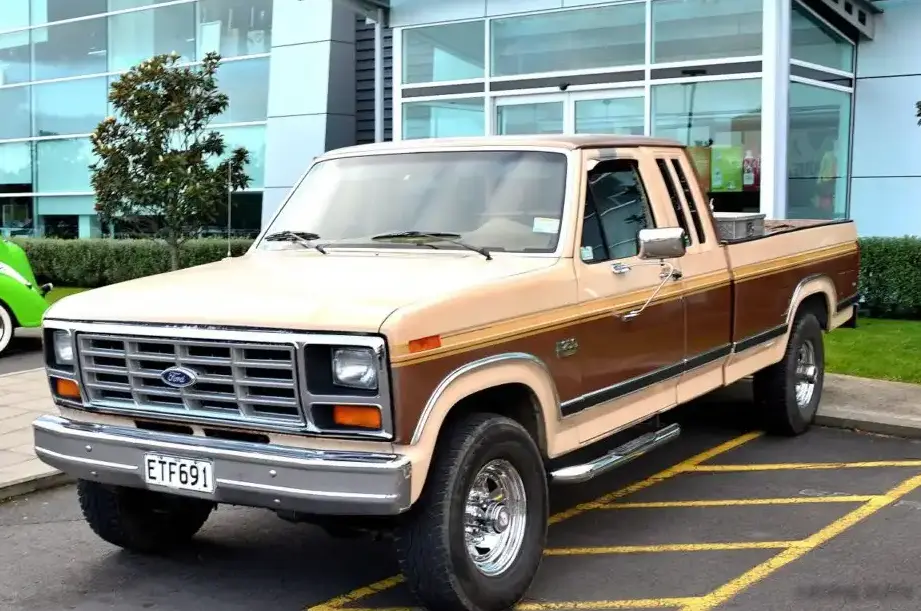
The Ford F-Series F-250 VII SuperCab, equipped with the 4.9-liter inline-six engine producing 125 horsepower and paired with a four-speed automatic transmission and four-wheel drive, was a mainstay of Ford’s heavy-duty truck lineup from 1982 to 1986. This configuration represented an entry-level offering within the seventh generation (1980-1986) of the F-Series, designed for buyers prioritizing affordability and basic capability over outright performance. The SuperCab designation indicated an extended cab body style, offering limited rear seating and storage compared to the standard cab models. This variant played a crucial role in Ford’s dominance of the American truck market, providing a workhorse vehicle for farmers, ranchers, and tradespeople.
Technical Specifications
| Brand | Ford |
| Model | F-Series F-250 |
| Generation | F-Series F-250 VII SuperCab |
| Type (Engine) | 4.9 Six (125 Hp) 4×4 Automatic |
| Start of production | 1982 |
| End of production | 1986 |
| Powertrain Architecture | Internal Combustion engine |
| Body type | Pick-up |
| Seats | 5-6 |
| Doors | 2 |
| Fuel Type | Petrol (Gasoline) |
| Power | 125 Hp |
| Power per litre | 25.4 Hp/l |
| Torque | 339 Nm / 250.03 lb.-ft. |
| Engine layout | Front, Longitudinal |
| Engine displacement | 4916 cm3 / 299.99 cu. in. |
| Number of cylinders | 6 |
| Engine configuration | Inline |
| Fuel injection system | Multi-port manifold injection |
| Engine aspiration | Naturally aspirated engine |
| Max. weight | 3719 kg / 8198.99 lbs. |
| Fuel tank capacity | 72-144 l / 19.02 – 38.04 US gal | 15.84 – 31.68 UK gal |
| Length | 5849 mm / 230.28 in. |
| Height | 1910 mm / 75.2 in. |
| Wheelbase | 3937 mm / 155 in. |
| Minimum turning circle | 16.5 m / 54.13 ft. |
| Wading depth | 832 mm / 32.76 in. |
| Drivetrain Architecture | The Internal combustion engine (ICE) drives the rear wheels permanently, and the front wheels are driven through an electrically or mechanically operated clutch if necessary. |
| Drive wheel | All wheel drive (4×4) |
| Number of gears and type of gearbox | automatic transmission SelectShift |
| Front suspension | Independent coil spring, Transverse stabilizer |
| Rear suspension | Transverse stabilizer |
| Power steering | Electric Steering |
| Tires size | 235/85 R16.5 |
| Wheel rims size | 6J x 16.5 |
Powertrain & Engine Architecture
The heart of this F-250 variant was the 4.9-liter (299 cubic inch) inline-six cylinder engine, commonly known as the 300 six. While not a high-performance engine, it was renowned for its durability and longevity. The engine utilized a cast iron block and head, contributing to its robust nature. Fuel delivery was managed by a multi-port fuel injection system, a relatively modern feature for the time, improving efficiency and driveability compared to carbureted engines. The engine’s valvetrain employed a single overhead camshaft. The “SelectShift” automatic transmission was a four-speed unit, designed to provide smooth and reliable operation. It wasn’t particularly sophisticated by modern standards, but it was well-suited to the engine’s torque characteristics and the truck’s intended use.
Driving Characteristics
The 125 horsepower and 250 lb-ft of torque produced by the 4.9-liter engine, when coupled with the automatic transmission and four-wheel drive, resulted in a truck that was capable but not quick. Acceleration was modest, and passing maneuvers required careful planning. The automatic transmission’s gear ratios were optimized for towing and hauling, prioritizing low-end torque over high-speed performance. Compared to the available V8 engines (such as the 351 Windsor or 460), this 4.9L automatic configuration offered significantly less power. However, it provided a smoother, more relaxed driving experience, particularly in city traffic. The four-wheel drive system added considerable capability in off-road conditions and inclement weather, making it a popular choice for those needing a versatile work truck.
Equipment & Trim Levels
The F-250 SuperCab with the 4.9-liter engine and automatic transmission typically represented the base trim level. Standard features included a basic vinyl interior, a simple dashboard layout, and manual windows and locks. The SuperCab configuration added a small rear seat and extra storage space behind the front seats. Options included upgraded interior trim, air conditioning, a radio, and various towing packages. The exterior typically featured minimal chrome trim and black steel wheels. This trim level was geared towards buyers who prioritized functionality and affordability over luxury and convenience.
Chassis & Braking
The F-250’s chassis was a traditional body-on-frame construction, providing a robust and durable platform. The front suspension utilized independent coil springs and a transverse stabilizer bar, offering a reasonable ride quality for a heavy-duty truck. The rear suspension employed leaf springs and a transverse stabilizer bar, designed to handle heavy loads. Braking was typically accomplished with front disc brakes and rear drum brakes. Power steering was standard, making the truck easier to maneuver, especially at low speeds. The 235/85 R16.5 tires were chosen for their durability and load-carrying capacity.
Market Reception & Comparison
The 4.9-liter F-250 SuperCab with automatic transmission was generally well-received by buyers seeking a dependable and affordable work truck. Critics acknowledged its lack of power compared to the V8 options but praised its fuel efficiency and durability. Fuel economy, while not exceptional, was better than that of the larger-displacement engines. Reliability was a major selling point, with the 300 six engine earning a reputation for being virtually indestructible. Compared to the V8-powered F-250s, this variant was less expensive to purchase and maintain, making it an attractive option for budget-conscious buyers. However, those needing to tow heavy loads or frequently drive on steep terrain often opted for the more powerful V8 engines.
Legacy
The 4.9-liter inline-six engine and the accompanying four-speed automatic transmission have proven to be remarkably durable powertrains. Many examples of these trucks are still on the road today, a testament to their robust construction and simple design. In the used car market, these F-250s are often sought after by those looking for a reliable and affordable work truck. While they may not offer the performance or features of modern trucks, they provide a simple, dependable, and capable alternative. The 300 six engine remains a favorite among enthusiasts for its longevity and ease of maintenance, solidifying its place as a legendary powerplant in Ford truck history.