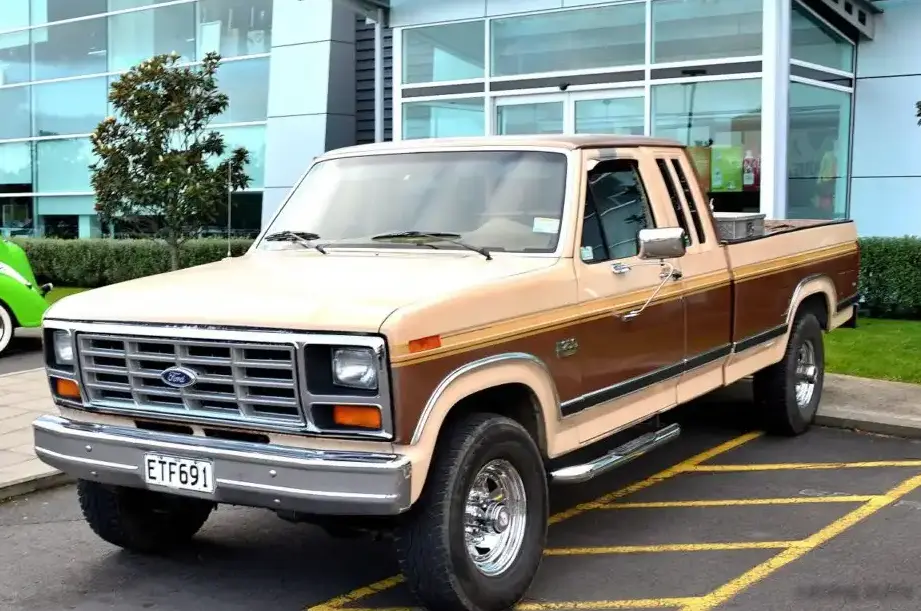
The Ford F-Series F-250 VII SuperCab, equipped with the 5.8-liter V8 engine producing 136 horsepower, represents a significant iteration in Ford’s long-running and immensely popular F-Series line of trucks. Produced from 1979 through 1982, this variant occupied a middle ground within the F-250 range, offering a balance between capability and affordability. The “VII” designation refers to the seventh generation of the F-Series, which saw substantial updates to styling and engineering compared to its predecessors. The SuperCab configuration, introduced in the late 1970s, provided an expanded rear seating area, making the F-250 a more practical option for families and crews. This particular engine and configuration was aimed at buyers needing a robust work truck without the expense of the larger displacement engines or the complexity of newer technologies.
Technical Specifications
| Brand | Ford |
| Model | F-Series F-250 |
| Generation | F-Series F-250 VII SuperCab |
| Type (Engine) | 5.8 V8 (136 Hp) |
| Start of production | September, 1979 |
| End of production | 1982 |
| Powertrain Architecture | Internal Combustion engine |
| Body type | Pick-up |
| Seats | 5-6 |
| Doors | 2 |
| Fuel Type | Petrol (Gasoline) |
| Power | 136 Hp |
| Power per litre | 23.6 Hp/l |
| Torque | 355 Nm / 261.83 lb.-ft. |
| Engine layout | Front, Longitudinal |
| Engine displacement | 5752 cm3 / 351.01 cu. in. |
| Number of cylinders | 8 |
| Engine configuration | V-engine |
| Fuel injection system | Carburettor |
| Engine aspiration | Naturally aspirated engine |
| Max. weight | 3629 kg / 8000.58 lbs. |
| Fuel tank capacity | 62-72 l / 16.38 – 19.02 US gal | 13.64 – 15.84 UK gal |
| Length | 5438-5849 mm / 214.09 – 230.28 in. |
| Width | 1778 mm / 70 in. |
| Height | 1836-1839 mm / 72.28 – 72.4 in. |
| Wheelbase | 3526-3937 mm / 138.82 – 155 in. |
| Wading depth | 785 mm / 30.91 in. |
| Drivetrain Architecture | The Internal combustion engine (ICE) drives the rear wheels of the vehicle. |
| Drive wheel | Rear wheel drive |
| Number of gears and type of gearbox | 3 gears, manual transmission |
| Front suspension | Independent coil spring |
| Front brakes | Disc |
| Rear brakes | Drum |
| Power steering | Electric Steering |
| Tires size | 215/85 R16.5 |
| Wheel rims size | 6J x 16.5 |
Powertrain & Engine Architecture
The heart of this F-250 variant is the 5.8-liter (351 cubic inch) Ford Windsor V8 engine. This engine, designated as a small-block V8, was a mainstay of Ford’s lineup for decades. The 1979-1982 iteration utilized a two-barrel carburetor for fuel delivery, a relatively simple system compared to the fuel injection systems becoming more common in other vehicles. The engine featured a cast iron block and cylinder heads, contributing to its durability. The valvetrain employed a hydraulic lifter camshaft, reducing the need for frequent valve adjustments. The 136 horsepower output, while modest by modern standards, was considered adequate for the truck’s intended purpose – hauling and towing. The engine’s torque output of 355 Nm (261.83 lb.-ft.) was more significant, providing the necessary grunt for work-related tasks. The standard transmission for this configuration was a three-speed manual, although a three-speed automatic transmission was available as an option, albeit at an additional cost.
Driving Characteristics
The F-250 with the 5.8L V8 and manual transmission offered a straightforward driving experience. Acceleration was not its strong suit, but the engine provided sufficient power for everyday driving and moderate towing. The three-speed manual transmission featured relatively deep gear ratios, prioritizing low-end torque for hauling. This meant that the engine would rev relatively high at highway speeds. Compared to the larger 6.6-liter and 7.5-liter V8 options available in the F-250 lineup, the 5.8L felt less powerful, especially when heavily loaded. However, it was also more fuel-efficient and less demanding on the cooling system. The ride quality, typical of trucks of this era, was firm, and the steering lacked the precision of more modern systems.
Equipment & Trim Levels
The F-250 SuperCab 5.8 V8 typically came with a fairly basic level of equipment. Standard features included a vinyl bench seat, a basic AM radio, and manual windows and locks. The SuperCab configuration added a rear bench seat, increasing passenger capacity. Optional extras included air conditioning, a more powerful radio, upgraded interior trim, and various towing packages. The trim level was generally considered to be a step above the base models, but below the more luxurious XLT trim. The interior was functional and durable, designed to withstand the rigors of work truck use.
Chassis & Braking
The F-250 chassis was a robust body-on-frame design, built to handle heavy loads. The front suspension utilized independent coil springs, providing a reasonable level of ride comfort. The rear suspension employed leaf springs, which were well-suited for carrying heavy payloads. Braking duties were handled by disc brakes at the front and drum brakes at the rear. Power steering was standard, making the truck easier to maneuver, especially at low speeds. The tires, typically 215/85 R16.5, were designed for durability and traction in a variety of conditions.
Market Reception & Comparison
The F-250 5.8 V8 was generally well-received by buyers looking for a capable and affordable work truck. Critics noted its durability and reliability, but also pointed out its relatively low power output compared to other options in the F-250 lineup. Compared to the larger-displacement V8s, the 5.8L offered better fuel economy, which was a significant consideration during the late 1970s and early 1980s energy crises. The manual transmission was praised for its simplicity and durability, while the optional automatic transmission was seen as a convenience feature. The SuperCab configuration was a popular option, adding versatility and practicality to the truck.
Legacy
The Ford F-Series F-250 VII SuperCab 5.8 V8 has become a popular choice among classic truck enthusiasts. The 5.8L Windsor V8 is known for its reliability and relative ease of maintenance. Parts availability is generally good, making it a relatively affordable truck to restore and maintain. While not the most powerful or luxurious F-250 variant, it represents a solid and dependable work truck from a bygone era. Today, well-maintained examples command reasonable prices in the used car market, appealing to those seeking a classic American pickup with a proven track record.