Technical Specifications
| Brand | Ford |
| Model | F-Series F-250 |
| Generation | F-Series F-250 VII SuperCab |
| Type (Engine) | 5.8 V8 (150 Hp) 4×4 |
| Start of production | 1983 |
| End of production | 1985 |
| Powertrain Architecture | Internal Combustion engine |
| Body type | Pick-up |
| Seats | 5-6 |
| Doors | 2 |
| Fuel Type | Petrol (Gasoline) |
| Power | 150 Hp |
| Power per litre | 26.1 Hp/l |
| Torque | 380 Nm / 280.27 lb.-ft. |
| Engine layout | Front, Longitudinal |
| Engine displacement | 5752 cm3 / 351.01 cu. in. |
| Number of cylinders | 8 |
| Engine configuration | V-engine |
| Fuel injection system | Multi-port manifold injection |
| Engine aspiration | Naturally aspirated engine |
| Max. weight | 3719 kg / 8198.99 lbs. |
| Fuel tank capacity | 72-144 l / 19.02 – 38.04 US gal | 15.84 – 31.68 UK gal |
| Length | 5849 mm / 230.28 in. |
| Height | 1910 mm / 75.2 in. |
| Wheelbase | 3937 mm / 155 in. |
| Minimum turning circle | 16.5 m / 54.13 ft. |
| Wading depth | 832 mm / 32.76 in. |
| Drivetrain Architecture | The Internal combustion engine (ICE) drives the rear wheels permanently, and the front wheels are driven through an electrically or mechanically operated clutch if necessary. |
| Drive wheel | All wheel drive (4×4) |
| Number of gears | 4 |
| Type of gearbox | Manual transmission |
| Front suspension | Independent coil spring, Transverse stabilizer |
| Rear suspension | Transverse stabilizer |
| Power steering | Electric Steering |
| Tires size | 235/85 R16.5 |
| Wheel rims size | 6J x 16.5 |
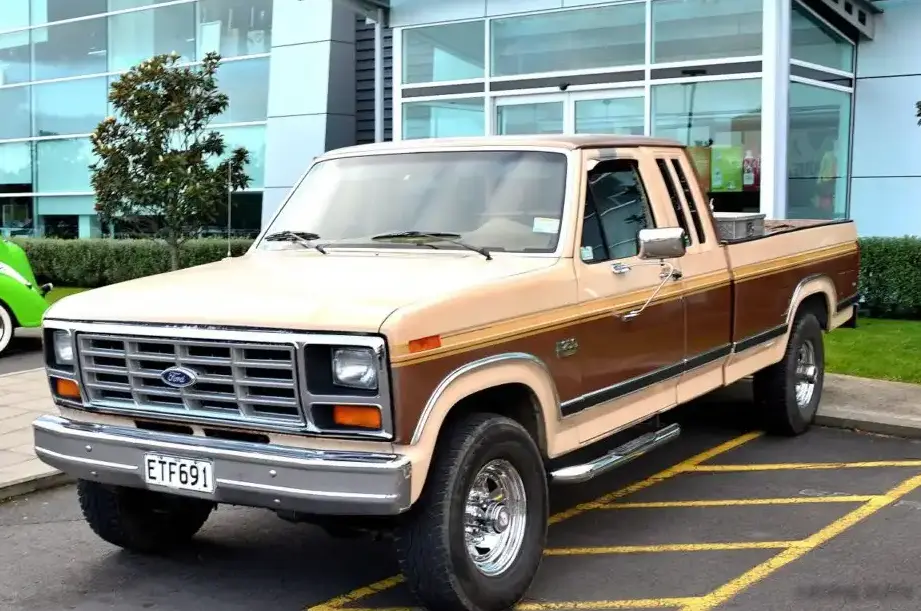
The Ford F-Series F-250 VII SuperCab, equipped with the 5.8-liter V8 engine producing 150 horsepower and a four-wheel-drive (4×4) drivetrain, was a significant offering in the American heavy-duty pickup truck market from 1983 to 1985. This variant occupied a middle ground within the F-250 lineup, providing a balance between capability and affordability. It was part of the seventh generation of the F-Series (1980-1986), a generation known for its robust construction and improvements in comfort compared to its predecessors. The SuperCab configuration offered extended passenger space, making it a popular choice for families and work crews.
Powertrain & Engine Architecture
The heart of this F-250 variant was the 5.8-liter (351 cubic inch) Ford Windsor V8 engine. This engine, a staple of Ford trucks for many years, was known for its durability and relatively simple design. The 1983-1985 iteration featured multi-port fuel injection, a significant upgrade from the carburetor systems used in earlier models. This improved fuel efficiency and throttle response. The engine utilized a cast iron block and cylinder heads, contributing to its robustness. The 5.8L V8 produced 150 horsepower and 280 lb-ft of torque. The four-speed manual transmission was the standard offering, providing direct control over the engine’s power. The transmission was chosen for its strength and reliability, essential for heavy-duty truck applications. The 4×4 system employed a transfer case allowing the driver to switch between two-wheel drive and four-wheel drive, with a low-range gear for increased torque in challenging off-road conditions. The Windsor engine’s design prioritized low-end torque, making it well-suited for the demands of truck work. The multi-port fuel injection system, while a step forward, was relatively simple compared to later electronic fuel injection systems, contributing to its reliability.
Driving Characteristics
The F-250 with the 5.8L V8 and manual transmission offered a work-oriented driving experience. While not a performance truck, the engine provided adequate power for hauling and towing. The manual transmission allowed for precise gear selection, maximizing engine braking on descents and providing control when navigating difficult terrain. The 4×4 system delivered confident traction in slippery conditions. Compared to the larger 6.9L diesel engine option, the 5.8L V8 was noticeably less powerful, especially when fully loaded. However, it was lighter and more responsive at lower speeds. Compared to the 302 cubic inch V8, the 5.8L offered a substantial increase in torque, making it better suited for heavier tasks. The gear ratios in the four-speed manual were optimized for towing and hauling, prioritizing low-end grunt over high-speed acceleration. Steering felt relatively heavy, typical of trucks of this era, but provided good feedback. The suspension, while robust, offered a firm ride, especially when unladen.
Equipment & Trim Levels
The F-250 SuperCab in this configuration typically came with a fairly basic level of equipment. Standard features included a vinyl bench seat, basic instrumentation (speedometer, fuel gauge, temperature gauge), and a simple AM radio. The SuperCab configuration added extra rear seating, increasing passenger capacity. Optional extras included air conditioning, a more powerful radio, upgraded interior trim, and various towing packages. The trim level was generally considered a step up from the base F-150 models but below the more luxurious F-350 trims. The SuperCab body style was a popular upgrade, offering a compromise between the practicality of a standard cab and the space of a crew cab. The interior materials were durable but utilitarian, reflecting the truck’s intended purpose. Few “luxury” options were available, focusing instead on functional upgrades.
Chassis & Braking
The F-250 chassis was built for durability and strength. It featured a heavy-duty frame and robust suspension components. The front suspension utilized independent coil springs and a transverse stabilizer bar, providing a relatively comfortable ride for a heavy-duty truck. The rear suspension employed leaf springs and a transverse stabilizer bar. Braking was accomplished with front disc brakes and rear drum brakes. Power steering was standard, making maneuvering the large truck easier. The tires, typically 235/85R16.5, were designed for both on-road and off-road use, providing good traction in a variety of conditions. The frame was fully boxed for increased rigidity, and the suspension was designed to handle heavy loads without significant sag. The drum brakes on the rear were adequate for most applications, but could fade under prolonged heavy use.
Market Reception & Comparison
The F-250 with the 5.8L V8 and manual transmission was well-received by buyers who needed a capable and reliable work truck. Critics praised its durability and straightforward design. However, some noted that the engine lacked the power of the diesel options. Fuel economy was typical for a truck of its size and era, averaging around 12-15 miles per gallon. Compared to the 6.9L diesel, the 5.8L V8 was less expensive to purchase and maintain, but it offered significantly less towing capacity. The 5.8L was also considered more reliable than some of the early electronic fuel injection systems used in other vehicles of the time. It represented a good value proposition for buyers who didn’t require the ultimate in towing power but still needed a robust and dependable truck.
Legacy
The 1983-1985 Ford F-250 with the 5.8L V8 and manual transmission remains a popular choice among classic truck enthusiasts. The 5.8L Windsor engine is known for its longevity and relatively easy maintenance. Parts availability is generally good, making it a practical choice for restoration projects. These trucks are often sought after for their ruggedness and simplicity. While not as collectible as some of the more rare or high-performance F-Series models, the F-250 5.8L represents a solid and dependable workhorse from a bygone era of American truck manufacturing. Today, well-maintained examples command reasonable prices in the used car market, appealing to those seeking a classic truck for work or recreation. The simplicity of the engine and drivetrain makes it relatively easy for home mechanics to maintain and repair, contributing to its enduring appeal.