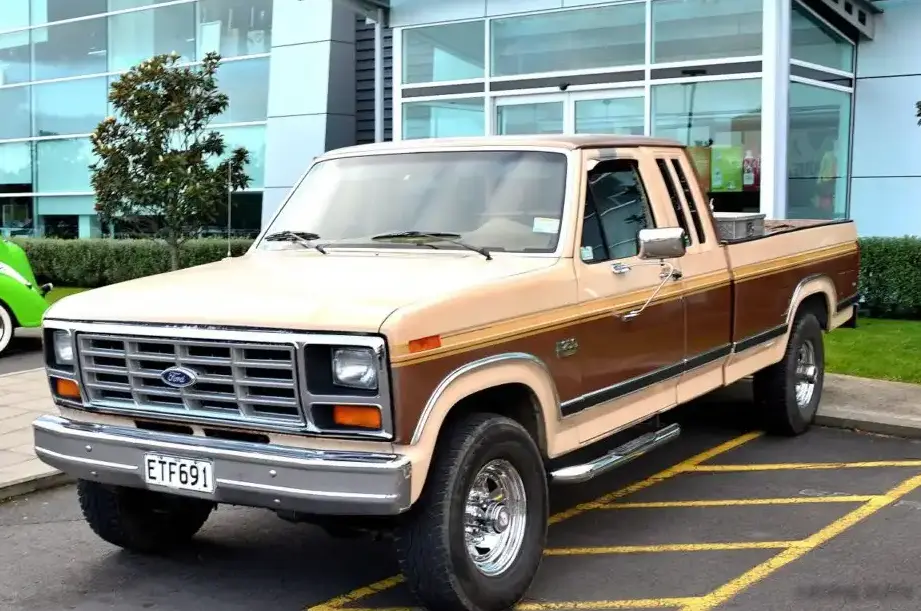
The Ford F-Series F-250 VII SuperCab, specifically equipped with the 5.8-liter V8 engine producing 150 horsepower and paired with a four-wheel-drive system and automatic transmission, was a mainstay of Ford’s heavy-duty truck lineup from 1983 to 1985. This variant occupied a middle ground within the F-250 range, offering a balance between capability and affordability. It was part of the seventh generation of the F-Series (1980-1986), known for its squared-off styling and increased interior space compared to previous generations. The SuperCab configuration, featuring an extended cab, provided additional seating and storage, making it a popular choice for families and work crews.
Technical Specifications
| Brand | Ford |
| Model | F-Series F-250 |
| Generation | F-Series F-250 VII SuperCab |
| Type (Engine) | 5.8 V8 (150 Hp) 4×4 Automatic |
| Start of production | 1983 |
| End of production | 1985 |
| Powertrain Architecture | Internal Combustion engine |
| Body type | Pick-up |
| Seats | 5-6 |
| Doors | 2 |
| Fuel Type | Petrol (Gasoline) |
| Power | 150 Hp |
| Power per litre | 26.1 Hp/l |
| Torque | 380 Nm / 280.27 lb.-ft. |
| Engine layout | Front, Longitudinal |
| Engine displacement | 5752 cm3 / 351.01 cu. in. |
| Number of cylinders | 8 |
| Engine configuration | V-engine |
| Fuel injection system | Multi-port manifold injection |
| Engine aspiration | Naturally aspirated engine |
| Max. weight | 3719 kg / 8198.99 lbs. |
| Fuel tank capacity | 72-144 l / 19.02 – 38.04 US gal | 15.84 – 31.68 UK gal |
| Length | 5849 mm / 230.28 in. |
| Height | 1910 mm / 75.2 in. |
| Wheelbase | 3937 mm / 155 in. |
| Minimum turning circle | 16.5 m / 54.13 ft. |
| Wading depth | 832 mm / 32.76 in. |
| Drivetrain Architecture | The Internal combustion engine (ICE) drives the rear wheels permanently, and the front wheels are driven through an electrically or mechanically operated clutch if necessary. |
| Drive wheel | All wheel drive (4×4) |
| Number of gears and type of gearbox | automatic transmission SelectShift |
| Front suspension | Independent coil spring, Transverse stabilizer |
| Rear suspension | Transverse stabilizer |
| Power steering | Electric Steering |
| Tires size | 235/85 R16.5 |
| Wheel rims size | 6J x 16.5 |
Powertrain & Engine Architecture
The heart of this F-250 variant was the 5.8-liter (351 cubic inch) Ford Windsor V8 engine. This engine, a staple of Ford trucks for decades, featured a cast iron block and cylinder heads, and a two-barrel carburetor. The 150 horsepower output was achieved through a relatively conservative compression ratio and a focus on durability rather than outright performance. The multi-port fuel injection system, while a step up from carburation, was still relatively basic by modern standards. The engine’s valvetrain utilized a hydraulic lifter camshaft, reducing the need for frequent valve adjustments. The “SelectShift” automatic transmission was a three-speed unit, designed for robust operation and ease of use. It was electronically controlled, offering smoother shifts compared to earlier iterations.
Driving Characteristics
The 150 hp 5.8L V8 and automatic transmission combination in the F-250 provided adequate, but not exhilarating, performance. Acceleration was modest, particularly when hauling heavy loads or navigating hilly terrain. The automatic transmission’s gear ratios were optimized for towing and hauling, prioritizing low-end torque over quick acceleration. Compared to the available 6.9-liter diesel engine, the 5.8L V8 offered significantly less torque, making it less suitable for extremely demanding tasks. However, it was more responsive than the diesel at higher RPMs. Compared to a manual transmission equipped F-250, the automatic offered greater convenience, but at the expense of some fuel efficiency and driver control. The 4×4 system provided enhanced traction in off-road conditions and inclement weather.
Equipment & Trim Levels
The F-250 SuperCab in this configuration typically came standard with features like a basic AM radio, vinyl upholstery, and a manually adjustable steering column. The SuperCab configuration added a rear bench seat, increasing passenger capacity. Optional extras included air conditioning, a more powerful stereo system, upgraded interior trim, and various towing packages. The trim level was generally considered a mid-range offering, positioned above the base models but below the more luxurious XLT trims. The SuperCab body style was often chosen by buyers who needed the extra space for passengers or cargo, but didn’t require the full luxury of the higher trim levels.
Chassis & Braking
The F-250’s chassis was a traditional body-on-frame construction, providing a robust and durable platform. The front suspension utilized independent coil springs and a transverse stabilizer bar, offering a reasonably comfortable ride. The rear suspension employed leaf springs with a transverse stabilizer bar, designed to handle heavy loads. Braking was accomplished via power-assisted disc brakes on the front wheels and drum brakes on the rear. The drum brakes on the rear were a cost-saving measure, and limited the overall braking performance compared to a full disc brake setup. The steering was power-assisted, making it easier to maneuver the large truck.
Market Reception & Comparison
The F-250 with the 5.8L V8 and automatic transmission was generally well-received by buyers who needed a capable and reliable work truck. Critics noted its adequate power and comfortable ride, but also pointed out its relatively low fuel economy compared to smaller trucks. Compared to the diesel-powered F-250s, the 5.8L V8 offered lower initial cost and simpler maintenance, but significantly less towing capacity and fuel efficiency. The automatic transmission was praised for its ease of use, but some reviewers preferred the greater control offered by a manual transmission. Overall, this variant represented a good value for buyers who prioritized affordability and convenience over outright performance.
Legacy
The 5.8L Windsor V8 engine, in general, is known for its durability and relative simplicity, making it a popular choice for engine swaps and restorations. The automatic transmission, while not as sophisticated as modern units, is also known for its robustness. Today, these F-250s are often found in the hands of collectors and enthusiasts who appreciate their classic styling and rugged construction. While not the most powerful or fuel-efficient option in the F-250 lineup, the 5.8L V8 automatic remains a reliable and capable truck, and a testament to Ford’s long-standing tradition of building tough and dependable work vehicles. Parts availability is generally good, making maintenance and repairs relatively straightforward. The SuperCab configuration continues to be a desirable feature, offering a rare blend of utility and space.