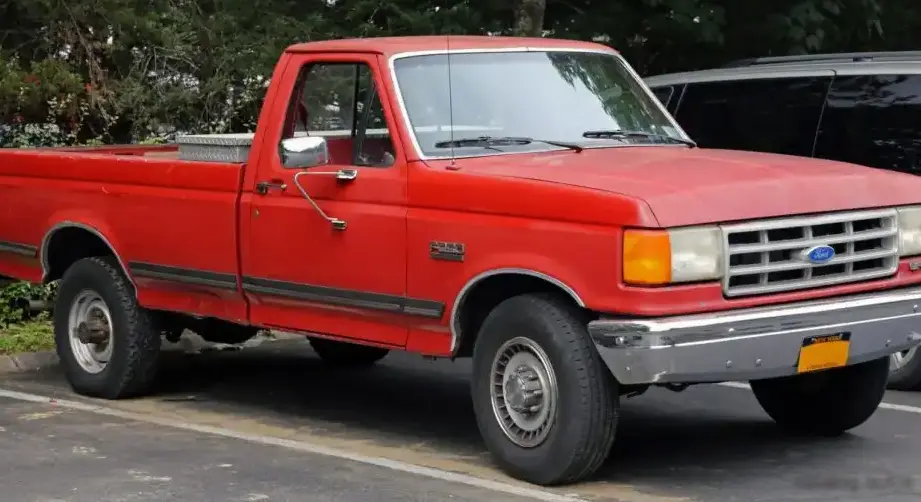
The Ford F-Series F-250 VIII Regular Cab, equipped with the 5.8-liter V8 Windsor engine producing 210 horsepower, represents a significant iteration in Ford’s long-running and immensely popular F-Series line of trucks. Produced from 1986 through 1988, this particular configuration occupied a middle ground within the F-250 range, offering a balance between capability and affordability for buyers needing more than the F-150 could provide, but not requiring the full-duty capacity of the F-350. This generation (VIII) marked a period of refinement for the F-Series, building upon the robust foundations laid by previous models while incorporating incremental improvements in comfort and convenience.
Technical Specifications
| Brand | Ford |
| Model | F-Series F-250 |
| Generation | F-Series F-250 VIII Regular Cab |
| Engine Type | 5.8 V8 Windsor (210 Hp) |
| Production Years | 1986 – 1988 |
| Powertrain Architecture | Internal Combustion Engine |
| Body Type | Pick-up |
| Seats | 3 |
| Doors | 2 |
| Fuel Type | Petrol (Gasoline) |
| Power | 210 Hp |
| Power per Liter | 36.5 Hp/l |
| Torque | 414 Nm / 305.35 lb.-ft. |
| Engine Layout | Front, Longitudinal |
| Engine Displacement | 5752 cm3 / 351.01 cu. in. |
| Number of Cylinders | 8 |
| Engine Configuration | V-engine |
| Fuel Injection System | Carburettor |
| Engine Aspiration | Naturally Aspirated |
| Max. Weight | 3493 kg / 7700.75 lbs. |
| Fuel Tank Capacity | 72 l / 19.02 US gal | 15.84 UK gal |
| Length | 5339 mm / 210.2 in. |
| Width | 1778 mm / 70 in. |
| Height | 1854 mm / 72.99 in. |
| Wheelbase | 3378 mm / 132.99 in. |
| Wading Depth | 826 mm / 32.52 in. |
| Drivetrain | Rear Wheel Drive |
| Gearbox | 4 gears, manual transmission |
| Front Suspension | Independent coil spring |
| Front Brakes | Disc |
| Rear Brakes | Drum |
| Power Steering | Electric Steering |
| Tire Size | 215/85 R16; 235/85 R16 |
| Wheel Rim Size | 6J x 16 |
Powertrain & Engine Architecture
The heart of this F-250 variant is the 5.8-liter (351 cubic inch) Windsor V8 engine. This engine, a Ford mainstay for decades, is a traditional pushrod design featuring a cast iron block and cylinder heads. The 5.8L Windsor utilized a two-barrel carburetor for fuel delivery, a relatively simple system compared to the fuel injection systems becoming more prevalent in the late 1980s. While not the most technologically advanced engine of its time, the Windsor was known for its durability and relatively easy maintenance. The engine produced 210 horsepower and 305 lb-ft of torque, providing adequate power for hauling and towing duties. The standard transmission for this configuration was a four-speed manual, although a three-speed automatic transmission was also available as an option. The engine’s longitudinal front-mounted layout contributed to a balanced weight distribution, enhancing handling characteristics.
Driving Characteristics
The F-250 with the 5.8L Windsor and manual transmission offered a work-oriented driving experience. Acceleration was modest, but the engine delivered a broad torque curve, making it well-suited for tasks like towing trailers or hauling heavy loads. The four-speed manual transmission provided good control over the engine’s power, allowing drivers to select the appropriate gear for the task at hand. Compared to the optional automatic transmission, the manual offered better fuel economy and a more engaging driving experience. However, it lacked the convenience of an automatic, particularly in stop-and-go traffic. Compared to the larger 6.9L diesel engine option, the 5.8L Windsor was significantly less powerful and offered lower towing capacity, but it was also lighter and more responsive in everyday driving situations. The ride quality, typical of trucks of this era, was firm, prioritizing load-carrying capacity over comfort.
Equipment & Trim Levels
The F-250 VIII Regular Cab, in its base configuration with the 5.8L engine, was fairly spartan. Standard features typically included a basic vinyl bench seat, a simple dashboard with analog gauges, and manual windows and locks. Air conditioning and an upgraded AM/FM radio were common optional extras. Higher trim levels, such as the XLT, added features like cloth upholstery, more comprehensive instrumentation, and exterior trim enhancements. The Regular Cab configuration offered a single row of seating, prioritizing functionality over passenger space. The interior was designed for durability and ease of cleaning, reflecting the truck’s intended use as a work vehicle.
Chassis & Braking
The F-250 VIII utilized a body-on-frame construction, providing a robust and durable chassis. The front suspension featured independent coil springs, while the rear suspension employed leaf springs. This setup provided a good balance between ride comfort and load-carrying capacity. Braking duties were handled by disc brakes at the front and drum brakes at the rear. Power steering was standard, making the truck easier to maneuver, especially at low speeds. Tire sizes of 215/85 R16 or 235/85 R16 were common, providing adequate traction for a variety of road conditions. The truck’s relatively simple suspension and braking systems were designed for reliability and ease of maintenance.
Market Reception & Comparison
The F-250 with the 5.8L Windsor engine was generally well-received by buyers who needed a capable and affordable work truck. Critics praised the engine’s durability and the truck’s overall robustness. However, some noted the engine’s relatively low power output compared to larger engines and the lack of modern features. Fuel economy was also a concern, as the carbureted V8 was not particularly efficient. Compared to the diesel-powered F-250 models, the 5.8L Windsor offered lower operating costs (due to the lower price of gasoline compared to diesel fuel) but significantly less torque and towing capacity. The automatic transmission option, while convenient, further reduced fuel economy and performance.
Legacy
The Ford F-250 VIII Regular Cab with the 5.8L Windsor engine remains a popular choice among classic truck enthusiasts and those seeking a reliable and affordable work truck. The 5.8L Windsor engine is known for its longevity and relatively simple maintenance requirements, making it a relatively easy engine to keep running. Parts availability is generally good, although some components may be becoming increasingly difficult to find. Today, these trucks are often found in use as farm vehicles, work trucks, or as restoration projects. While not the most powerful or technologically advanced truck of its era, the F-250 with the 5.8L Windsor represents a solid and dependable workhorse that has earned a lasting place in Ford’s history.