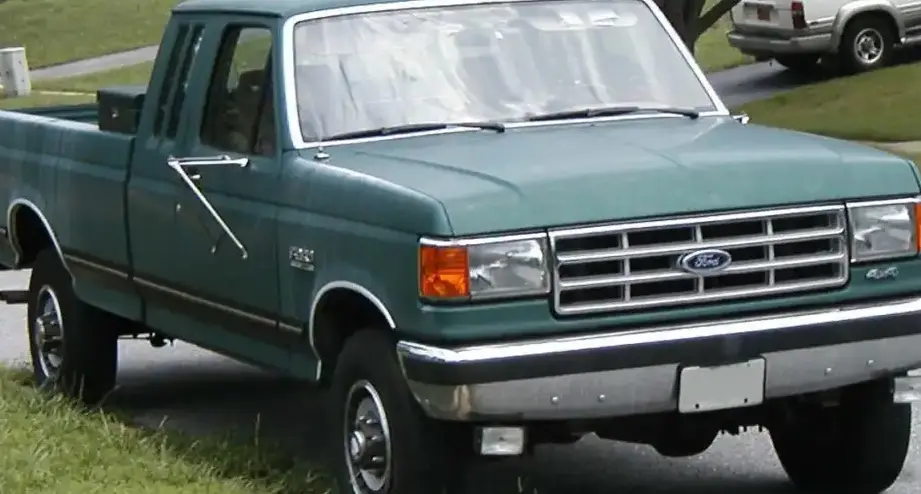
The Ford F-250 VIII SuperCab HD, equipped with the 6.9L V8 Indirect Injection Diesel (IDI) engine and an automatic transmission, represented a significant workhorse offering from Ford during its 1986-1987 production run. This variant occupied a crucial position in the F-Series lineup, bridging the gap between the lighter-duty F-150 and the heavier-duty F-350. It was designed for buyers needing substantial towing and hauling capacity, but who didn’t require the ultimate capabilities of the F-350. The “SuperCab” designation indicated an extended cab configuration, offering limited rear seating and increased interior space compared to the standard cab models. This generation (VIII) of the F-Series, produced from 1980-1986, saw significant updates to styling and features, solidifying the F-Series’ position as America’s best-selling truck.
Technical Specifications
| Brand | Ford |
| Model | F-Series F-250 |
| Generation | F-Series F-250 VIII SuperCab HD |
| Type (Engine) | 6.9 V8 IDI (170 Hp) Automatic |
| Start of production | 1986 |
| End of production | 1987 |
| Powertrain Architecture | Internal Combustion engine |
| Body type | Pick-up |
| Seats | 6 |
| Doors | 2 |
| Fuel Type | Diesel |
| Power | 170 Hp |
| Power per litre | 24.7 Hp/l |
| Torque | 427 Nm / 314.94 lb.-ft. |
| Engine layout | Front, Longitudinal |
| Engine displacement | 6883 cm3 / 420.03 cu. in. |
| Number of cylinders | 8 |
| Engine configuration | V-engine |
| Fuel injection system | Precombustion chamber injection |
| Engine aspiration | Naturally aspirated engine |
| Engine oil capacity | 9.3 l / 9.83 US qt | 8.18 UK qt |
| Coolant | 29 l / 30.64 US qt | 25.52 UK qt |
| Max. weight | 3992 kg / 8800.85 lbs. |
| Fuel tank capacity | 144 l / 38.04 US gal | 31.68 UK gal |
| Length | 5898 mm / 232.2 in. |
| Width | 1778 mm / 70 in. |
| Height | 1895 mm / 74.61 in. |
| Wheelbase | 3937 mm / 155 in. |
| Wading depth | 869 mm / 34.21 in. |
| Drivetrain Architecture | Rear wheel drive. Internal Combustion engine. |
| Drive wheel | Rear wheel drive |
| Number of gears and type of gearbox | automatic transmission SelectShift |
| Front suspension | Independent coil spring |
| Front brakes | Disc |
| Rear brakes | Drum |
| Power steering | Electric Steering |
| Tires size | 235/85 R16 |
| Wheel rims size | 16 |
Powertrain & Engine Architecture
The heart of this F-250 variant was the 6.9L IDI V8 diesel engine. This engine, introduced in 1983, was a significant departure from Ford’s previous diesel offerings. The “IDI” designation stands for Indirect Injection, meaning the fuel was pre-combusted in a small chamber before being injected into the main cylinder. This design reduced engine noise and improved cold-starting performance, crucial for a work truck. The engine utilized a mechanical fuel injection pump, a robust and reliable system, though less precise than later electronic systems. The V8 configuration provided a relatively smooth power delivery for a diesel engine of the era. The automatic transmission was a Ford SelectShift, a three-speed unit designed to handle the engine’s torque. While not known for its quick shifts, it was durable and well-suited for heavy-duty applications. The transmission was electronically controlled, a relatively new feature for trucks at the time.
Driving Characteristics
The 170 horsepower and 315 lb-ft of torque delivered by the 6.9L IDI engine provided adequate, but not exhilarating, performance. Acceleration was modest, and passing maneuvers required careful planning. The automatic transmission’s gear ratios were optimized for towing and hauling, prioritizing low-end grunt over outright speed. Compared to the gasoline-powered F-250s, the diesel offered significantly better fuel economy, especially under load. However, it lacked the responsiveness of the gasoline engines. Compared to later, more powerful diesel variants (like the 7.3L Powerstroke), the 6.9L felt underpowered, particularly when towing heavy loads uphill. The three-speed automatic, while reliable, also contributed to a less engaging driving experience than a manual transmission.
Equipment & Trim Levels
The F-250 SuperCab HD with the 6.9L diesel and automatic transmission typically fell into the mid-range of the F-250 lineup. Standard features included a basic interior with vinyl upholstery, a functional dashboard layout, and manual windows and locks. The SuperCab configuration added a small rear seat, suitable for occasional passengers. Optional extras included air conditioning, an upgraded sound system, power windows and locks, and a tilt steering wheel. Higher trim levels, such as the XLT, offered more luxurious interior appointments and additional features. The exterior typically featured basic chrome trim and steel wheels. The focus was on functionality and durability rather than luxury.
Chassis & Braking
The F-250 chassis was built for ruggedness. It featured a heavy-duty frame and a robust suspension system designed to withstand significant loads. The front suspension utilized coil springs, providing a comfortable ride, while the rear suspension employed leaf springs, optimized for load-carrying capacity. Braking duties were handled by disc brakes on the front axle and drum brakes on the rear. Power steering was standard, making maneuvering the large truck easier. The tires, typically 235/85R16, were designed for both on-road and off-road use, providing good traction in a variety of conditions.
Market Reception & Comparison
The 6.9L diesel F-250 was generally well-received by buyers who needed a capable work truck with good fuel economy. Critics praised its durability and reliability, but noted its lack of power compared to gasoline engines and later diesel variants. Compared to the F-150, the F-250 offered significantly greater towing and hauling capacity. Compared to the F-350, it provided a balance between capability and affordability. Fuel economy was a key selling point, particularly for those who used their trucks for long-distance hauling. However, the IDI engine’s relatively low power output and the three-speed automatic transmission limited its appeal to buyers who prioritized performance.
Legacy
The 6.9L IDI diesel engine, while superseded by more powerful and technologically advanced engines, remains a respected powerplant among diesel enthusiasts. Its simplicity and durability make it relatively easy to maintain and repair. Many examples are still in service today, a testament to its robust design. The F-250 SuperCab HD with this engine and transmission combination has become a popular choice for restoration projects and classic truck enthusiasts. Parts availability is generally good, and a strong aftermarket supports these vehicles. While not the fastest or most luxurious truck of its era, the 1986-1987 Ford F-250 SuperCab HD 6.9L IDI V8 Automatic represents a solid and dependable workhorse that continues to earn its keep decades after it rolled off the assembly line.