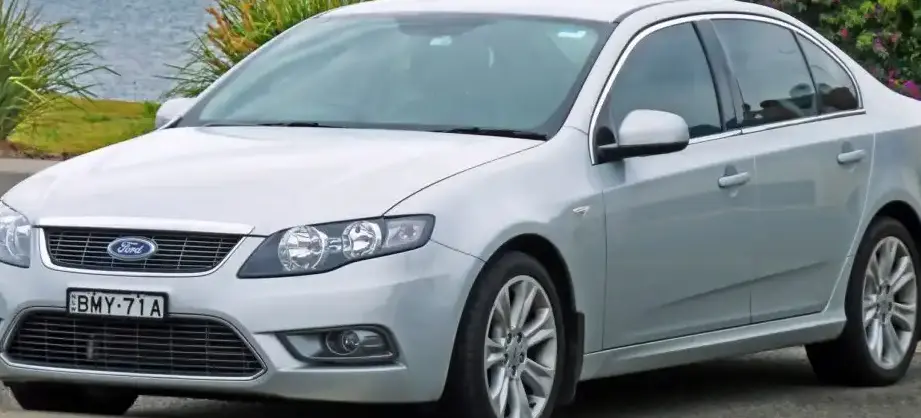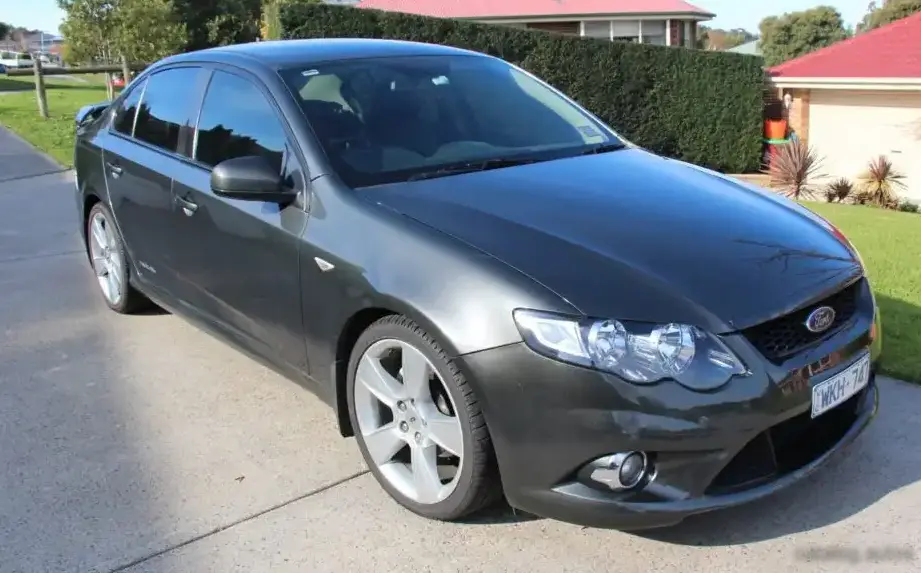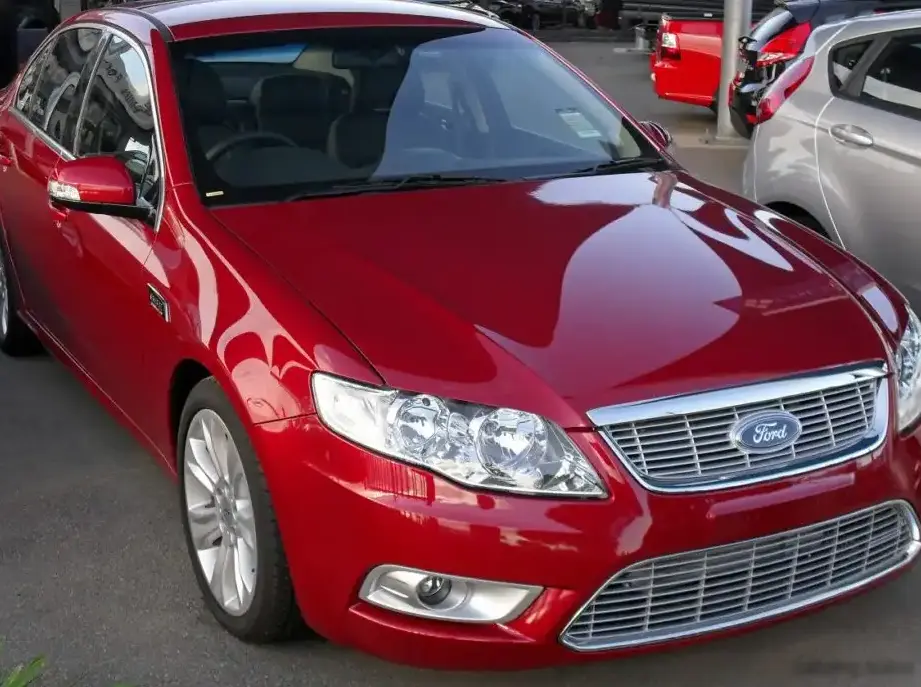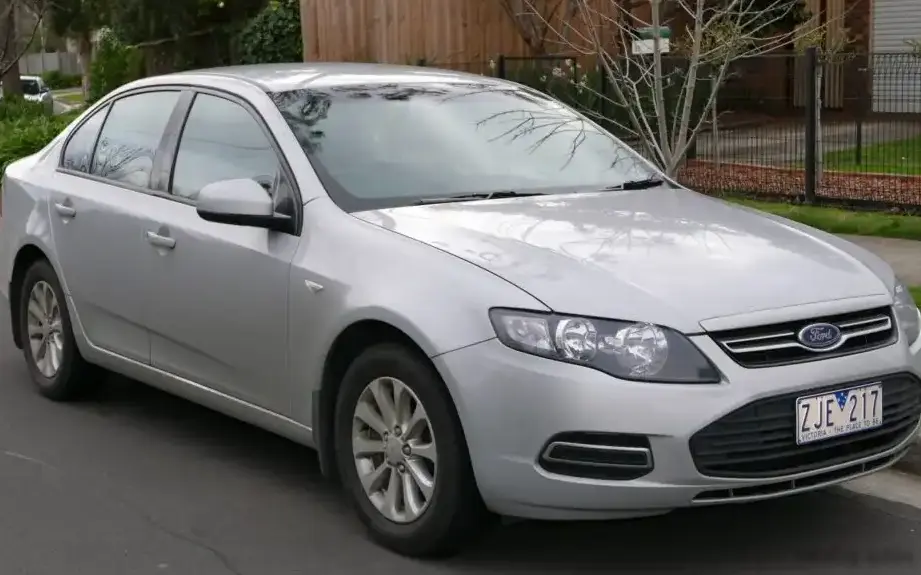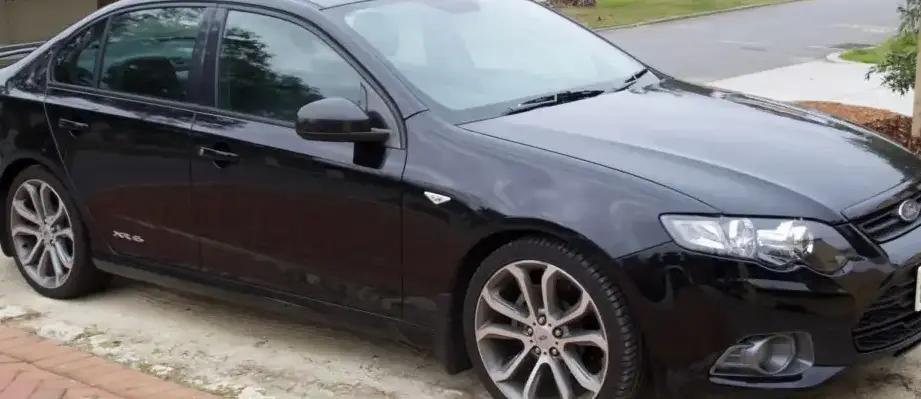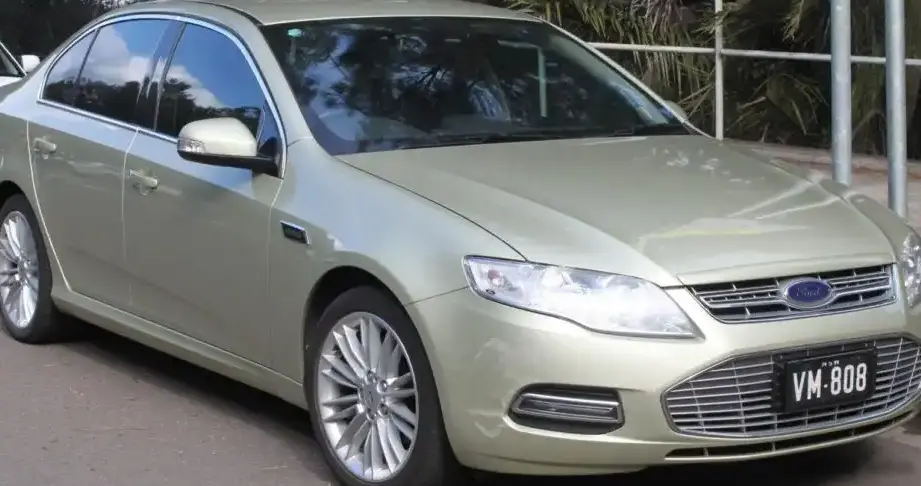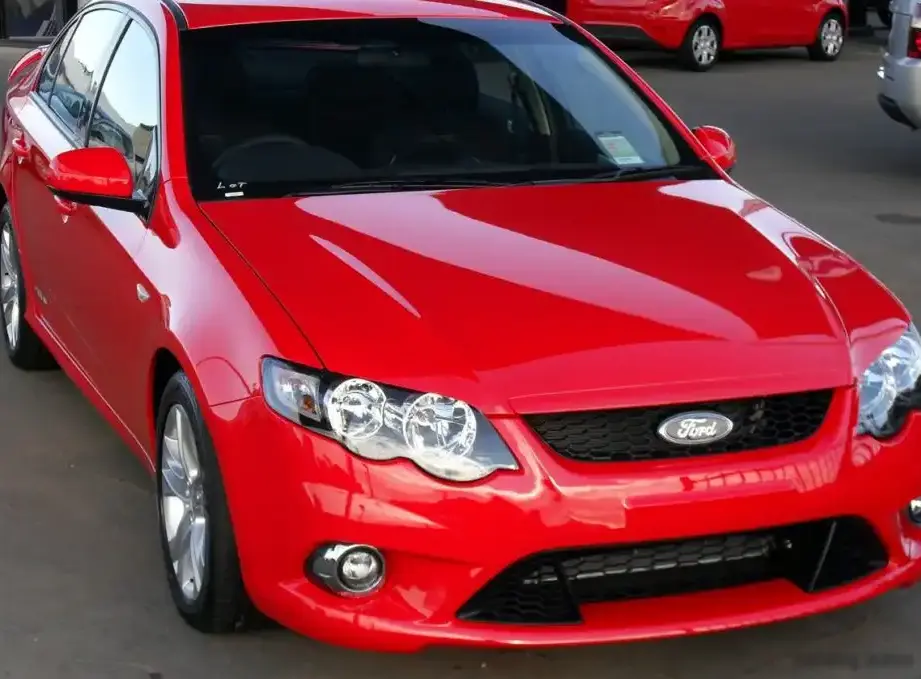
The Ford Falcon FG 4.0 DI-VCT, produced between 2008 and 2011, represented a significant evolution of Australia’s iconic rear-wheel-drive family sedan. This variant, powered by the Barra 195 inline-six engine producing 265 horsepower, occupied a key position in the FG lineup, offering a balance of performance and fuel efficiency. It was positioned as a step up from the base models, appealing to buyers seeking more power without the expense of the high-performance XR6 Turbo or the luxury of the G6. The FG series itself was a heavily revised version of the BA/BF Falcon, featuring updated styling, improved interior refinement, and a focus on enhancing the driving experience.
Technical Specifications
| Brand | Ford |
| Model | Falcon |
| Generation | Falcon (FG) |
| Type (Engine) | 4.0 DI-VCT (265 Hp) |
| Start of production | 2008 |
| End of production | 2011 |
| Powertrain Architecture | Internal Combustion engine |
| Body type | Sedan |
| Seats | 5 |
| Doors | 4 |
| Fuel consumption (urban) | 16 l/100 km (14.7 US mpg, 17.7 UK mpg, 6.3 km/l) |
| Fuel consumption (extra urban) | 8.1 l/100 km (29 US mpg, 34.9 UK mpg, 12.3 km/l) |
| Fuel consumption (combined) | 11.1 l/100 km (21.2 US mpg, 25.4 UK mpg, 9 km/l) |
| Fuel Type | Petrol (Gasoline) |
| Power | 265 Hp @ 6000 rpm |
| Power per litre | 66.5 Hp/l |
| Torque | 391 Nm @ 3250 rpm (288.39 lb.-ft. @ 3250 rpm) |
| Engine layout | Front, Longitudinal |
| Engine Model/Code | Barra 195 |
| Engine displacement | 3984 cm3 (243.12 cu. in.) |
| Number of cylinders | 6 |
| Engine configuration | Inline |
| Cylinder Bore | 92.25 mm (3.63 in.) |
| Piston Stroke | 99.31 mm (3.91 in.) |
| Compression ratio | 10.3:1 |
| Number of valves per cylinder | 4 |
| Fuel injection system | Multi-port manifold injection |
| Engine aspiration | Naturally aspirated engine |
| Valvetrain | DOHC |
| Trunk (boot) space (minimum) | 535 l (18.89 cu. ft.) |
| Fuel tank capacity | 68 l (17.96 US gal | 14.96 UK gal) |
| Permitted trailer load with brakes (12%) | 1200 kg (2645.55 lbs.) |
| Length | 4970 mm (195.67 in.) |
| Width | 1868 mm (73.54 in.) |
| Width including mirrors | 2100 mm (82.68 in.) |
| Height | 1433 mm (56.42 in.) |
| Wheelbase | 2838 mm (111.73 in.) |
| Front track | 1583 mm (62.32 in.) |
| Rear (Back) track | 1598 mm (62.91 in.) |
| Front overhang | 954 mm (37.56 in.) |
| Rear overhang | 1179 mm (46.42 in.) |
| Minimum turning circle (turning diameter) | 11 m (36.09 ft.) |
| Drivetrain Architecture | Rear wheel drive |
| Drive wheel | Rear wheel drive |
| Number of gears and type of gearbox | 6 gears, manual transmission |
| Front suspension | Double wishbone |
| Rear suspension | Independent multi-link suspension |
| Front brakes | Ventilated discs |
| Rear brakes | Disc |
| Assisting systems | ABS (Anti-lock braking system) |
| Steering type | Steering rack and pinion |
| Power steering | Hydraulic Steering |
| Tires size | 245/45 R17; 245/40 R18; 245/35 R19 |
| Wheel rims size | 8J x 17; 8J x 18; 8J x 19 |
Powertrain & Engine Architecture
The heart of the Falcon FG 4.0 DI-VCT is the Barra 195 inline-six engine. This 4.0-liter (3984 cc) engine is a naturally aspirated powerplant featuring a double overhead camshaft (DOHC) valvetrain and multi-port fuel injection. The “DI-VCT” designation stands for Dual Independent Variable Camshaft Timing, a technology that optimizes valve timing for improved performance and fuel efficiency across the engine’s operating range. The Barra engine family is renowned for its robustness and relatively simple design, making it a favorite among enthusiasts for its potential for modification. The 6-speed manual transmission was standard, offering precise gear changes and a more engaging driving experience. The engine produces 265 horsepower at 6000 rpm and 391 Nm (288.39 lb-ft) of torque at 3250 rpm.
Driving Characteristics
The 4.0-liter Barra engine, paired with the 6-speed manual transmission, provided a responsive and enjoyable driving experience. While not as overtly powerful as the turbocharged XR6, the 4.0 DI-VCT offered ample power for everyday driving and overtaking maneuvers. The engine’s torque curve was relatively flat, providing good pulling power throughout the rev range. The manual transmission allowed for precise control over gear selection, maximizing the engine’s potential. Compared to the automatic transmission options available in other Falcon FG models, the manual version offered a more direct connection to the engine and a sportier feel. The rear-wheel-drive configuration contributed to balanced handling and a predictable driving experience.
Equipment & Trim Levels
The Falcon FG 4.0 DI-VCT typically came equipped with a respectable level of standard features. These included air conditioning, power windows and mirrors, a basic audio system, and an anti-lock braking system (ABS). Interior upholstery was typically cloth, with options for leather upgrades available. Dashboard configuration was relatively straightforward, prioritizing functionality over excessive ornamentation. Optional extras included a sunroof, upgraded audio systems, and alloy wheels. The trim level generally sat between the base models and the more luxurious G6, offering a good balance of features and value.
Chassis & Braking
The Falcon FG utilized a robust chassis featuring double wishbone front suspension and an independent multi-link rear suspension. This suspension setup provided a comfortable ride while maintaining good handling characteristics. The braking system consisted of ventilated discs at the front and solid discs at the rear, providing adequate stopping power for the vehicle’s weight and performance. The steering was rack and pinion with hydraulic power assistance, offering precise and responsive steering feel. Tire sizes varied depending on the trim level, ranging from 245/45 R17 to 245/35 R19.
Market Reception & Comparison
The Falcon FG 4.0 DI-VCT was generally well-received by Australian motoring journalists and consumers. Critics praised the engine’s smooth power delivery and the improved refinement of the FG series. Fuel economy was considered reasonable for a large, naturally aspirated six-cylinder engine, averaging around 11.1 l/100 km (21.2 US mpg) in combined driving. Compared to the XR6 Turbo, the 4.0 DI-VCT offered a more linear power delivery and a less aggressive driving experience. Compared to the base models, it provided a significant performance upgrade. Reliability was generally good, although some owners reported minor issues with the fuel injection system and cooling system.
Legacy
The Ford Falcon FG 4.0 DI-VCT remains a popular choice among Australian car enthusiasts. The Barra 195 engine is highly regarded for its durability and potential for modification, and parts availability remains relatively good. The FG series as a whole is considered a high point in Australian automotive engineering, representing the culmination of decades of Falcon development. Today, well-maintained examples of the Falcon FG 4.0 DI-VCT are sought after by collectors and enthusiasts alike, representing a piece of Australian automotive history. The manual transmission variant, in particular, is highly prized for its engaging driving experience and relative rarity.