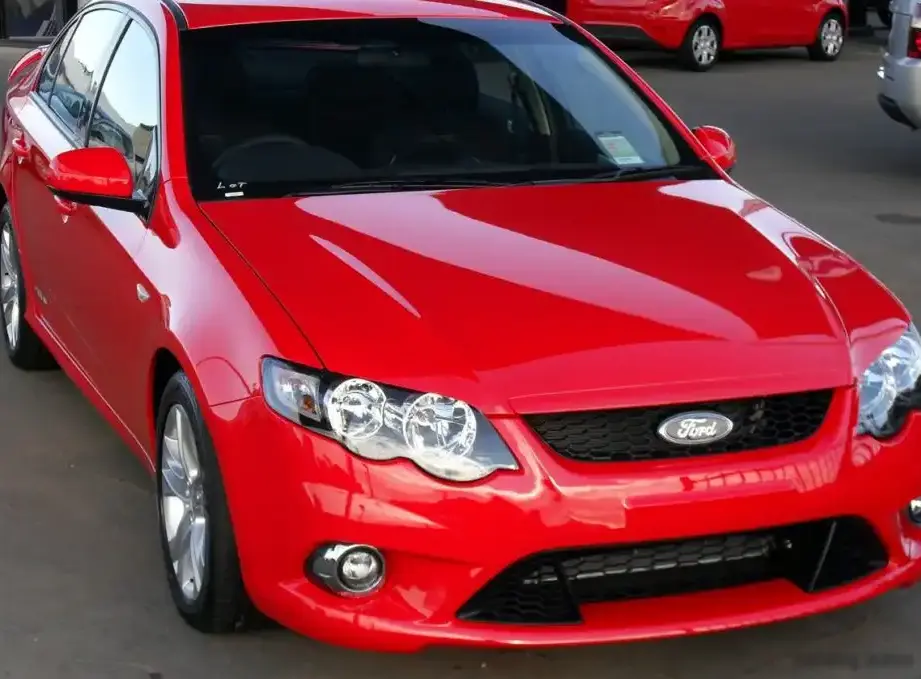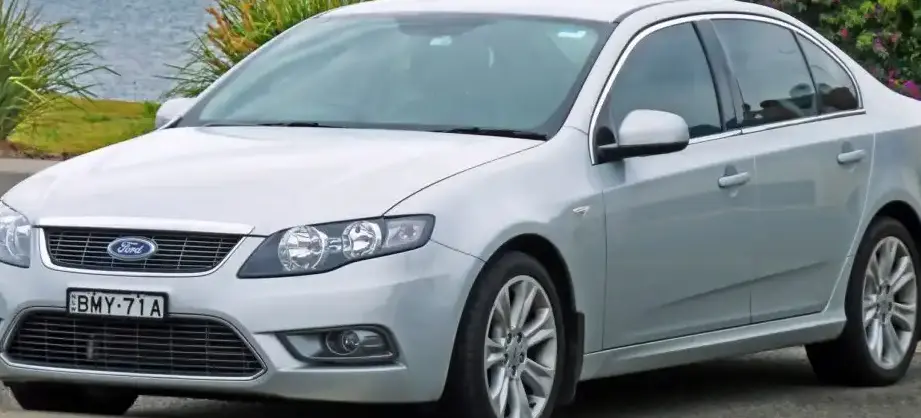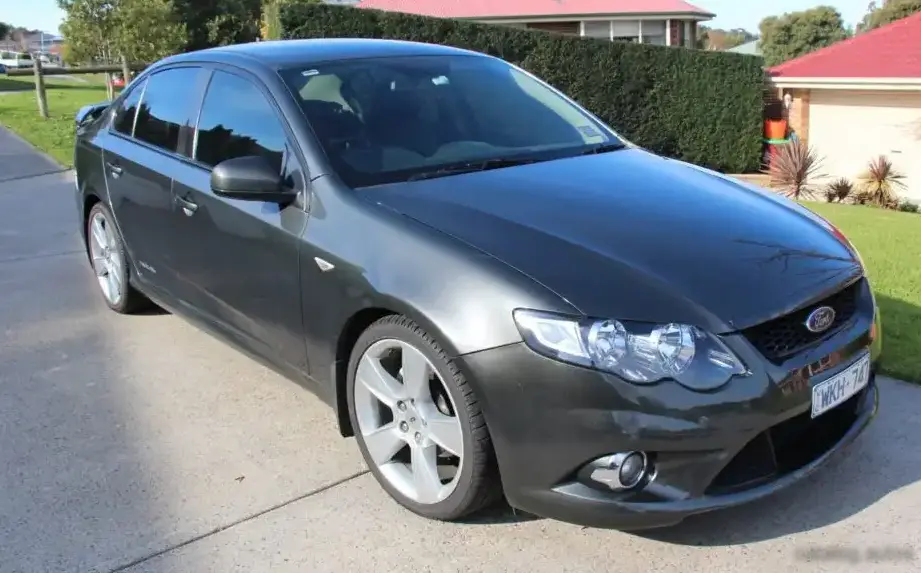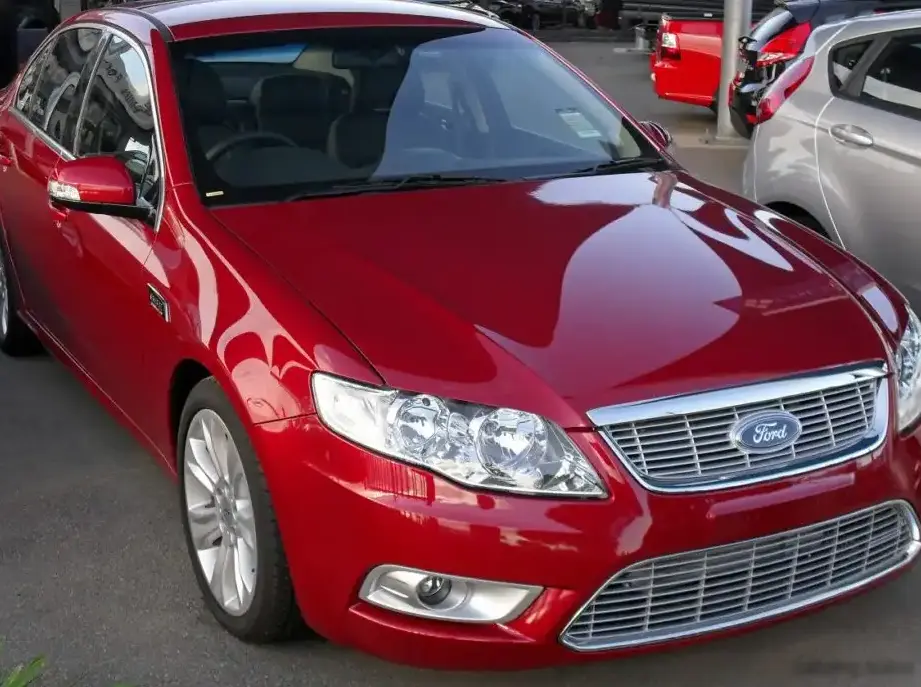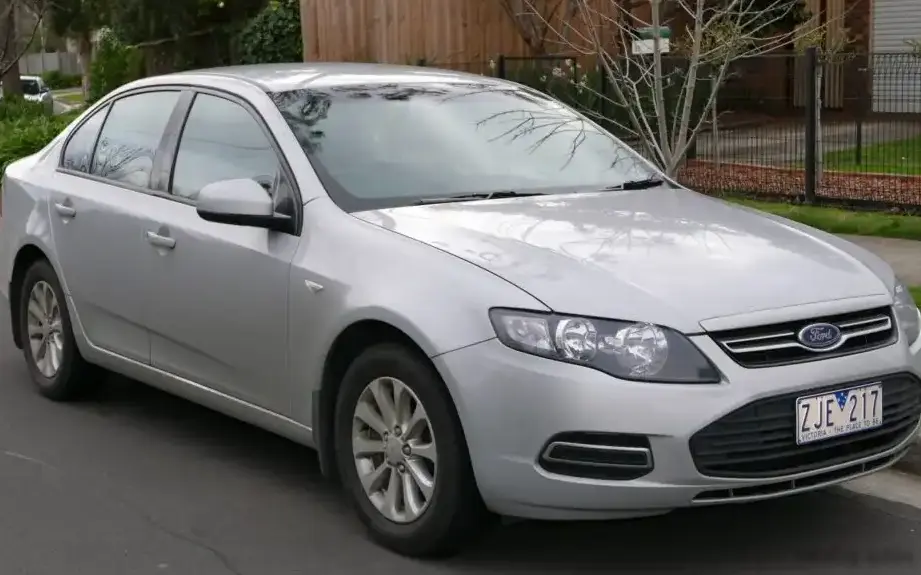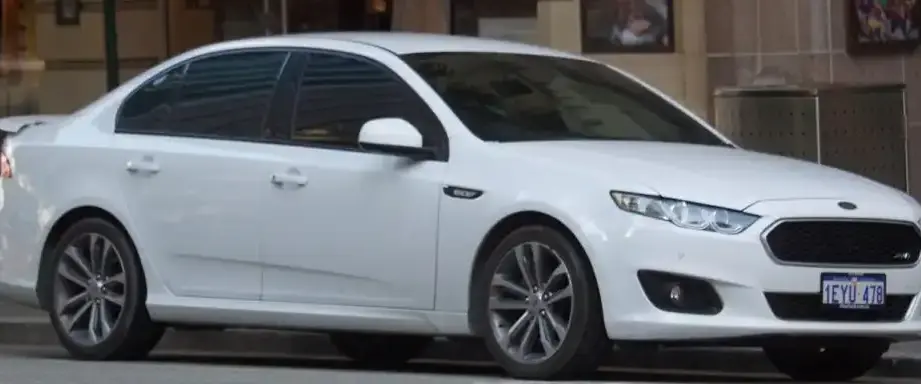
The Ford Falcon FG X 4.0 DI-VCT, produced between 2014 and 2016, represents the final iteration of the iconic Australian-designed and manufactured Falcon. This variant, powered by the Barra 195 4.0-liter inline-six engine producing 265 horsepower, served as a key offering in the FG X lineup, positioned as a balance between performance and fuel efficiency. It was a significant model as Ford Australia prepared to cease local manufacturing operations, marking the end of an era for Australian automotive production. The FG X series, built on the Falcon (FG) platform, aimed to deliver a refined driving experience and modern features while retaining the Falcon’s traditional rear-wheel-drive layout.
Technical Specifications
| Brand | Ford |
| Model | Falcon |
| Generation | Falcon (FG X) |
| Type (Engine) | 4.0 DI-VCT (265 Hp) |
| Start of production | 2014 |
| End of production | 2016 |
| Powertrain Architecture | Internal Combustion engine |
| Body type | Sedan |
| Seats | 5 |
| Doors | 4 |
| Fuel consumption (urban) | 15.8 l/100 km (14.9 US mpg, 17.9 UK mpg, 6.3 km/l) |
| Fuel consumption (extra urban) | 8.3 l/100 km (28.3 US mpg, 34 UK mpg, 12 km/l) |
| Fuel consumption (combined) | 11.1 l/100 km (21.2 US mpg, 25.4 UK mpg, 9 km/l) |
| Fuel Type | Petrol (Gasoline) |
| Power | 265 Hp @ 6000 rpm |
| Power per litre | 66.5 Hp/l |
| Torque | 391 Nm @ 3250 rpm (288.39 lb.-ft. @ 3250 rpm) |
| Engine layout | Front, Longitudinal |
| Engine Model/Code | Barra 195 |
| Engine displacement | 3983 cm3 (243.06 cu. in.) |
| Number of cylinders | 6 |
| Engine configuration | Inline |
| Cylinder Bore | 92.25 mm (3.63 in.) |
| Piston Stroke | 99.31 mm (3.91 in.) |
| Compression ratio | 10.3:1 |
| Number of valves per cylinder | 4 |
| Fuel injection system | Multi-port manifold injection |
| Engine aspiration | Naturally aspirated engine |
| Valvetrain | DOHC |
| Trunk (boot) space (minimum) | 535 l (18.89 cu. ft.) |
| Fuel tank capacity | 68 l (17.96 US gal, 14.96 UK gal) |
| Permitted trailer load with brakes (12%) | 1200 kg (2645.55 lbs.) |
| Length | 4949 mm (194.84 in.) |
| Width | 1868 mm (73.54 in.) |
| Width including mirrors | 2100 mm (82.68 in.) |
| Height | 1494 mm (58.82 in.) |
| Wheelbase | 2838 mm (111.73 in.) |
| Front track | 1583 mm (62.32 in.) |
| Rear track | 1598 mm (62.91 in.) |
| Front overhang | 943 mm (37.13 in.) |
| Rear overhang | 1168 mm (45.98 in.) |
| Drag coefficient (Cd) | 0.291 |
| Minimum turning circle | 11 m (36.09 ft.) |
| Drivetrain Architecture | Rear wheel drive |
| Number of gears and type of gearbox | 6 gears, manual transmission |
| Front suspension | Double wishbone |
| Rear suspension | Independent multi-link suspension |
| Front brakes | Ventilated discs, 298 mm |
| Rear brakes | Disc, 303 mm |
| Assisting systems | ABS (Anti-lock braking system) |
| Steering type | Steering rack and pinion |
| Power steering | Hydraulic Steering |
| Tires size | 215/60 R16; 245/40 R18; 245/35 R19 |
| Wheel rims size | 6.5J x 16; 8J x 18; 8J x 19 |
INTRODUCTION
The Ford Falcon FG X 4.0 DI-VCT, launched in 2014, was a pivotal model in the Falcon lineage. It represented the culmination of decades of Australian automotive engineering and design. As the final Falcon produced domestically, it carried significant weight for enthusiasts and the Australian public. The FG X series, built on the 1HX0 platform (also known as the A3 platform), aimed to improve upon the already well-regarded FG series with refinements to styling, technology, and driving dynamics. The 4.0-liter DI-VCT engine variant occupied a middle ground in the FG X range, offering a compelling blend of performance and fuel economy, appealing to a broad spectrum of buyers.
Powertrain & Engine Architecture
At the heart of the FG X 4.0 DI-VCT lies the Barra 195 inline-six engine. This 3.983-liter (243.06 cubic inch) engine is a naturally aspirated powerplant featuring double overhead camshafts (DOHC) and multi-port fuel injection. The “DI-VCT” designation stands for “Dual Independent Variable Camshaft Timing,” a technology that optimizes valve timing for improved performance and efficiency across the engine’s operating range. The Barra engine family is renowned for its robustness and potential for modification. The 4.0-liter version produced 265 horsepower at 6000 rpm and 391 Nm (288.39 lb-ft) of torque at 3250 rpm. The engine’s longitudinal mounting and rear-wheel-drive configuration were hallmarks of the Falcon’s traditional layout. The standard transmission for this variant was a 6-speed manual, although a 6-speed automatic transmission was also available, impacting the vehicle’s acceleration and fuel economy characteristics.
Driving Characteristics
The FG X 4.0 DI-VCT offered a balanced driving experience. While not as overtly sporty as the Falcon XR6 Turbo or as fuel-efficient as the EcoBoost variants, it provided ample power for everyday driving and comfortable cruising. The 6-speed manual transmission allowed for precise control and engaging driving, while the optional automatic offered convenience. The rear-wheel-drive layout contributed to a well-balanced feel, particularly during cornering. Compared to the higher-output XR6 Turbo, the 4.0 DI-VCT felt less urgent in acceleration, but its linear power delivery made it more predictable and easier to manage. The automatic transmission, while smooth, did result in a slight reduction in fuel economy and responsiveness compared to the manual.
Equipment & Trim Levels
The FG X 4.0 DI-VCT was typically offered in a range of trim levels, including base models and more well-equipped variants like the XR6. Standard features generally included air conditioning, power windows, a basic audio system, and alloy wheels. Higher trim levels added features such as a touchscreen infotainment system with navigation, leather upholstery, sports seats, and a premium sound system. Optional extras included a sunroof, parking sensors, and a reversing camera. Interior upholstery varied depending on the trim level, ranging from cloth to leather. The dashboard layout was generally consistent across the FG X range, with a focus on functionality and ease of use.
Chassis & Braking
The FG X utilized a robust chassis with double wishbone front suspension and an independent multi-link rear suspension. This setup provided a comfortable ride and good handling characteristics. Braking duties were handled by ventilated discs at the front and discs at the rear. Anti-lock Braking System (ABS) was standard. The suspension tuning was geared towards providing a balance between comfort and handling, making it suitable for both daily commuting and spirited driving. Stabilizer bars were fitted front and rear to reduce body roll during cornering. The FG X’s chassis was designed to accommodate the rear-wheel-drive layout and provide a stable platform for the engine’s power output.
Market Reception & Comparison
The FG X 4.0 DI-VCT received generally positive reviews from Australian automotive media. Critics praised its comfortable ride, well-balanced handling, and the robust nature of the Barra engine. However, some noted that its fuel economy was not class-leading, and its performance was not as exciting as the turbocharged variants. Compared to the XR6 Turbo, the 4.0 DI-VCT offered a more affordable entry point into the Falcon range, appealing to buyers who prioritized reliability and everyday usability over outright performance. Against the EcoBoost models, it offered a more traditional driving experience and a simpler engine design. The 4.0 DI-VCT was often seen as a sensible and practical choice for families and commuters.
Legacy
The Ford Falcon FG X 4.0 DI-VCT holds a special place in Australian automotive history as one of the last Falcons produced domestically. The Barra 195 engine has gained a strong following among enthusiasts, known for its durability and potential for performance upgrades. In the used car market, FG X 4.0 DI-VCT models are generally considered reliable and relatively affordable to maintain. However, as with any older vehicle, regular maintenance is crucial. The engine’s simplicity and readily available parts contribute to its long-term viability. The FG X 4.0 DI-VCT represents a final chapter in the story of the iconic Australian Falcon, a vehicle that defined a generation of Australian motoring.