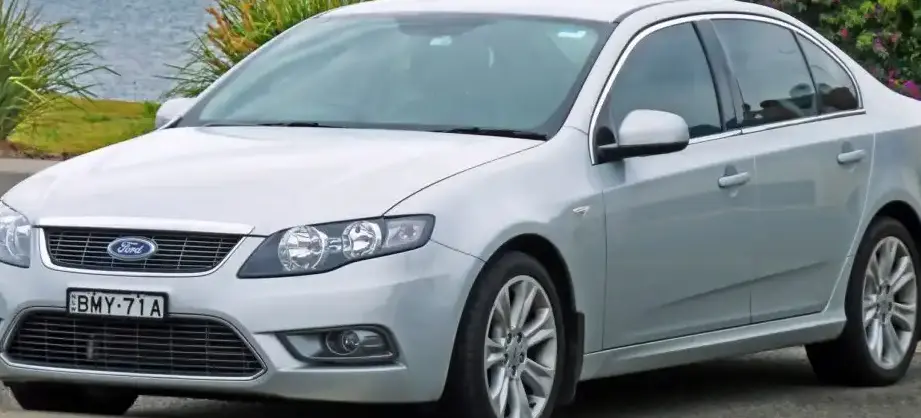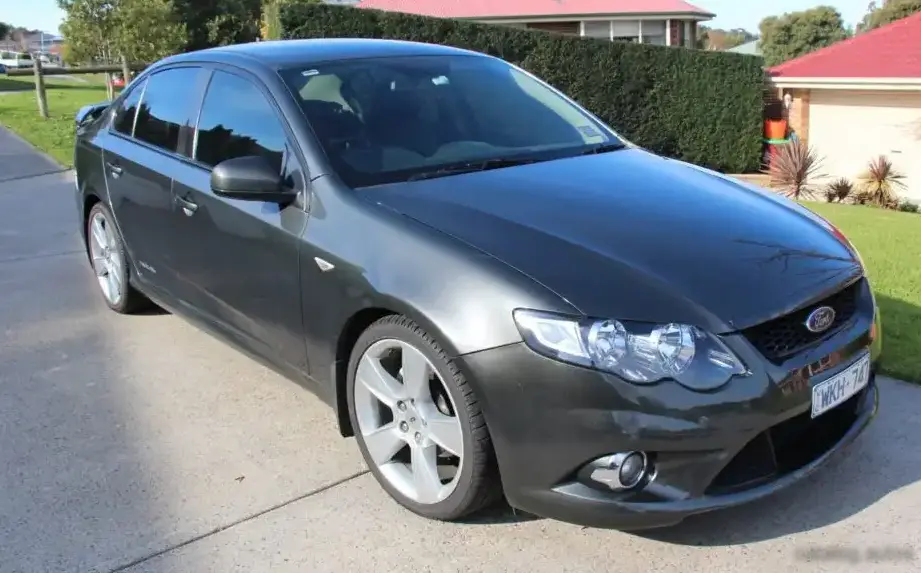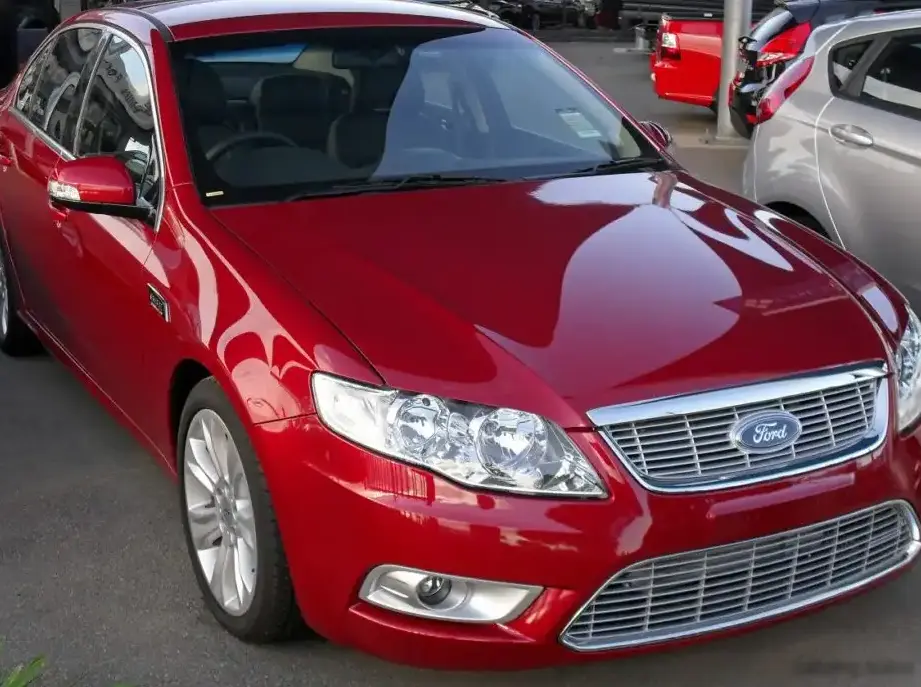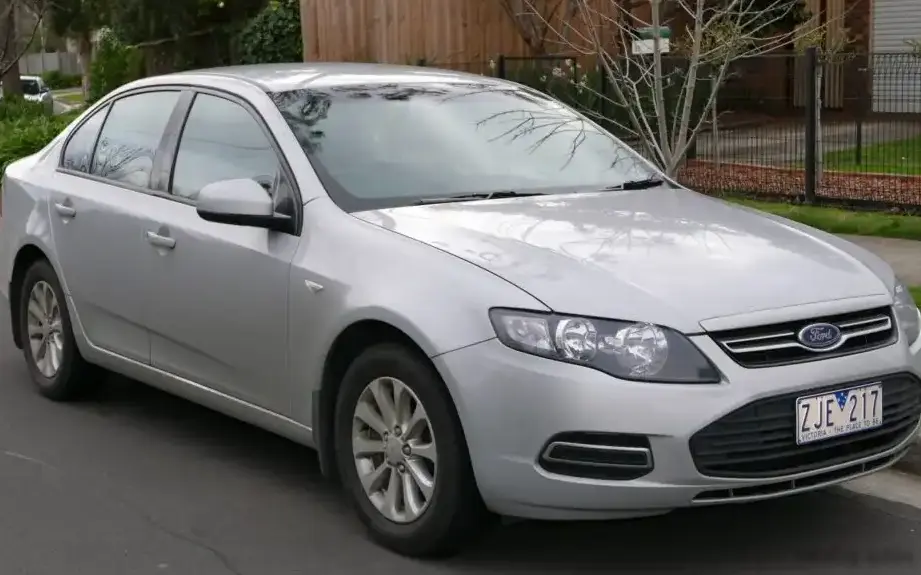
The Ford Falcon FG X 4.0 DI-VCT Automatic, produced between 2014 and 2016, represents the final iteration of the iconic Australian-designed and manufactured Falcon. This variant occupied a significant position in the lineup, offering a balance between performance and fuel efficiency for the Australian market. It was part of the larger FG X series, which itself was a heavily revised version of the FG Falcon, aiming to address criticisms of the previous model and offer a competitive package in a shrinking large car segment. The 4.0-liter inline-six engine paired with a six-speed automatic transmission was a popular choice for buyers seeking a comfortable and capable vehicle.
Technical Specifications
| Brand | Ford |
| Model | Falcon |
| Generation | Falcon (FG X) |
| Type (Engine) | 4.0 DI-VCT (265 Hp) Automatic |
| Start of production | 2014 |
| End of production | 2016 |
| Powertrain Architecture | Internal Combustion engine |
| Body type | Sedan |
| Seats | 5 |
| Doors | 4 |
| Fuel consumption (urban) | 14.2 l/100 km (16.6 US mpg, 19.9 UK mpg, 7 km/l) |
| Fuel consumption (extra urban) | 6.8 l/100 km (34.6 US mpg, 41.5 UK mpg, 14.7 km/l) |
| Fuel consumption (combined) | 9.5 l/100 km (24.8 US mpg, 29.7 UK mpg, 10.5 km/l) |
| CO2 emissions | 225 g/km |
| Fuel Type | Petrol (Gasoline) |
| Weight-to-power ratio | 6.5 kg/Hp, 153.8 Hp/tonne |
| Weight-to-torque ratio | 4.4 kg/Nm, 226.9 Nm/tonne |
| Power | 265 Hp @ 6000 rpm |
| Power per litre | 66.5 Hp/l |
| Torque | 391 Nm @ 3250 rpm (288.39 lb.-ft. @ 3250 rpm) |
| Engine layout | Front, Longitudinal |
| Engine Model/Code | Barra 195 |
| Engine displacement | 3983 cm3 (243.06 cu. in.) |
| Number of cylinders | 6 |
| Engine configuration | Inline |
| Cylinder Bore | 92.25 mm (3.63 in.) |
| Piston Stroke | 99.31 mm (3.91 in.) |
| Compression ratio | 10.3:1 |
| Number of valves per cylinder | 4 |
| Fuel injection system | Multi-port manifold injection |
| Engine aspiration | Naturally aspirated engine |
| Valvetrain | DOHC |
| Kerb Weight | 1723 kg (3798.56 lbs.) |
| Trunk (boot) space (minimum) | 535 l (18.89 cu. ft.) |
| Fuel tank capacity | 68 l (17.96 US gal, 14.96 UK gal) |
| Permitted trailer load with brakes (12%) | 2300 kg (5070.63 lbs.) |
| Length | 4949 mm (194.84 in.) |
| Width | 1868 mm (73.54 in.) |
| Width including mirrors | 2100 mm (82.68 in.) |
| Height | 1494 mm (58.82 in.) |
| Wheelbase | 2838 mm (111.73 in.) |
| Front track | 1583 mm (62.32 in.) |
| Rear track | 1598 mm (62.91 in.) |
| Front overhang | 943 mm (37.13 in.) |
| Rear overhang | 1168 mm (45.98 in.) |
| Drag coefficient (Cd) | 0.291 |
| Minimum turning circle | 11 m (36.09 ft.) |
| Drivetrain Architecture | Rear wheel drive |
| Number of gears and type of gearbox | 6 gears, automatic transmission |
| Front suspension | Double wishbone |
| Rear suspension | Independent multi-link suspension |
| Front brakes | Ventilated discs, 298 mm |
| Rear brakes | Disc, 303 mm |
| Assisting systems | ABS (Anti-lock braking system) |
| Steering type | Steering rack and pinion |
| Power steering | Hydraulic Steering |
| Tires size | 215/60 R16; 245/40 R18; 245/35 R19 |
| Wheel rims size | 6.5J x 16; 8J x 18; 8J x 19 |
INTRODUCTION
The Ford Falcon FG X 4.0 DI-VCT Automatic, launched in 2014, was a key model in the final series of Australia’s long-running Falcon. It represented a significant investment by Ford Australia to revitalize the Falcon nameplate and compete with imported rivals. The FG X series, built on the 1HX0 platform, featured substantial updates to styling, technology, and refinement. The 4.0-liter inline-six engine, coupled with a six-speed automatic transmission, was positioned as a mainstream offering, appealing to families and drivers prioritizing comfort and practicality over outright performance. It sat below the performance-oriented XR6 Turbo and XR8 models in the lineup, and above the base Falcon XT.
Powertrain & Engine Architecture
The heart of the FG X 4.0 DI-VCT Automatic is the Barra 195 engine, a 3.983-liter (243.06 cubic inch) inline-six cylinder petrol engine. This engine utilizes a naturally aspirated configuration and features double overhead camshafts (DOHC) and four valves per cylinder. The “DI-VCT” designation stands for Direct Injection Variable Camshaft Timing, a technology that enhances both power and fuel efficiency. The multi-port fuel injection system delivers fuel directly into the intake ports, optimizing combustion. The engine produces 265 horsepower at 6000 rpm and 391 Nm (288.39 lb-ft) of torque at 3250 rpm. The six-speed automatic transmission, sourced from ZF, was a crucial component, offering smooth and responsive gear changes. This transmission was specifically tuned to complement the characteristics of the 4.0-liter engine, providing a balance between acceleration and fuel economy.
Driving Characteristics
The FG X 4.0 DI-VCT Automatic delivered a comfortable and refined driving experience. While not as overtly sporty as the XR models, it provided ample power for everyday driving and highway cruising. The automatic transmission, with its six forward gears, allowed the engine to operate efficiently at various speeds. Acceleration was respectable, but the focus was more on smooth power delivery than outright speed. Compared to the manual transmission versions of the 4.0-liter engine, the automatic offered greater convenience, particularly in urban traffic. However, the manual versions generally felt more responsive and engaging. Against the higher-output XR6 Turbo and XR8, the 4.0 DI-VCT Automatic lacked the same level of performance, but it offered a more economical and accessible entry point into the Falcon range.
Equipment & Trim Levels
The FG X 4.0 DI-VCT Automatic typically came standard with a comprehensive list of features. These included air conditioning, a multi-function steering wheel, a basic audio system with Bluetooth connectivity, power windows and mirrors, and cruise control. Higher trim levels, such as the G6, added features like alloy wheels, upgraded interior trim, a more advanced audio system with a touchscreen display, and parking sensors. Optional extras included a sunroof, leather upholstery, and a premium sound system. Interior upholstery was typically cloth on the base models, with leather available as an upgrade. The dashboard layout was functional and user-friendly, with a focus on ergonomics.
Chassis & Braking
The FG X 4.0 DI-VCT Automatic featured a robust chassis and suspension system designed to provide a comfortable ride and stable handling. The front suspension utilized a double wishbone configuration, while the rear suspension employed an independent multi-link setup. This combination helped to absorb bumps and maintain control in various driving conditions. Braking duties were handled by ventilated discs at the front and solid discs at the rear. Anti-lock Braking System (ABS) was standard, enhancing safety and control during emergency braking. The steering system was a hydraulic rack and pinion setup, providing precise and responsive steering feel.
Market Reception & Comparison
The FG X 4.0 DI-VCT Automatic was generally well-received by Australian automotive critics. It was praised for its comfortable ride, refined engine, and well-equipped interior. However, some critics noted that the fuel economy, while improved over previous Falcon generations, was still relatively high compared to some imported rivals. Compared to the XR6 Turbo, the 4.0 DI-VCT Automatic offered a more affordable and fuel-efficient option, but at the expense of performance. Against the XR8, it provided a more sensible and practical choice for everyday driving. The 4.0-liter engine’s reliability was generally good, although regular maintenance was essential to ensure optimal performance.
Legacy
The Ford Falcon FG X 4.0 DI-VCT Automatic holds a significant place in Australian automotive history as one of the final Falcons ever produced. The Barra 195 engine, while not the most technologically advanced, proved to be a durable and reliable powerplant. Today, the FG X series, including the 4.0 DI-VCT Automatic, is gaining popularity among collectors and enthusiasts. Well-maintained examples are becoming increasingly sought after, as they represent a tangible link to Australia’s automotive manufacturing past. The powertrain, while not particularly fuel-efficient by modern standards, remains relatively straightforward to maintain and repair, making it a viable option for those seeking a classic Australian car.