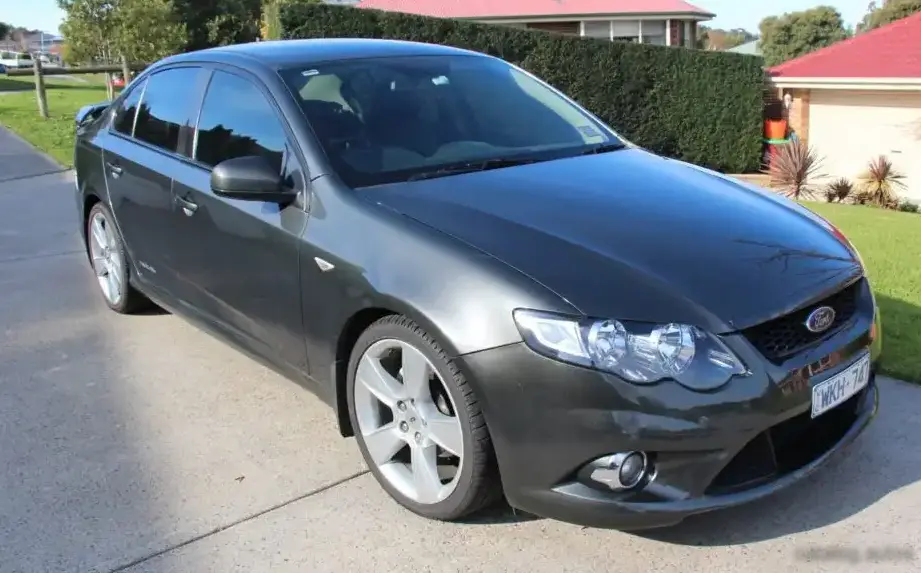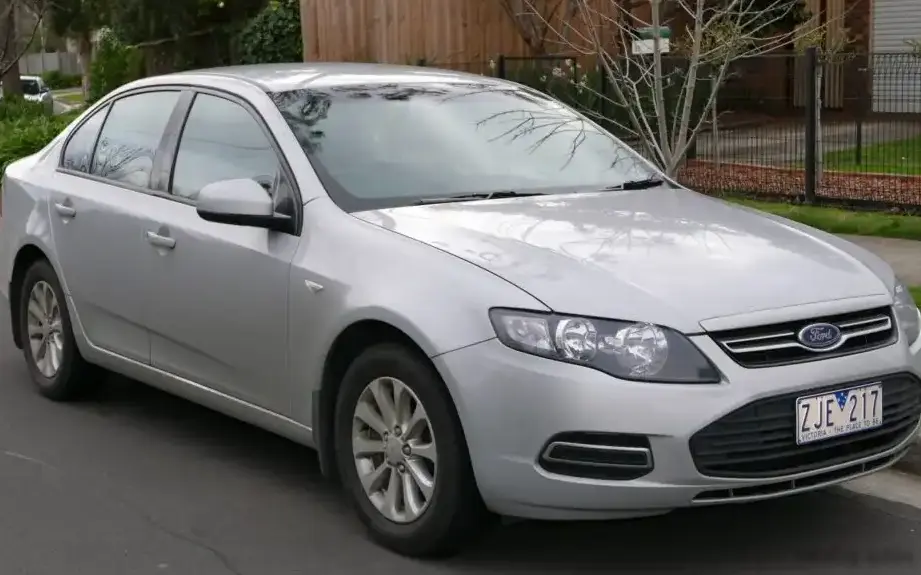
The Ford Falcon FG X 4.0 EcoLPi Automatic, produced between 2014 and 2016, represents a unique chapter in the storied history of the Australian-designed and manufactured Ford Falcon. This variant, powered by a dedicated Liquefied Petroleum Gas (LPG) engine, was positioned as a practical and efficient option within the FG X range, appealing to fleet buyers and private consumers seeking reduced running costs. It was the final iteration of the Falcon before the cessation of Australian automotive manufacturing by Ford, making it a significant vehicle for enthusiasts and collectors alike. The FG X series, built on the Falcon (FG) platform, was the last of a lineage stretching back to the original Falcon of 1960.
Technical Specifications
| Brand | Ford |
| Model | Falcon |
| Generation | Falcon (FG X) |
| Type (Engine) | 4.0 EcoLPi (269 Hp) Automatic |
| Start of production | 2014 |
| End of production | 2016 |
| Powertrain Architecture | Internal Combustion engine |
| Body type | Sedan |
| Seats | 5 |
| Doors | 4 |
| Fuel consumption (urban) | 17.6 l/100 km (13.4 US mpg, 16.1 UK mpg, 5.7 km/l) |
| Fuel consumption (extra urban) | 8.3 l/100 km (28.3 US mpg, 34 UK mpg, 12 km/l) |
| Fuel consumption (combined) | 11.7 l/100 km (20.1 US mpg, 24.1 UK mpg, 8.5 km/l) |
| CO2 emissions | 189 g/km |
| Fuel Type | LPG |
| Weight-to-power ratio | 6.6 kg/Hp, 152.3 Hp/tonne |
| Weight-to-torque ratio | 4.3 kg/Nm, 231.6 Nm/tonne |
| Power | 269 Hp @ 5000 rpm |
| Power per litre | 67.5 Hp/l |
| Torque | 409 Nm @ 3250 rpm (301.66 lb.-ft. @ 3250 rpm) |
| Engine layout | Front, Longitudinal |
| Engine Model/Code | Barra EcoLPi |
| Engine displacement | 3983 cm3 (243.06 cu. in.) |
| Number of cylinders | 6 |
| Engine configuration | Inline |
| Cylinder Bore | 92.25 mm (3.63 in.) |
| Piston Stroke | 99.31 mm (3.91 in.) |
| Compression ratio | 12:1 |
| Number of valves per cylinder | 4 |
| Fuel injection system | Multi-port manifold injection |
| Engine aspiration | Naturally aspirated engine |
| Valvetrain | DOHC |
| Kerb Weight | 1766 kg (3893.36 lbs.) |
| Trunk (boot) space (minimum) | 464 l (16.39 cu. ft.) |
| Fuel tank capacity | 88 l (23.25 US gal, 19.36 UK gal) |
| Permitted trailer load with brakes (12%) | 2300 kg (5070.63 lbs.) |
| Length | 4949 mm (194.84 in.) |
| Width | 1868 mm (73.54 in.) |
| Width including mirrors | 2100 mm (82.68 in.) |
| Height | 1494 mm (58.82 in.) |
| Wheelbase | 2838 mm (111.73 in.) |
| Front track | 1583 mm (62.32 in.) |
| Rear (Back) track | 1598 mm (62.91 in.) |
| Front overhang | 943 mm (37.13 in.) |
| Rear overhang | 1168 mm (45.98 in.) |
| Minimum turning circle | 11 m (36.09 ft.) |
| Drivetrain Architecture | Rear wheel drive |
| Number of gears and type of gearbox | 6 gears, automatic transmission |
| Front suspension | Double wishbone |
| Rear suspension | Independent multi-link suspension |
| Front brakes | Ventilated discs |
| Rear brakes | Disc |
| Assisting systems | ABS (Anti-lock braking system) |
| Steering type | Steering rack and pinion |
| Power steering | Hydraulic Steering |
| Tires size | 215/60 R16; 245/40 R18 |
| Wheel rims size | 6.5J x 16; 8J x 18 |
INTRODUCTION
The Ford Falcon FG X 4.0 EcoLPi Automatic was a key variant in the final series of the iconic Australian Falcon. Introduced in 2014, it offered a compelling alternative to petrol-powered Falcons, particularly in a market increasingly sensitive to fuel costs. The “EcoLPi” designation signified its dedicated LPG fuel system, engineered to deliver comparable performance to its petrol counterparts while significantly reducing emissions and running expenses. This model occupied a middle ground in the FG X lineup, offering a balance between performance and economy, aimed at families and businesses seeking a spacious and reliable sedan.
Powertrain & Engine Architecture
At the heart of the FG X EcoLPi lay the Barra 4.0-liter inline-six engine, specifically adapted for LPG operation. Designated the Barra EcoLPi, this engine featured a hardened valve train and fuel system components designed to withstand the demands of gaseous fuel. The engine utilized multi-port fuel injection, delivering LPG directly into the intake manifold. The 12:1 compression ratio was optimized for LPG combustion. The six-speed automatic transmission, sourced from ZF, was a crucial component, providing smooth and efficient gear changes. This transmission was calibrated to suit the torque characteristics of the EcoLPi engine, offering a comfortable driving experience. The engine code for this variant is often simply referred to as the Barra EcoLPi, distinguishing it from the petrol-fueled Barra engines.
Driving Characteristics
The FG X 4.0 EcoLPi Automatic delivered a respectable driving experience, though it wasn’t positioned as a performance flagship. With 269 horsepower and 409 Nm (301.66 lb-ft) of torque, acceleration was adequate for everyday driving, but noticeably less brisk than the Falcon XR6 Turbo or XR8. The automatic transmission, while smooth, sometimes felt hesitant during quick overtaking maneuvers. The LPG fuel system did result in a slight reduction in overall power compared to the petrol version, but the difference was often imperceptible to the average driver. The gear ratios were tuned for fuel efficiency and comfortable cruising, making it well-suited for highway driving. The rear-wheel-drive configuration provided a balanced feel, although it lacked the dynamic handling of some front-wheel-drive competitors.
Equipment & Trim Levels
The FG X 4.0 EcoLPi Automatic was typically offered in a well-equipped trim level, often mirroring the features of the standard Falcon XT. Standard equipment included air conditioning, a basic audio system with Bluetooth connectivity, power windows and mirrors, and a multi-function steering wheel. Higher-spec variants, such as the G6, added features like alloy wheels, upgraded audio systems, and a color multi-function display in the instrument cluster. Optional extras included leather upholstery, a sunroof, and a rear parking sensor system. The interior design was functional and spacious, prioritizing comfort and practicality over outright luxury.
Chassis & Braking
The FG X EcoLPi utilized a robust chassis and suspension setup designed to handle the vehicle’s weight and provide a comfortable ride. The front suspension featured a double wishbone configuration, while the rear employed an independent multi-link setup. The braking system consisted of ventilated discs at the front and solid discs at the rear, providing adequate stopping power. Anti-lock Braking System (ABS) was standard. The suspension tuning was geared towards comfort and stability, rather than sporty handling. The steering was hydraulically assisted, offering a reasonably direct feel.
Market Reception & Comparison
The FG X 4.0 EcoLPi Automatic received a mixed reception from critics. While praised for its fuel efficiency and reduced running costs, it was often criticized for its slightly diminished performance compared to petrol-powered Falcons. Compared to the XR6 Turbo, the EcoLPi offered significantly less power and acceleration, but it provided a more economical and environmentally friendly alternative. Against the XR8, the performance gap was even wider. However, the EcoLPi’s lower fuel costs and reduced emissions appealed to a specific segment of the market, particularly fleet operators and environmentally conscious buyers. Fuel economy figures of around 11.7 l/100km (20.1 US mpg) were competitive for a large sedan.
Legacy
The Ford Falcon FG X 4.0 EcoLPi Automatic holds a unique place in Australian automotive history as one of the last Falcons ever produced. Its dedicated LPG engine and focus on efficiency represent a response to changing market demands. Today, these vehicles are becoming increasingly collectible, particularly among Falcon enthusiasts. The Barra EcoLPi engine is generally considered reliable, although regular maintenance is essential, especially concerning the LPG system components. The availability of parts is becoming a concern as the Falcon production ceased in 2016, but a dedicated enthusiast community continues to support the model. The FG X EcoLPi serves as a reminder of a bygone era of Australian automotive manufacturing and a testament to the enduring appeal of the Ford Falcon.