Technical Specifications
| Brand | Ford |
| Model | Falcon |
| Generation | Falcon (FG X) |
| Type | XR8 5.0 SC V8 (456 Hp) Automatic |
| Start of production | 2014 |
| End of production | 2016 |
| Powertrain Architecture | Internal Combustion engine |
| Body type | Sedan |
| Seats | 5 |
| Doors | 4 |
| Fuel consumption (urban) | 20.6 l/100 km (11.4 US mpg, 13.7 UK mpg, 4.9 km/l) |
| Fuel consumption (extra urban) | 9.8 l/100 km (24 US mpg, 28.8 UK mpg, 10.2 km/l) |
| Fuel consumption (combined) | 13.7 l/100 km (17.2 US mpg, 20.6 UK mpg, 7.3 km/l) |
| CO2 emissions | 324 g/km |
| Fuel Type | Petrol (Gasoline) |
| Weight-to-power ratio | 4.1 kg/Hp, 245 Hp/tonne |
| Weight-to-torque ratio | 3.3 kg/Nm, 306.3 Nm/tonne |
| Power | 456 Hp @ 5750 rpm |
| Power per litre | 92.1 Hp/l |
| Torque | 570 Nm @ 2200-5500 rpm (420.41 lb.-ft. @ 2200-5500 rpm) |
| Engine layout | Front, Longitudinal |
| Engine displacement | 4951 cm3 (302.13 cu. in.) |
| Number of cylinders | 8 |
| Engine configuration | V-engine |
| Cylinder Bore | 92.2 mm (3.63 in.) |
| Piston Stroke | 92.7 mm (3.65 in.) |
| Compression ratio | 9.25:1 |
| Number of valves per cylinder | 4 |
| Fuel injection system | Multi-port manifold injection |
| Engine aspiration | Supercharger, Intercooler |
| Valvetrain | DOHC |
| Kerb Weight | 1861 kg (4102.8 lbs.) |
| Trunk (boot) space (minimum) | 535 l (18.89 cu. ft.) |
| Fuel tank capacity | 68 l (17.96 US gal | 14.96 UK gal) |
| Permitted trailer load with brakes (12%) | 1600 kg (3527.4 lbs.) |
| Length | 4949 mm (194.84 in.) |
| Width | 1868 mm (73.54 in.) |
| Width including mirrors | 2100 mm (82.68 in.) |
| Height | 1494 mm (58.82 in.) |
| Wheelbase | 2838 mm (111.73 in.) |
| Front track | 1583 mm (62.32 in.) |
| Rear track | 1598 mm (62.91 in.) |
| Front overhang | 943 mm (37.13 in.) |
| Rear overhang | 1168 mm (45.98 in.) |
| Drag coefficient (Cd) | 0.291 |
| Minimum turning circle | 11 m (36.09 ft.) |
| Drivetrain Architecture | Rear wheel drive |
| Number of gears and type of gearbox | 6 gears, automatic transmission |
| Front suspension | Double wishbone |
| Rear suspension | Independent multi-link suspension |
| Front brakes | Ventilated discs, 355 mm |
| Rear brakes | Disc, 328 mm |
| Assisting systems | ABS (Anti-lock braking system) |
| Steering type | Steering rack and pinion |
| Power steering | Hydraulic Steering |
| Tires size | 245/35 R19; 275/30 R19 |
| Wheel rims size | 8J x 19; 8J x 19 |
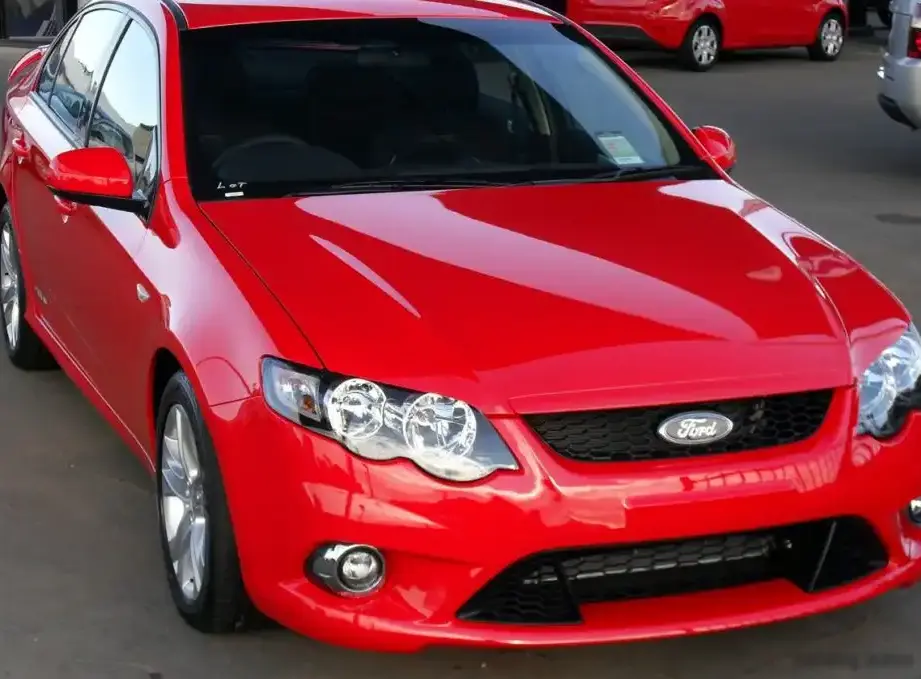
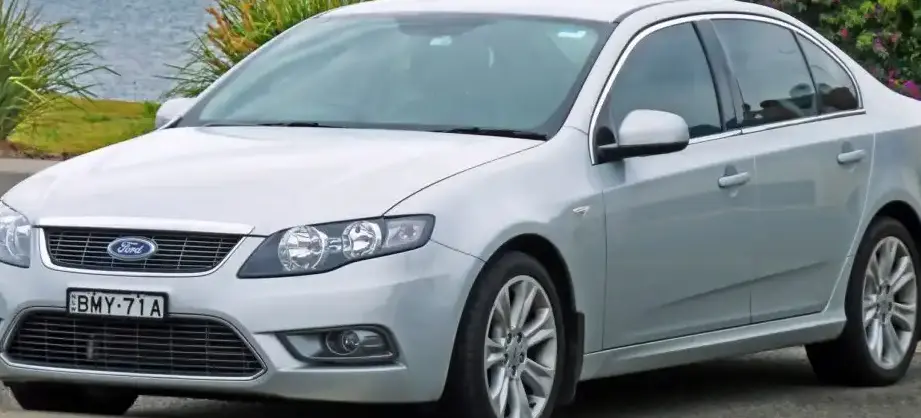
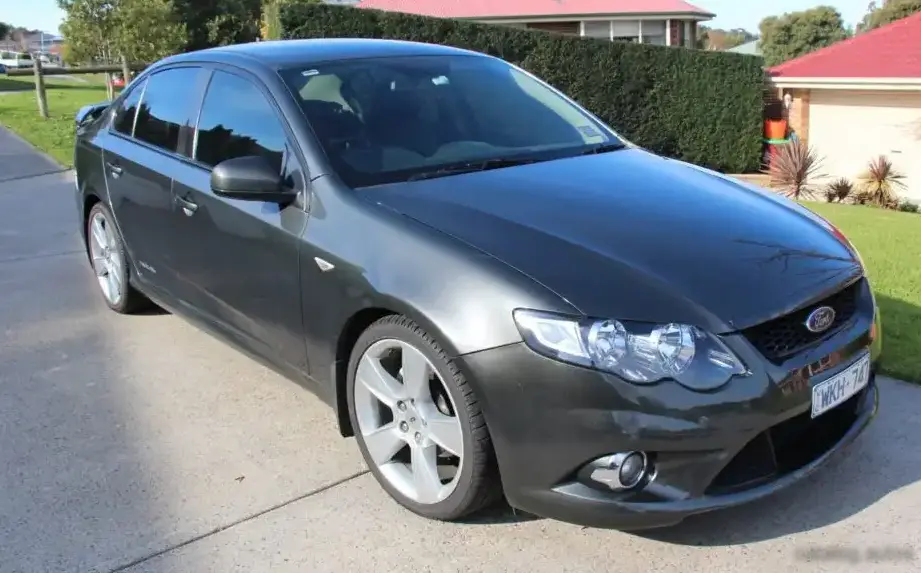
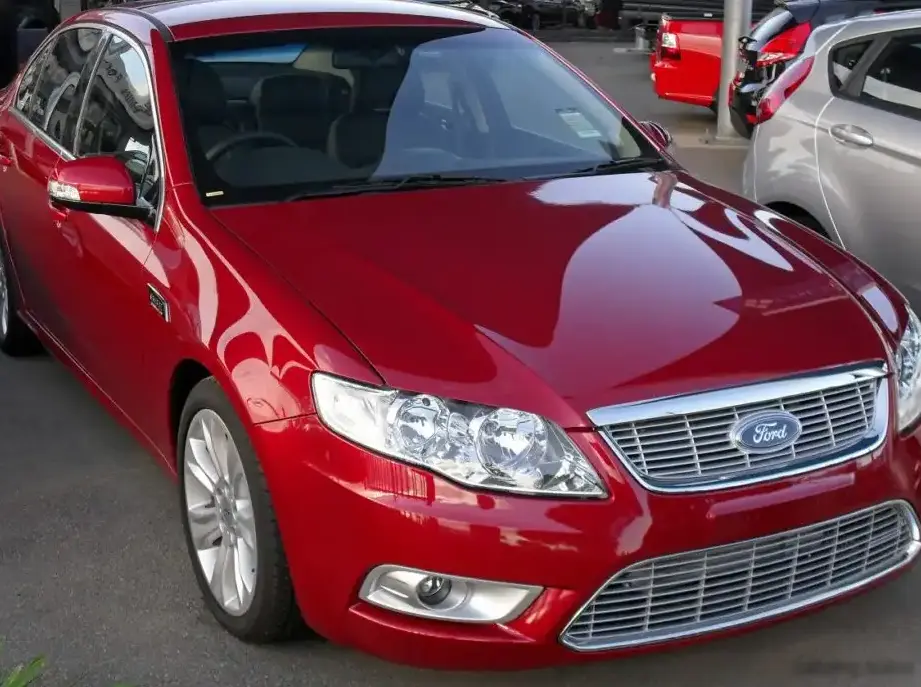
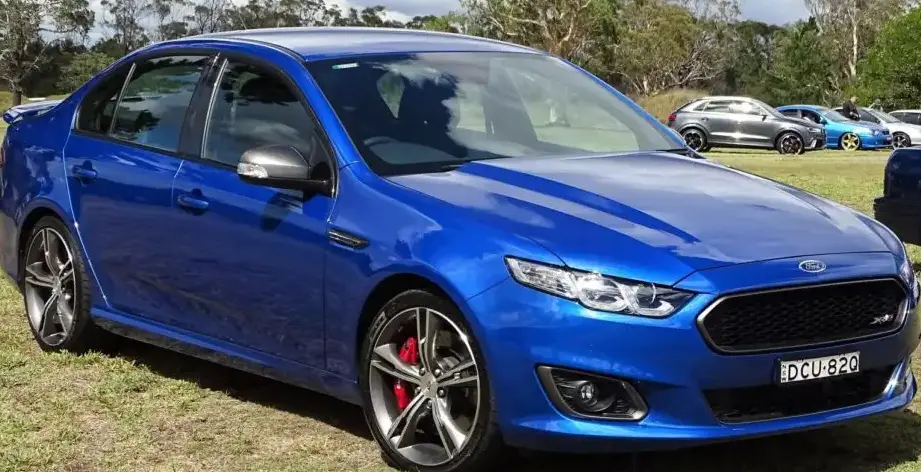
The Ford Falcon FG X XR8 5.0 SC V8 Automatic, produced between 2014 and 2016, marked the final chapter for the iconic, Australian-made Ford Falcon performance sedan. Positioned as the flagship model of the FG X range, the XR8 was designed to deliver a potent combination of power, handling, and Australian muscle car heritage before the end of local production. Built on the FG X platform – a substantial update to the preceding FG series – it incorporated revised styling, improved technology, and a focus on maximizing the performance of its naturally aspirated, supercharged V8 engine. This specific variant, equipped with a six-speed automatic transmission, aimed to broaden the car’s appeal while still offering an exhilarating driving experience.
Powertrain & Engine Architecture
The XR8’s powertrain revolves around the 5.0-liter ‘Miami’ V8 engine, internally known as the BOSS 335. This engine utilizes a Roots-type supercharger to deliver forced induction, dramatically increasing power output. The engine employs multi-port fuel injection and a double overhead camshaft (DOHC) valvetrain with four valves per cylinder. The supercharger is paired with an intercooler to manage intake air temperature, enhancing efficiency and preventing pre-ignition. The engine code is closely associated with the BOSS program, signifying its high-performance capabilities. The six-speed automatic transmission, sourced from ZF, was specifically calibrated to handle the substantial torque generated by the supercharged V8. It incorporates a torque converter lock-up clutch to improve fuel economy during cruising and provides smooth, responsive gear changes. The transmission’s gear ratios were carefully selected to optimize both acceleration and highway cruising.
Driving Characteristics
The XR8 Automatic provides a distinctly powerful and engaging driving experience. The supercharger delivers immediate throttle response and a broad, flat torque curve, making the car feel quick and responsive across the rev range. While the automatic transmission doesn’t offer the same level of driver involvement as a manual gearbox, it provides smooth and consistent shifts, making it more accessible for everyday driving. Compared to the six-speed manual XR8, the automatic version concedes a slight performance advantage in terms of acceleration, but gains in ease of use. The automatic’s programming prioritizes drivability, resulting in a slightly less aggressive shift pattern. The engine’s longitudinal front-engine layout contributes to balanced handling, although the car’s substantial weight (1861 kg) is noticeable during aggressive cornering.
Equipment & Trim Levels
The XR8 came standard with a generous array of features, including leather-appointed sports seats, a unique XR8 instrument cluster, a premium audio system, and automatic climate control. Exterior styling cues included a distinctive body kit, incorporating a rear spoiler, side skirts, and unique alloy wheels. Optional extras included a sunroof, satellite navigation, and upgraded sound systems. The interior trim was typically finished in dark leather with contrasting stitching, reinforcing the car’s sporty character. The XR8 also featured a trip computer, cruise control, and a comprehensive suite of safety features, including ABS brakes and multiple airbags.
Chassis & Braking
The FG X XR8 utilized a double wishbone front suspension and an independent multi-link rear suspension, providing a comfortable yet controlled ride. The suspension was tuned to strike a balance between handling performance and ride comfort. Braking was handled by ventilated discs at the front and solid discs at the rear, offering ample stopping power. The ABS (Anti-lock Braking System) helped maintain control during hard braking maneuvers. The XR8 featured a hydraulic power steering system, providing precise and responsive steering feel. The car’s relatively wide tires (245/35 R19 front, 275/30 R19 rear) contributed to improved grip and handling characteristics.
Market Reception & Comparison
The XR8 was generally well-received by automotive critics, who lauded its powerful engine, comfortable ride, and distinctive styling. However, some reviewers noted the car’s relatively high fuel consumption and considerable weight. Compared to the XR6 Turbo, the XR8 offered significantly more power and a more refined driving experience, but came at a higher price point. The XR6 Turbo was often viewed as a more practical and fuel-efficient option, while the XR8 catered to enthusiasts seeking the ultimate Falcon performance sedan. Fuel economy was a frequent point of criticism, with combined cycle figures of 13.7 l/100 km being considered high by contemporary standards.
Legacy
The Ford Falcon FG X XR8 5.0 SC V8 Automatic occupies a significant place in Australian automotive history as the last of the locally produced Falcon performance sedans. These cars are now highly sought after by collectors and enthusiasts, with values steadily appreciating. The powertrain, while renowned for its power, requires regular maintenance to ensure long-term reliability. Common maintenance items include supercharger belt replacement and monitoring for potential oil leaks. However, with proper care, the ‘Miami’ V8 and ZF automatic transmission are generally considered robust and durable. The XR8 represents a final chapter in a long and proud tradition of Australian muscle cars, and its legacy is likely to endure for many years to come.