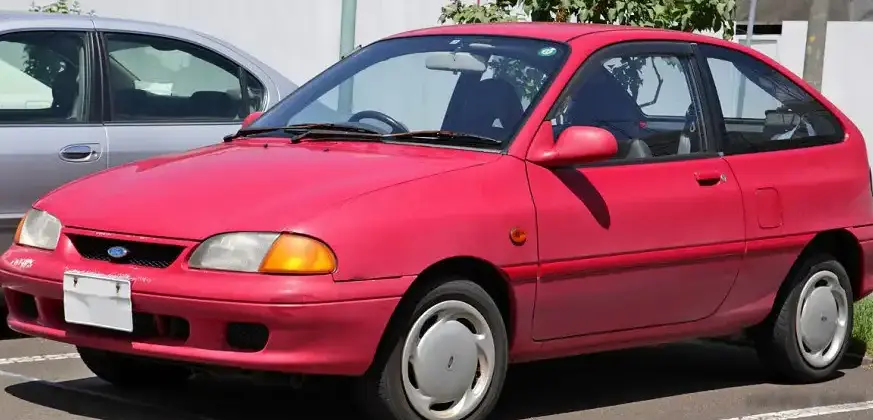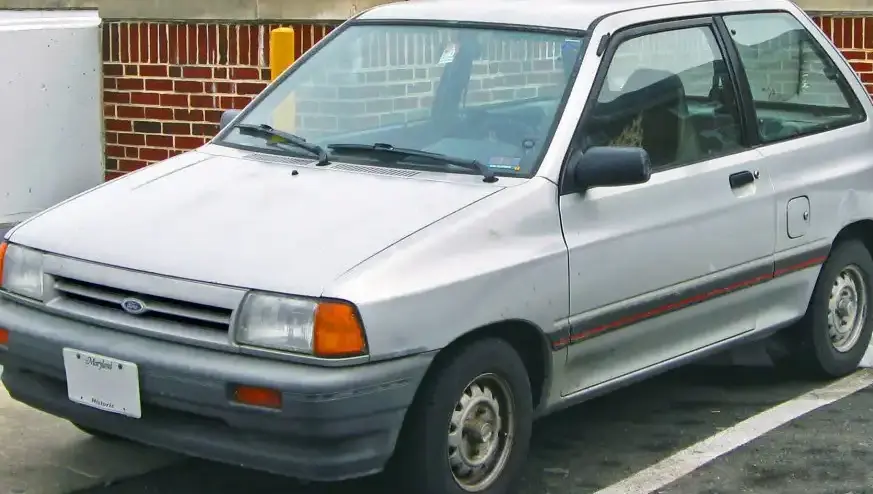
The Ford Festiva, introduced in 1986 and continuing through 1993 in North America, represented a significant shift in Ford’s strategy to offer affordable and fuel-efficient transportation. Built in Japan by Mazda (under a joint venture agreement), the Festiva was a subcompact hatchback designed to compete with imports like the Toyota Corolla and Honda Civic. The 1.3-liter, 64 horsepower variant was the entry-level model, serving as the foundation of the Festiva lineup and appealing to buyers prioritizing economy and practicality. It was part of the first generation (Festiva I) and played a crucial role in establishing the Festiva’s presence in the competitive US market. This model was particularly popular with first-time car buyers, students, and those seeking a reliable city car.
Technical Specifications
| Brand | Ford |
| Model | Festiva |
| Generation | Festiva I |
| Type (Engine) | 1.3 (64 Hp) |
| Start of Production | 1986 |
| End of Production | 1993 |
| Powertrain Architecture | Internal Combustion Engine |
| Body Type | Hatchback |
| Fuel Type | Petrol (Gasoline) |
| Power | 64 Hp |
| Engine Aspiration | Naturally Aspirated |
| Engine Displacement | 1.3 Liters |
| Transmission | 3-Speed Automatic (available, also 5-Speed Manual) |
| Weight (Curb) | 1,800 – 1,850 lbs (approx.) |
| Fuel Economy (City/Highway) | 34/44 mpg (approx.) |
Powertrain & Engine Architecture
The heart of the Festiva 1.3 was the Mazda-designed EA engine, a 1.3-liter inline-four cylinder gasoline engine. This engine, internally designated as the E13, was a simple, lightweight unit known for its reliability. It featured a single overhead camshaft (SOHC) operating two valves per cylinder. Fuel delivery was managed by a carburetor in earlier models (1986-1988) and transitioned to multi-point fuel injection (MPFI) in later years (1989-1993), improving efficiency and reducing emissions. The 64 horsepower output was achieved at 6,000 rpm, with peak torque of approximately 74 lb-ft at 4,000 rpm. The available 3-speed automatic transmission was a conventional hydraulic unit, chosen for its simplicity and cost-effectiveness. A 5-speed manual transmission was also offered, providing better fuel economy and a more engaging driving experience. The engine block was cast iron, while the cylinder head was aluminum, contributing to a relatively lightweight overall engine design.
Driving Characteristics
The 1.3-liter Festiva, particularly with the automatic transmission, was not designed for spirited performance. Acceleration was modest, with 0-60 mph times estimated around 14-16 seconds. The focus was squarely on fuel efficiency and ease of driving. The automatic transmission featured relatively tall gear ratios, prioritizing fuel economy over quick acceleration. The car felt nimble and easy to maneuver in city traffic, thanks to its small size and light weight. The suspension, consisting of MacPherson struts in the front and a twist-beam rear axle, provided a comfortable, if somewhat basic, ride. While the manual transmission version offered a more responsive driving experience, the automatic was favored by buyers seeking a hassle-free commute. The steering was light and responsive, making parking and low-speed maneuvers easy.
Equipment & Trim Levels
The base-level Festiva 1.3 was fairly spartan in terms of standard equipment. It typically included cloth upholstery, a basic AM/FM radio, and manual windows and locks. Air conditioning was often an optional extra, as were power steering and upgraded audio systems. Later models saw the addition of features like a digital clock and improved interior trim. The interior design was functional and straightforward, prioritizing practicality over luxury. The dashboard layout was simple and easy to understand, with clearly marked controls. Trim levels were relatively limited; the 1.3L model served as the entry point, with higher trims offering features like upgraded wheels, body-colored bumpers, and more comfortable seating.
Chassis & Braking
The Festiva’s chassis was a unibody construction, designed for lightweight and rigidity. The front suspension utilized MacPherson struts, while the rear employed a twist-beam axle. This setup provided a reasonable balance of ride comfort and handling for a subcompact car. Braking on the base 1.3 model typically consisted of front disc brakes and rear drum brakes. Power assist was standard. The braking system was adequate for the car’s weight and performance, but not particularly powerful. Steering was rack-and-pinion, providing precise and responsive control. The relatively small turning radius made the Festiva easy to maneuver in tight spaces.
Market Reception & Comparison
The Festiva 1.3 was generally well-received by critics and consumers alike, particularly for its exceptional fuel economy and low price. It was consistently praised for its reliability and ease of maintenance. However, its lack of power and basic interior were often noted as drawbacks. Compared to other subcompacts of the time, such as the Chevrolet Sprint and the Yugo, the Festiva offered a more refined driving experience and a higher level of build quality. Against competitors like the Toyota Corolla and Honda Civic, the Festiva was less powerful and less well-equipped, but significantly more affordable. Fuel economy figures consistently exceeded those of many competitors, making it a popular choice for budget-conscious buyers. The automatic transmission version, while convenient, sacrificed some fuel economy compared to the manual.
Legacy
The Ford Festiva, and specifically the 1.3-liter variant, holds a unique place in automotive history as a symbol of affordable and efficient transportation. While not known for its performance or luxury, it earned a reputation for reliability and longevity. Today, well-maintained Festivas are becoming increasingly collectible, particularly among enthusiasts of 1980s and 1990s Japanese-built cars. The EA engine, while simple in design, proved to be remarkably durable, and many examples are still on the road today. The Festiva paved the way for Ford’s later forays into the subcompact market and demonstrated the company’s willingness to embrace innovative manufacturing partnerships. The 1.3L automatic version, while the least powerful in the lineup, remains a testament to the era’s focus on fuel efficiency and practicality, and is often sought after by those looking for a simple, reliable, and inexpensive classic car.