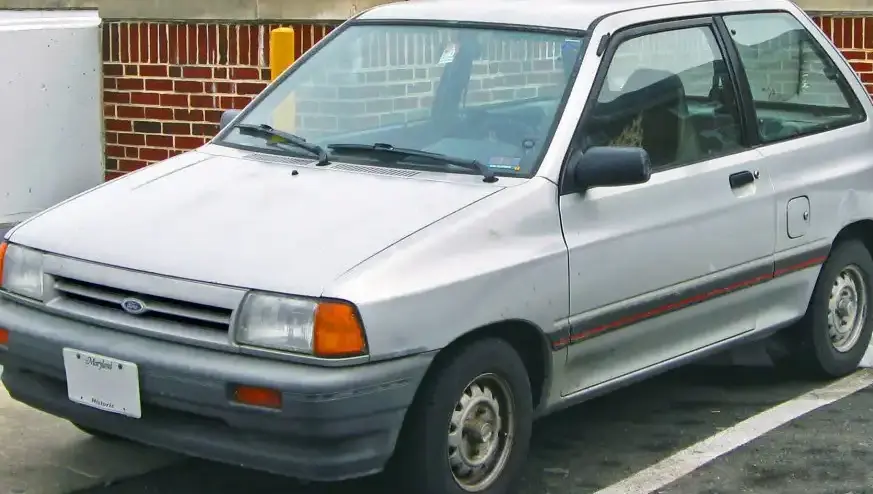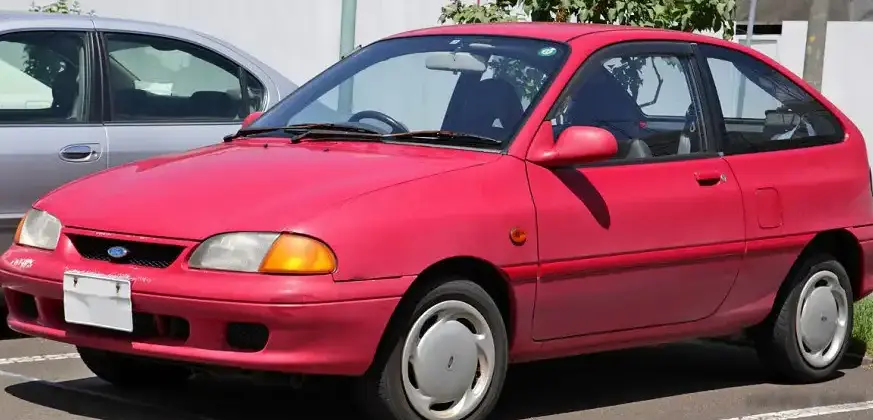
The Ford Festiva II (DA) 1.3i, producing 64 horsepower, was a subcompact hatchback marketed by Ford primarily between 1994 and 1997. It represented a continuation of the Festiva line, originally developed in partnership with Mazda, and was sold largely to cater to the demand for affordable, fuel-efficient transportation. The DA generation, while retaining the basic formula of its predecessor, featured updated styling and minor mechanical refinements. This particular 1.3i variant served as the entry point into the Festiva II range, offering a balance of economy and practicality for budget-conscious buyers. It was positioned as a direct competitor to other small, economical hatchbacks available in the North American market, such as the Chevrolet Metro and the Geo Metro.
Technical Specifications
| Brand | Ford |
| Model | Festiva |
| Generation | Festiva II (DA) |
| Type (Engine) | 1.3i (64 Hp) |
| Start of production | 1994 |
| End of production | 1997 |
| Powertrain Architecture | Internal Combustion engine |
| Body type | Hatchback |
| Seats | 5 |
| Doors | 3 |
| Fuel Type | Petrol (Gasoline) |
| Maximum speed | 145 km/h (90.1 mph) |
| Weight-to-power ratio | 14.2 kg/Hp, 70.4 Hp/tonne |
| Weight-to-torque ratio | 9.1 kg/Nm, 110 Nm/tonne |
| Power | 64 Hp @ 5000 rpm |
| Power per litre | 48.3 Hp/l |
| Torque | 100 Nm @ 3000 rpm (73.76 lb.-ft. @ 3000 rpm) |
| Engine layout | Front, Transverse |
| Engine displacement | 1324 cm3 (80.8 cu. in.) |
| Number of cylinders | 4 |
| Engine configuration | Inline |
| Cylinder Bore | 71 mm (2.8 in.) |
| Piston Stroke | 83.6 mm (3.29 in.) |
| Compression ratio | 9.7:1 |
| Number of valves per cylinder | 2 |
| Fuel injection system | Multi-port manifold injection |
| Engine aspiration | Naturally aspirated engine |
| Valvetrain | OHC |
| Kerb Weight | 909 kg (2004 lbs.) |
| Fuel tank capacity | 38 l (10.04 US gal | 8.36 UK gal) |
| Length | 4440 mm (174.8 in.) |
| Width | 1680 mm (66.14 in.) |
| Height | 1360 mm (53.54 in.) |
| Wheelbase | 2305 mm (90.75 in.) |
| Front track | 1435 mm (56.5 in.) |
| Rear track | 1435 mm (56.5 in.) |
| Drivetrain Architecture | The Internal combustion engine (ICE) drives the front wheels of the vehicle. |
| Drive wheel | Front wheel drive |
| Number of gears and type of gearbox | 5 gears, manual transmission |
| Front suspension | Spring Strut |
| Rear suspension | Coil spring |
| Front brakes | Disc |
| Rear brakes | Drum |
| Steering type | Steering rack and pinion |
| Tires size | 165/70 R13 S |
Powertrain & Engine Architecture
The heart of the Festiva II 1.3i was the Ford-sourced, but Mazda-designed, 1.3-liter inline-four cylinder engine. This engine, internally designated with various codes depending on the specific market, was a relatively simple design featuring a single overhead camshaft (OHC) operating two valves per cylinder. Fuel delivery was handled by a multi-port fuel injection system, a significant upgrade from the carburetor systems found on earlier Festiva models. The engine’s 9.7:1 compression ratio was a compromise between efficiency and performance. The 64 horsepower peak was achieved at 5000 rpm, while the 73.76 lb-ft of torque was available at 3000 rpm. The engine was transversely mounted in the front of the vehicle, driving the front wheels. The standard transmission was a five-speed manual, contributing to the car’s fuel efficiency. While an automatic transmission was offered in some markets, it was not commonly paired with this specific engine due to the limited power output.
Driving Characteristics
The 1.3i Festiva II, with its modest 64 horsepower, was not designed for spirited acceleration. Performance was adequate for city driving and highway cruising, but overtaking maneuvers required careful planning. The five-speed manual transmission allowed drivers to keep the engine in its optimal power band, maximizing available performance. The gear ratios were relatively tall, prioritizing fuel economy over rapid acceleration. Compared to the slightly more powerful (and often more expensive) 1.6-liter versions of the Festiva II, the 1.3i felt noticeably slower. However, the lighter engine weight contributed to nimble handling, making it a surprisingly enjoyable car to drive on winding roads. The steering, while not particularly communicative, was light and easy to use, making it well-suited for urban environments.
Equipment & Trim Levels
The 1.3i Festiva II typically represented the base trim level. Standard equipment generally included cloth upholstery, a basic AM/FM radio, and manual windows and door locks. Air conditioning was often an optional extra, as were power steering and upgraded audio systems. Interior plastics were durable but utilitarian, reflecting the car’s budget-oriented positioning. The dashboard layout was simple and functional, with clearly marked gauges. Safety features were limited by the standards of the time, typically including only seatbelts and a basic steering wheel airbag. The overall interior ambiance was focused on practicality and affordability rather than luxury or refinement.
Chassis & Braking
The Festiva II utilized a relatively simple chassis design. The front suspension consisted of MacPherson strut springs, while the rear suspension employed a coil spring setup. This configuration provided a comfortable ride, although it wasn’t particularly sporty. The front brakes were disc brakes, offering adequate stopping power, while the rear brakes were drums, a cost-saving measure. The steering system was a rack-and-pinion setup, providing reasonably precise steering. The car’s relatively light weight (around 2004 lbs) helped to offset the limitations of the braking and suspension systems. Tire size was typically 165/70 R13, chosen for a balance of fuel efficiency and grip.
Market Reception & Comparison
The Festiva II 1.3i was generally well-received by critics as an exceptionally affordable and fuel-efficient vehicle. However, its limited power and basic interior were often cited as drawbacks. Compared to the higher-trim Festiva II models, the 1.3i offered significantly less performance but at a lower price point. Fuel economy was a major selling point, with the 1.3i consistently achieving impressive gas mileage figures. Reliability was generally good, although the car’s simple design meant that it lacked some of the advanced features found on more expensive vehicles. In the used car market, the 1.3i Festiva II remains a popular choice for those seeking a cheap and reliable commuter car.
Legacy
The Ford Festiva II 1.3i, while not a performance icon, played an important role in providing affordable transportation to a wide range of buyers. Its simple, reliable powertrain and fuel-efficient design have ensured its continued presence on roads today. The 1.3-liter engine, while not particularly powerful, proved to be durable and relatively easy to maintain. The Festiva II’s legacy lies in its practicality and affordability, making it a fondly remembered vehicle for those who sought basic, reliable transportation without breaking the bank. In the current used car market, well-maintained examples of the 1.3i Festiva II can still be found, offering a unique glimpse into the automotive landscape of the mid-1990s.