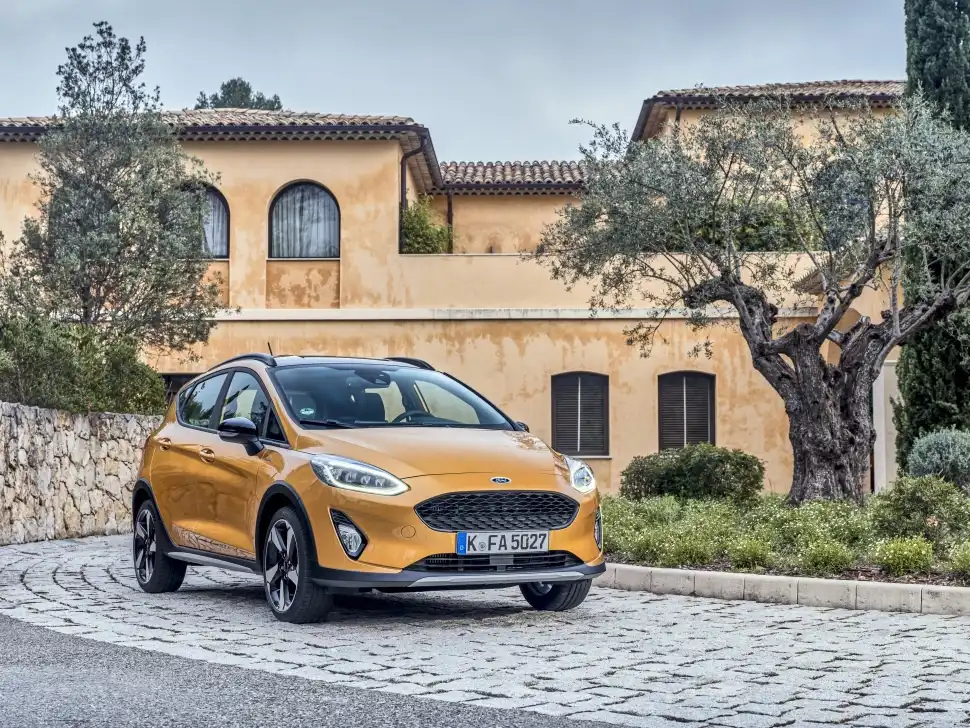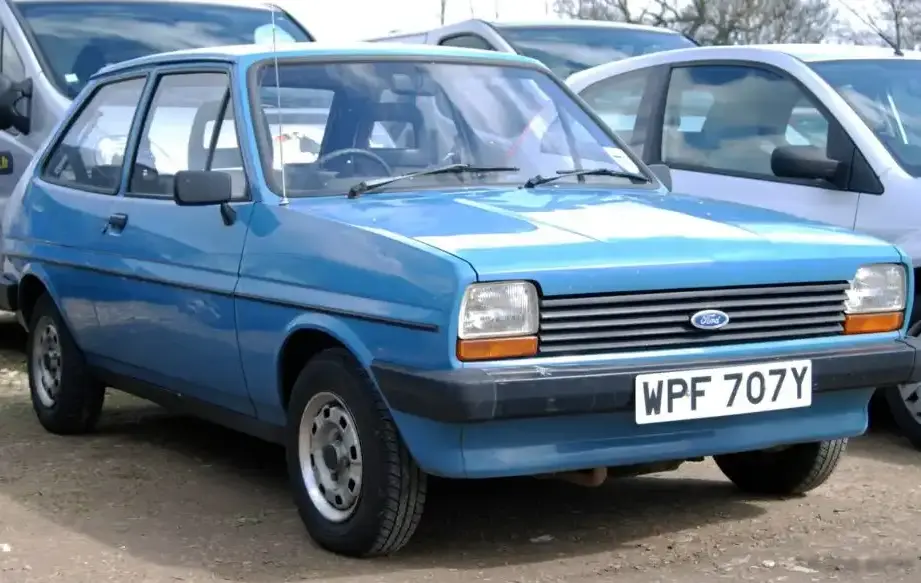
The Ford Fiesta Mk1 1.1, produced between 1981 and 1983, represents the entry point into the first generation of Ford’s globally successful supermini. Introduced as a direct competitor to models like the Fiat 127 and Renault 5, the Fiesta was Ford’s first front-wheel-drive car and a pivotal model in the company’s history. The 1.1-liter variant, producing 54 horsepower, was specifically designed to offer affordable and economical transportation, targeting first-time buyers and those seeking a practical city car. It occupied the base trim level within the Mk1 Fiesta range, sitting below the 1.3-liter and later 1.6-liter models.
Technical Specifications
| Brand | Ford |
| Model | Fiesta |
| Generation | Fiesta I (Mk1) |
| Type (Engine) | 1.1 (54 Hp) |
| Start of production | 1981 |
| End of production | 1983 |
| Powertrain Architecture | Internal Combustion Engine |
| Body Type | Hatchback |
| Fuel Type | Petrol (Gasoline) |
| Power | 54 Hp |
| Engine Aspiration | Naturally Aspirated |
| Engine Displacement | 1.1 Liters |
| Number of Cylinders | 4 |
| Valves per Cylinder | 2 |
| Transmission | 4-Speed Manual (primarily, though 3-speed automatic was available) |
| Drive Type | Front-Wheel Drive |
| Weight (approx.) | 750 – 800 kg (1650 – 1760 lbs) |
| Top Speed (approx.) | 90 mph (145 km/h) |
| 0-60 mph (approx.) | 14.5 seconds |
Powertrain & Engine Architecture
The heart of the Fiesta 1.1 is the 1117cc, inline-four cylinder engine. This engine, internally designated as the Kent 1.1, is a simple, naturally aspirated unit featuring a cast iron block and an aluminum cylinder head. It utilizes a single overhead camshaft (SOHC) operating two valves per cylinder. Fuel delivery is managed by a single downdraft carburetor – typically a Ford 32/36 DGV – rather than fuel injection, a common feature of cars in this price bracket during the early 1980s. The engine’s relatively low compression ratio (around 9.0:1) contributes to its ability to run on lower octane fuel, further enhancing its affordability. The majority of Fiesta 1.1 models were equipped with a four-speed manual transmission. However, a three-speed automatic transmission, the Ford Colonia, was offered as an optional extra, though it was less common due to its impact on fuel economy and performance. The Colonia was a relatively basic automatic, known for its smooth but unhurried shifts.
Driving Characteristics
The Fiesta 1.1’s driving experience is defined by its light weight and modest power output. Acceleration is leisurely, and overtaking requires careful planning. The four-speed manual transmission offers a reasonable spread of gears, allowing the engine to operate efficiently at cruising speeds. The automatic version, while providing convenience, noticeably diminishes performance. Gear changes are slow, and the engine often feels strained when attempting to accelerate quickly. Steering is light and precise, making the Fiesta easy to maneuver in urban environments. The suspension, consisting of independent front struts and a twist-beam rear axle, provides a comfortable ride, although it can feel somewhat bouncy on uneven surfaces. The car’s small size and nimble handling make it a surprisingly enjoyable vehicle to drive on winding roads, despite its limited power.
Equipment & Trim Levels
The Fiesta 1.1 was deliberately positioned as a basic, affordable car. Standard equipment was minimal, typically including cloth upholstery, a basic instrument cluster with speedometer and fuel gauge, and manually operated windows and door locks. The interior was functional rather than luxurious, with hard-wearing plastics used throughout. Optional extras included a radio, heated rear window, and upgraded interior trim. The ‘Popular’ trim level was the most common for the 1.1, offering a slightly more comprehensive level of equipment than the base model. Later in its production run, the ‘L’ trim level became available, adding features like a more comfortable driver’s seat and improved interior trim.
Chassis & Braking
The Fiesta Mk1 utilizes a monocoque chassis construction, providing a good balance of strength and lightness. The front suspension features independent MacPherson struts with anti-roll bar, while the rear suspension employs a simple twist-beam axle. Braking on the Fiesta 1.1 typically consisted of front disc brakes and rear drum brakes. The braking system was adequate for the car’s weight and performance, but lacked the sophistication of more expensive models. Steering is rack and pinion, providing precise and responsive control. The relatively small turning circle makes the Fiesta exceptionally easy to park and maneuver in tight spaces.
Market Reception & Comparison
The Fiesta 1.1 was generally well-received by critics as a practical and affordable city car. Its fuel economy was a major selling point, particularly during a period of rising fuel prices. However, its limited performance was often criticized, especially when compared to the more powerful 1.3 and 1.6-liter versions of the Fiesta. Compared to rivals like the Fiat 127 and Renault 5, the Fiesta 1.1 offered a slightly more refined driving experience and a more modern interior. The automatic transmission version was often seen as a compromise, sacrificing performance for convenience. Reliability was generally good, although the carburetor required periodic adjustment and maintenance.
Legacy
The Ford Fiesta Mk1 1.1 played a significant role in establishing the Fiesta as a leading supermini in Europe. While not the most powerful or sophisticated version of the first-generation Fiesta, it provided affordable transportation for a wide range of buyers. Today, the Fiesta Mk1 1.1 is a popular choice among classic car enthusiasts, prized for its simplicity, reliability, and affordability. Parts availability remains relatively good, making it a relatively easy car to maintain and restore. The 1.1-liter engine, while not particularly powerful, is known for its durability and ease of repair. Well-maintained examples of the Fiesta 1.1 are increasingly sought after by collectors, representing a nostalgic reminder of a simpler era in automotive history. The Fiesta’s success paved the way for subsequent generations, cementing its position as one of Ford’s most important and enduring models.