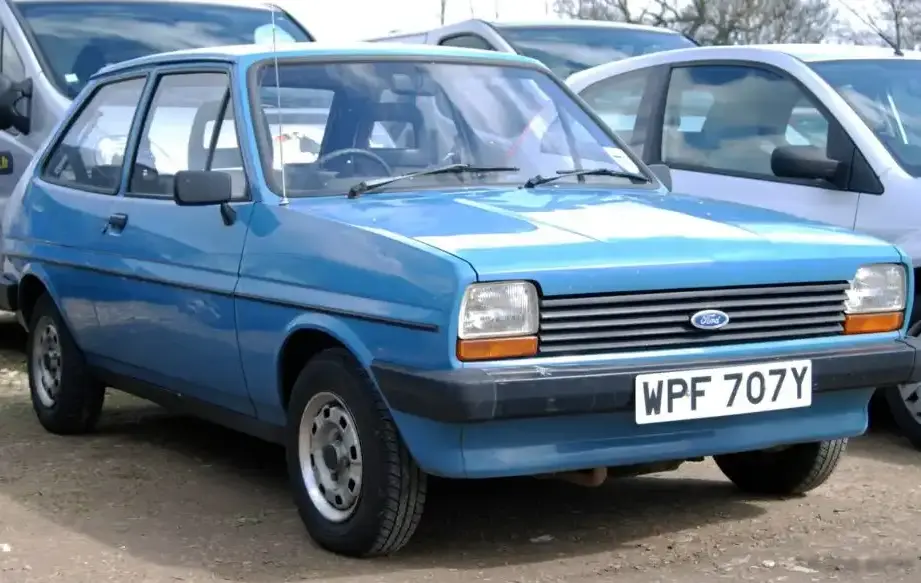
The Ford Fiesta Mk1 1.1, designated with engine code WFBT, represents the entry point into the first generation Fiesta lineup produced between 1981 and 1986. Introduced as a direct competitor to vehicles like the Fiat 127 and Renault 5, the Fiesta aimed to provide affordable and economical transportation to the European market. The 1.1-liter variant was specifically positioned as the most accessible model, prioritizing fuel efficiency and low running costs over outright performance. It played a crucial role in establishing the Fiesta as a popular choice for first-time car buyers and those seeking a practical city car.
Technical Specifications
| Brand | Ford |
| Model | Fiesta |
| Generation | Fiesta I (Mk1) |
| Type (Engine) | 1.1 (WFBT) (54 Hp) |
| Start of production | 1981 |
| End of production | 1986 |
| Powertrain Architecture | Internal Combustion engine |
| Body type | Hatchback |
| Fuel Type | Petrol (Gasoline) |
| Power | 54 Hp |
| Engine aspiration | Naturally aspirated engine |
Powertrain & Engine Architecture
The Fiesta Mk1 1.1 utilizes the Ford 1.1-liter inline-four cylinder engine, internally designated as the WFBT. This engine is a naturally aspirated, overhead valve (OHV) design. It features a single overhead camshaft operating two valves per cylinder. Fuel delivery is managed by a single-barrel carburetor, a common feature for vehicles of this era aiming for cost-effectiveness. The engine’s relatively simple design contributed to its reliability and ease of maintenance. The WFBT engine produces 54 horsepower at approximately 6000 rpm and 68 lb-ft of torque at 3600 rpm. The engine block is cast iron, while the cylinder head is aluminum. The Fiesta 1.1 was exclusively offered with a four-speed manual transmission during its production run. There was no automatic transmission option available for this specific engine and trim level.
Driving Characteristics
The driving experience in the Fiesta Mk1 1.1 is characterized by its light and nimble handling. The 1.1-liter engine, while not powerful, provides adequate acceleration for urban driving and short trips. Acceleration from 0 to 60 mph takes approximately 16 seconds, and the top speed is around 90 mph. The four-speed manual transmission offers a relatively direct feel, but the gear ratios are spaced to prioritize fuel economy rather than spirited performance. The engine feels most comfortable operating in the lower to mid-range of the rev band. Compared to the later 1.3-liter and 1.6-liter Fiesta variants, the 1.1 feels noticeably slower, particularly when fully loaded or tackling inclines. However, its lighter weight and smaller engine contribute to better fuel economy.
Equipment & Trim Levels
The Fiesta Mk1 1.1 was typically offered in a basic trim level, reflecting its position as the entry-level model. Standard equipment included cloth upholstery, vinyl floor covering, and basic instrumentation consisting of a speedometer, fuel gauge, and temperature gauge. The steering wheel was typically made of plastic. Exterior features included steel wheels with hubcaps, black plastic bumpers, and relatively simple lighting. Optional extras were limited but could include a radio, heated rear window, and upgraded interior trim. The Fiesta 1.1 was often seen as a blank canvas for owners to personalize with aftermarket accessories.
Chassis & Braking
The Fiesta Mk1 utilizes a front-wheel-drive layout with an independent MacPherson strut suspension at the front and a twist-beam axle with trailing arms at the rear. The suspension setup is tuned for comfort and ride quality, prioritizing a smooth ride over sporty handling. The steering is rack and pinion, providing reasonably precise control. Braking is accomplished via disc brakes at the front and drum brakes at the rear. The braking system is adequate for the vehicle’s weight and performance, but it lacks the stopping power of more modern systems. The Fiesta 1.1’s relatively light weight helps to mitigate the limitations of the drum brakes at the rear.
Market Reception & Comparison
The Fiesta Mk1 1.1 was generally well-received by critics and consumers alike, particularly for its affordability and fuel efficiency. It was praised for its nimble handling and ease of driving, making it an ideal city car. However, its lack of power was a common criticism, especially when compared to larger or more powerful rivals. Fuel economy was a significant selling point, averaging around 45-50 mpg. Compared to the 1.3-liter Fiesta, the 1.1 offered a lower purchase price but sacrificed performance. The 1.3-liter provided a noticeable improvement in acceleration and overall driving experience, while the 1.6-liter was considered the sporty option. The 1.1’s simplicity and robust design contributed to its relatively good reliability record.
Legacy
The Ford Fiesta Mk1 1.1 remains a popular choice among classic car enthusiasts and collectors. Its simple mechanical design makes it relatively easy to maintain and repair. The WFBT engine, while not particularly powerful, is known for its durability and longevity. Parts availability is generally good, although some components may be becoming increasingly scarce. Today, the Fiesta Mk1 1.1 is often sought after as a nostalgic reminder of affordable and practical motoring from the 1980s. Well-maintained examples can command reasonable prices in the used car market, particularly those with low mileage and original features. The Fiesta Mk1, and the 1.1 variant specifically, laid the foundation for the Fiesta’s enduring success as one of Ford’s most popular and iconic models.