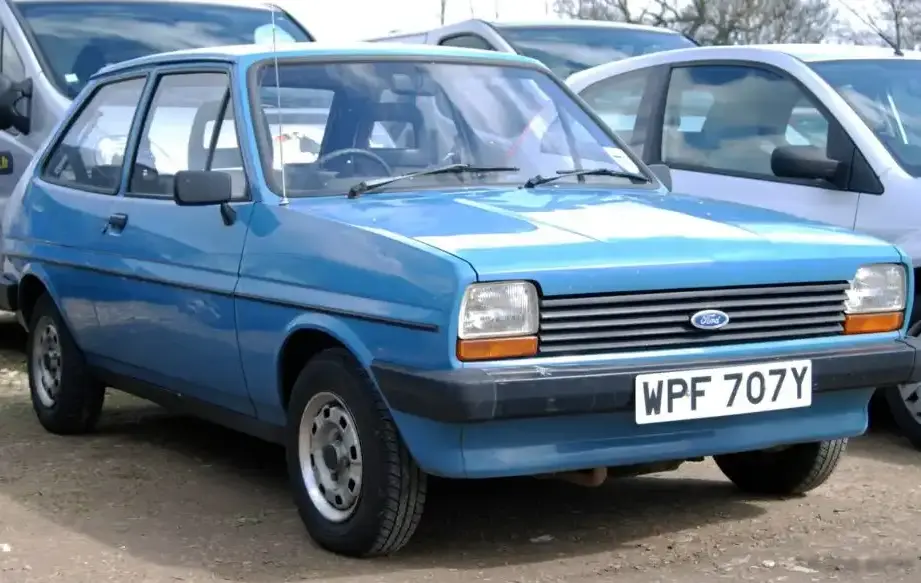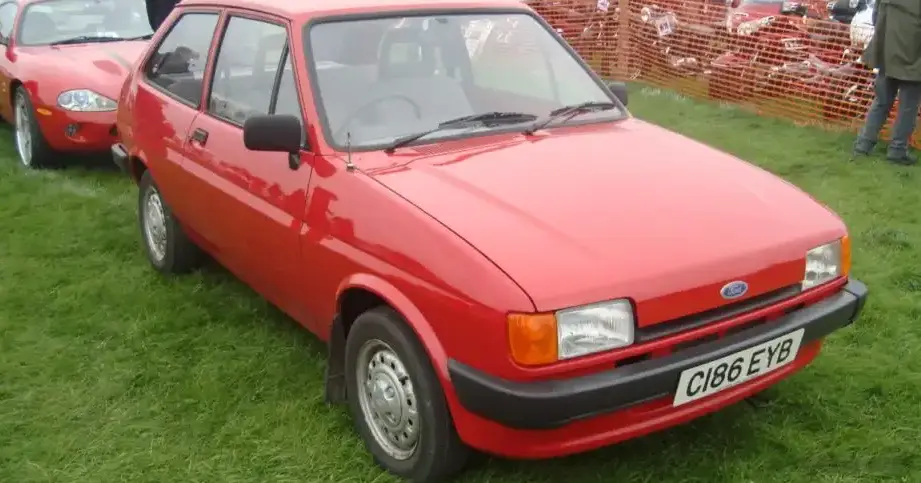
The Ford Fiesta Mk2 1.3, powered by the FBD engine producing 69 horsepower, represented a crucial entry point into the second generation Fiesta lineup, manufactured between 1983 and 1987. Positioned as the base model, it offered affordable transportation during a period of increasing fuel costs and economic uncertainty. The Mk2 Fiesta, built upon the original’s successful formula, aimed to refine the package with subtle styling updates and improved build quality. This 1.3L variant was particularly significant in European markets, where small, economical cars were in high demand. It served as a practical and reliable option for first-time car buyers, commuters, and those seeking a cost-effective city vehicle.
Technical Specifications
| Brand | Ford |
| Model | Fiesta |
| Generation | Fiesta II (Mk2) |
| Type (Engine) | 1.3 (FBD) (69 Hp) |
| Start of production | 1983 |
| End of production | 1987 |
| Powertrain Architecture | Internal Combustion engine |
| Body type | Hatchback |
| Fuel Type | Petrol (Gasoline) |
| Power | 69 Hp |
| Engine Model/Code | FBD |
| Engine aspiration | Naturally aspirated engine |
| Engine oil capacity | 3.5 l (3.7 US qt | 3.08 UK qt) |
| Coolant capacity | 6.3 l (6.66 US qt | 5.54 UK qt) |
Powertrain & Engine Architecture
The heart of the Fiesta Mk2 1.3 was the Ford FBD engine, a 1297cc inline-four cylinder unit. This engine, part of Ford’s ‘Valencia’ series, was a relatively simple design, prioritizing reliability and fuel efficiency over outright performance. It featured a single overhead camshaft (SOHC) operating two valves per cylinder. Fuel delivery was managed by a single, down-draft Weber carburetor, a common setup for vehicles of this era. The FBD engine produced 69 horsepower at 6000 rpm and approximately 79 lb-ft of torque at 3600 rpm. While not a powerhouse, the engine’s torque curve was relatively flat, providing adequate pulling power for everyday driving. The engine block was constructed from cast iron, contributing to its durability. The transmission offered was typically a four-speed manual, but a three-speed automatic transmission was also available, though less common. The automatic version, while offering convenience, noticeably impacted acceleration and fuel economy.
Driving Characteristics
The Fiesta Mk2 1.3, particularly in its base specification, offered a utilitarian driving experience. Acceleration was modest, taking around 14-15 seconds to reach 60 mph. The four-speed manual transmission allowed drivers to make the most of the engine’s limited power, while the automatic version felt sluggish in comparison. Gear ratios were geared towards economy, with a relatively tall final drive. Handling was generally considered good for a car of its class, with a MacPherson strut front suspension and a twist-beam rear axle. The steering was light and responsive, making it easy to maneuver in urban environments. The ride quality, while not luxurious, was acceptable for everyday use. Compared to the later 1.6-liter versions of the Mk2 Fiesta, the 1.3 felt noticeably underpowered, especially when carrying passengers or luggage. The manual transmission provided a more engaging driving experience, while the automatic prioritized ease of use.
Equipment & Trim Levels
The Fiesta Mk2 1.3 was typically offered in a basic trim level, focusing on affordability. Standard equipment included cloth upholstery, a basic instrument cluster, and manually operated windows and door locks. The interior was functional and durable, though lacking in refinement. Optional extras included a radio, heated rear window, and upgraded interior trim. Later models saw the introduction of minor cosmetic enhancements, such as improved seat fabrics and dashboard detailing. The Fiesta’s interior space was relatively generous for a car of its size, offering adequate room for four adults. The rear seats could be folded down to increase luggage capacity, adding to the car’s practicality. The base trim level was clearly differentiated from the higher-spec models, which featured more luxurious appointments and additional features.
Chassis & Braking
The Fiesta Mk2 utilized a relatively simple chassis design. The front suspension featured MacPherson struts with an anti-roll bar, while the rear suspension employed a twist-beam axle. This setup provided a good balance between ride comfort and handling. Braking was typically accomplished with disc brakes on the front wheels and drum brakes on the rear. The braking system was adequate for the car’s performance, but lacked the stopping power of more modern vehicles. Steering was rack and pinion, providing precise and responsive control. The Fiesta’s relatively lightweight construction contributed to its nimble handling characteristics. The suspension components were generally durable and required minimal maintenance. The base model typically featured smaller diameter wheels and narrower tires compared to the higher-spec versions.
Market Reception & Comparison
The Fiesta Mk2 1.3 was well-received in the European market as an affordable and reliable small car. Critics praised its fuel efficiency and practicality, but noted its lack of outright performance. Compared to rivals such as the Volkswagen Polo and Opel Corsa, the Fiesta offered a competitive package in terms of price and features. The 1.6-liter Fiesta models offered significantly more power and performance, but at a higher price point. The 1.3L engine was considered a good compromise for buyers prioritizing economy over speed. Fuel economy was a key selling point, with the Fiesta Mk2 1.3 achieving around 45-50 mpg in typical driving conditions. Reliability was generally good, although the carburetor required periodic adjustment and maintenance. The automatic transmission version was often criticized for its sluggish performance and reduced fuel economy.
Legacy
The Ford Fiesta Mk2 1.3, while not a particularly exciting vehicle, played a significant role in establishing the Fiesta as a popular and reliable small car. The FBD engine proved to be durable and relatively easy to maintain, contributing to the car’s longevity. Today, the Fiesta Mk2 1.3 is a relatively affordable classic car, appealing to enthusiasts seeking a simple and practical vehicle. Parts availability is generally good, although some components may be becoming increasingly difficult to find. The car’s simple mechanical design makes it relatively easy to work on for DIY mechanics. While not a collector’s item, the Fiesta Mk2 1.3 remains a popular choice for classic car rallies and events. Its enduring appeal lies in its affordability, reliability, and nostalgic charm. Well-maintained examples continue to provide reliable transportation for those seeking a classic motoring experience.