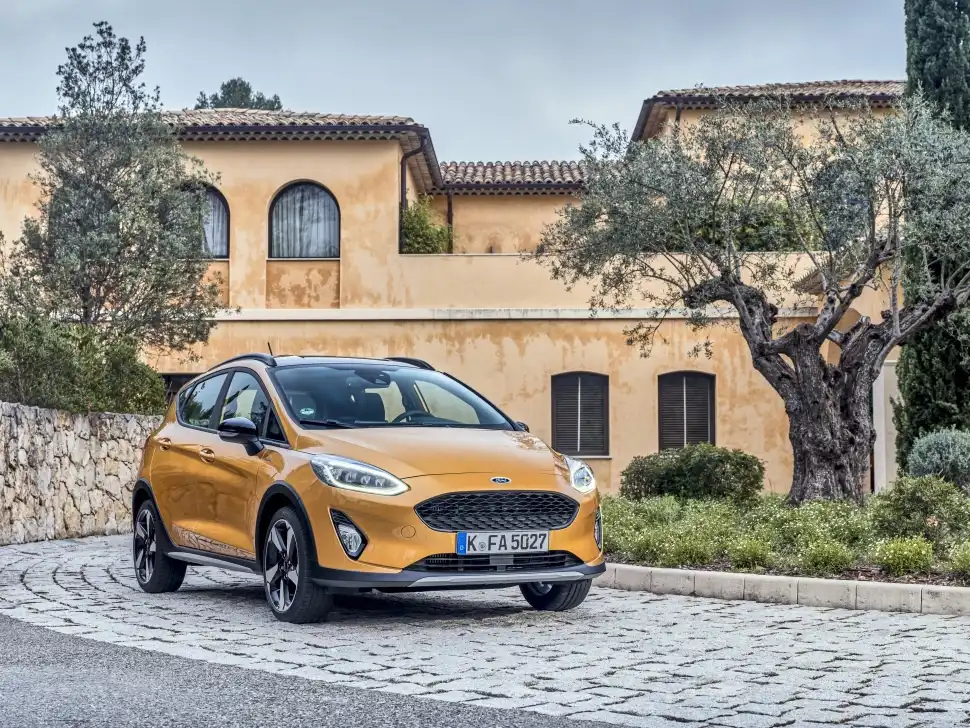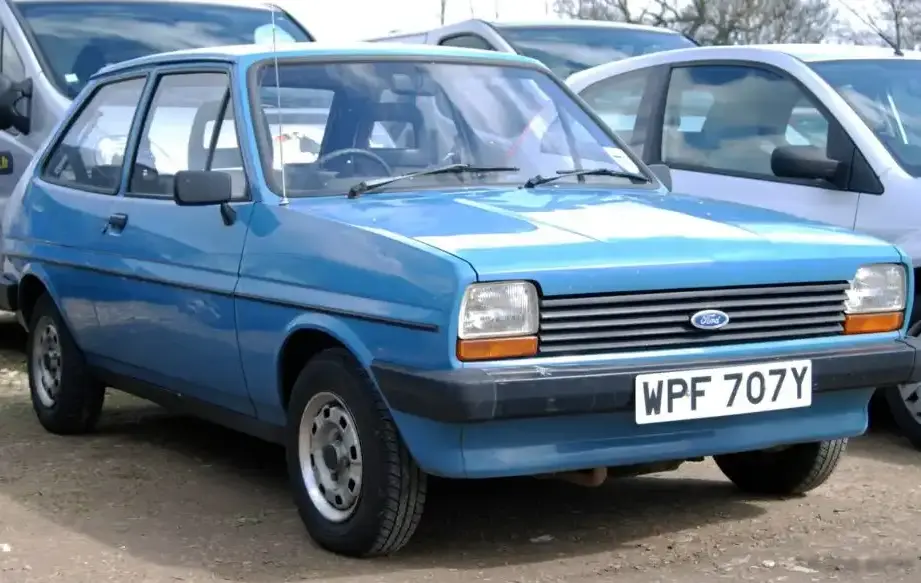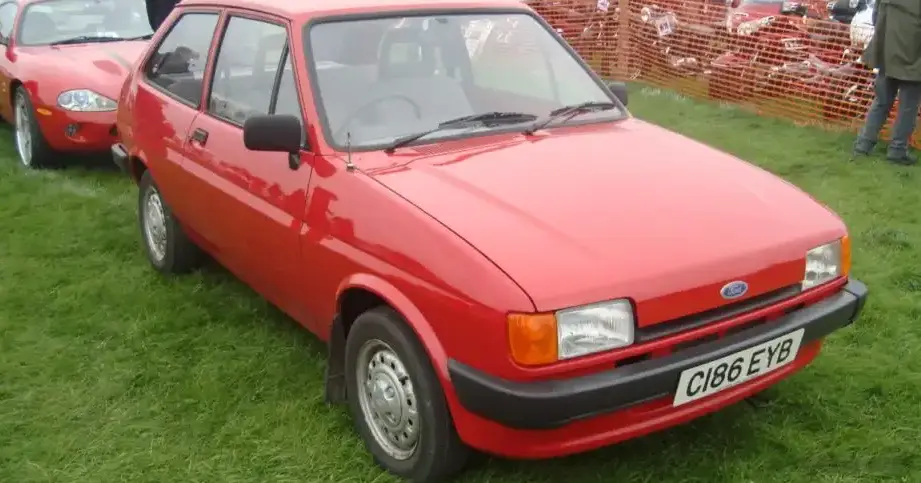
The Ford Fiesta Mk2 1.4 (FBD), produced between 1986 and 1989, represented a key iteration of Ford’s popular supermini. Falling within the broader Mk2 Fiesta range (produced 1983-1989), the 1.4-liter model with 71 horsepower served as a mainstream offering, positioned between the base 1.0-liter and the more performance-oriented 1.6-liter variants. This version aimed to provide a balance of affordability, practicality, and reasonable performance for the everyday driver, particularly within the European market where the Fiesta was a dominant force in its class. The Mk2 Fiesta itself was a significant update to the original, offering improved styling, interior space, and mechanical refinements.
Technical Specifications
| Brand | Ford |
| Model | Fiesta |
| Generation | Fiesta II (Mk2) |
| Type (Engine) | 1.4 (FBD) (71 Hp) |
| Start of production | 1986 |
| End of production | 1989 |
| Powertrain Architecture | Internal Combustion engine |
| Body type | Hatchback |
| Fuel Type | Petrol (Gasoline) |
| Power | 71 Hp |
| Engine Model/Code | F6A, F6C |
| Engine aspiration | Naturally aspirated engine |
| Engine oil capacity | 3.5 l (3.7 US qt | 3.08 UK qt) |
| Coolant capacity | 7.6 l (8.03 US qt | 6.69 UK qt) |
Powertrain & Engine Architecture
The Fiesta Mk2 1.4 (FBD) was powered by a 1392cc, inline-four cylinder engine. The ‘FBD’ engine code designates a version of Ford’s Valencia engine family, a unit known for its simplicity and durability. This particular iteration featured a single overhead camshaft (SOHC) valvetrain operating two valves per cylinder. Fuel delivery was managed by a Bosch fuel injection system, a significant upgrade from the carburetors used in earlier Fiesta models, contributing to improved fuel efficiency and reduced emissions. The F6A and F6C codes represent minor variations within the FBD family, often relating to emissions control equipment specific to different markets. The engine produced 71 horsepower at 5000 rpm and approximately 88 lb-ft of torque at 3000 rpm. The engine was typically paired with a four-speed manual transmission, but a three-speed automatic transmission was also available, though less common. The automatic transmission, while offering convenience, did noticeably impact acceleration and fuel economy.
Driving Characteristics
The Fiesta Mk2 1.4 offered a fairly unremarkable, but perfectly adequate, driving experience. With 71 horsepower propelling a relatively lightweight hatchback (around 1,700 lbs), acceleration was modest. Zero to sixty mph times were in the region of 13-14 seconds. The automatic transmission, while smooth, further diminished performance, resulting in slower acceleration and a less engaging driving experience compared to the manual version. Gear ratios were optimized for fuel economy rather than outright speed. The suspension, consisting of MacPherson struts at the front and a twist-beam rear axle, provided a comfortable ride, absorbing bumps and imperfections in the road reasonably well. Steering was light and precise, making the Fiesta easy to maneuver in urban environments. Compared to the 1.6-liter Fiesta, the 1.4 felt noticeably less powerful, particularly when fully loaded or tackling inclines. However, the 1.4 offered a more economical option for drivers prioritizing fuel efficiency over performance.
Equipment & Trim Levels
The Fiesta Mk2 1.4 was typically offered in base or L trim levels. The base model was fairly spartan, featuring cloth upholstery, a basic dashboard layout, and minimal creature comforts. The ‘L’ trim added features such as a more comfortable interior trim, a rear window wiper, and sometimes, a basic radio. Optional extras included a sunroof, central locking, and upgraded audio systems. Interior plastics were durable but utilitarian, reflecting the Fiesta’s focus on affordability. The dashboard layout was functional, with clearly labeled controls. Safety features were limited by the standards of the time, typically consisting of seatbelts and a steering column-mounted hazard warning switch. The 1.4L trim generally lacked the sporty embellishments found on the higher-spec 1.6 models, such as alloy wheels or a more aggressive body kit.
Chassis & Braking
The Fiesta Mk2 utilized a relatively simple chassis design. The front suspension employed MacPherson struts, providing a good balance of ride comfort and handling. The rear suspension featured a twist-beam axle, which was cost-effective and space-efficient. Braking systems varied depending on the trim level and market. Base models typically featured drum brakes on the rear wheels, while higher-spec models and those sold in certain markets were equipped with disc brakes all around. Front brakes were typically ventilated discs. Steering was rack and pinion, providing precise and responsive control. Stabilizer bars were often fitted to improve handling and reduce body roll, though their presence varied depending on the specific configuration. The relatively light weight of the Fiesta helped to compensate for the modest braking power.
Market Reception & Comparison
The Fiesta Mk2 1.4 was generally well-received by automotive critics as a practical and affordable supermini. It was praised for its fuel efficiency, comfortable ride, and ease of driving. However, the 1.4-liter engine was often criticized for being underpowered, particularly when compared to the more potent 1.6-liter version. Fuel economy was a strong point, typically achieving around 40-45 mpg in mixed driving conditions. Reliability was generally good, although the automatic transmission was sometimes prone to issues. Compared to rivals such as the Volkswagen Polo and the Opel/Vauxhall Corsa, the Fiesta offered a more engaging driving experience and a more stylish design. The 1.6-liter Fiesta offered significantly more performance, but at a higher price point and with increased running costs. The 1.0-liter Fiesta was even more economical but lacked the power needed for longer journeys or carrying a full load.
Legacy
The Ford Fiesta Mk2 1.4 (FBD) remains a popular choice among classic car enthusiasts and those seeking an affordable and reliable runabout. The Valencia engine is known for its durability and relative simplicity, making it relatively easy to maintain. Parts availability is generally good, although some trim-specific components can be difficult to find. The automatic transmission, while less desirable than the manual, can still provide years of reliable service with proper maintenance. Today, these Fiestas are often found in restored condition or as project cars, appealing to those who appreciate the charm and simplicity of 1980s automotive engineering. The Mk2 Fiesta, and the 1.4 variant in particular, played a significant role in establishing the Fiesta as a dominant force in the European supermini market, a position it continues to hold today.