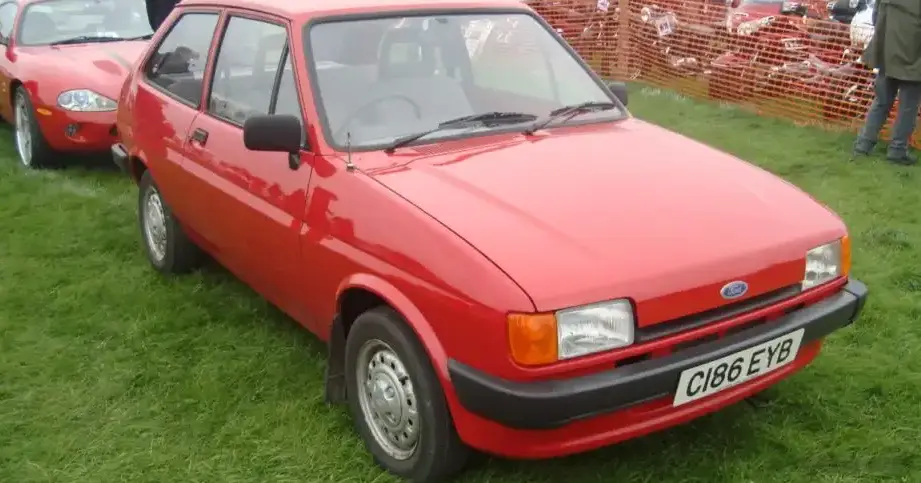
The Ford Fiesta Mk2 1.4 (FBD), produced between 1987 and 1989, represented a key iteration within the second generation of Ford’s popular supermini. Positioned as an entry-level offering in the Fiesta Mk2 range, it provided affordable transportation for a broad customer base, particularly in Europe where the Fiesta competed directly with vehicles like the Peugeot 205, Renault 5, and Volkswagen Polo. This variant aimed to balance fuel efficiency with acceptable performance for everyday driving, making it a practical choice for urban commuters and first-time car buyers. The Mk2 Fiesta, built on the platform code BC-1, was a significant update over the original Fiesta, offering improved refinement, space, and build quality.
Technical Specifications
| Brand | Ford |
| Model | Fiesta |
| Generation | Fiesta II (Mk2) |
| Type (Engine) | 1.4 (FBD) (73 Hp) |
| Start of production | 1987 |
| End of production | 1989 |
| Powertrain Architecture | Internal Combustion engine |
| Body type | Hatchback |
| Fuel Type | Petrol (Gasoline) |
| Power | 73 Hp |
| Engine Model/Code | FBD |
| Engine aspiration | Naturally aspirated engine |
| Engine oil capacity | 3.5 l (3.7 US qt | 3.08 UK qt) |
| Coolant capacity | 7.6 l (8.03 US qt | 6.69 UK qt) |
Powertrain & Engine Architecture
The Fiesta Mk2 1.4 FBD engine is a 1.388 cc inline-four cylinder, naturally aspirated gasoline engine. It’s part of the Ford Valencia engine family, known for its simplicity and durability. The FBD code specifically denotes a version of this engine tuned for 73 horsepower. The engine utilizes a single overhead camshaft (SOHC) valvetrain operating two valves per cylinder. Fuel delivery is managed by a Bosch fuel injection system, a significant upgrade from the carburetors used in earlier Fiesta models, contributing to improved fuel economy and reduced emissions. The engine’s block is cast iron, while the cylinder head is aluminum. The compression ratio is typically around 9.2:1. While a five-speed manual transmission was the most common pairing, the 1.4 FBD was also offered with a four-speed automatic transmission, though this was less frequent. The automatic transmission was a Ford-sourced unit, designed for smooth, if not particularly sporty, operation.
Driving Characteristics
The 1.4 FBD-equipped Fiesta Mk2 offered modest performance. With 73 horsepower, acceleration was adequate for city driving and short highway trips, but overtaking required careful planning. The 0-60 mph time was approximately 13-14 seconds. The four-speed automatic transmission, while providing convenience, did detract from the engine’s available power. Gear ratios were optimized for fuel efficiency rather than outright acceleration. The automatic transmission’s shift points were relatively conservative, prioritizing smoothness over responsiveness. Compared to the manual transmission versions, the automatic felt noticeably slower. The suspension, typical of the Fiesta Mk2, was tuned for comfort, providing a reasonably compliant ride on most road surfaces. Handling was predictable, but not particularly engaging. The steering was light and easy to use, making it well-suited for urban environments.
Equipment & Trim Levels
The 1.4 FBD Fiesta Mk2 typically fell into the base or mid-range trim levels, depending on the market. Standard equipment generally included cloth upholstery, a basic instrument cluster, and manual windows and door locks. The interior was functional and durable, though not particularly luxurious. Optional extras included a sunroof, upgraded stereo systems, and central locking. Higher trim levels, such as the Ghia, offered more refined interiors with features like velour upholstery and additional chrome trim. The dashboard layout was relatively simple, with clearly labeled controls. The seats provided adequate support for shorter journeys, but could become uncomfortable on longer trips. The Fiesta Mk2 offered a reasonable amount of interior space for a supermini, with sufficient headroom and legroom for four adults.
Chassis & Braking
The Fiesta Mk2 utilized a front-engine, front-wheel-drive layout. The suspension consisted of MacPherson struts at the front and a twist-beam axle at the rear. The 1.4 models typically featured drum brakes on the rear wheels and disc brakes on the front, providing adequate stopping power for its weight class. Stabilizer bars were often omitted on the base models to keep costs down, which could result in slightly more body roll during cornering. The steering was rack and pinion, providing precise and responsive control. The chassis was relatively lightweight, contributing to the Fiesta’s nimble handling. Tire sizes were typically 155/70 R13 or 165/60 R14, depending on the trim level.
Market Reception & Comparison
The Fiesta Mk2 1.4 FBD was generally well-received as an affordable and reliable city car. Critics praised its fuel efficiency and ease of driving, but noted its lack of outright performance. Compared to the more powerful 1.6-liter versions, the 1.4 FBD felt significantly slower. However, the 1.4 offered better fuel economy and lower running costs. The diesel-powered Fiesta models, while offering even better fuel economy, were often criticized for their noisy engines and limited performance. The 1.4 FBD represented a good compromise for buyers who prioritized practicality and affordability over sporty driving dynamics. Its reliability was generally considered good, although regular maintenance was essential to prevent issues.
Legacy
The Ford Fiesta Mk2 1.4 FBD remains a relatively common sight on European roads today, testament to its durability and affordability. The FBD engine is known for its robustness and relatively simple construction, making it relatively easy to maintain and repair. However, age-related issues such as corrosion and wear and tear on rubber components are common. In the used car market, these Fiestas are typically very affordable, making them popular choices for first-time car owners or those seeking a cheap and cheerful runaround. The Fiesta Mk2, and the 1.4 FBD variant in particular, played a significant role in establishing the Fiesta as one of Europe’s best-selling superminis, a position it continues to hold today. The engine’s simplicity and reliability have also made it a popular choice for classic car enthusiasts and those interested in modifying older vehicles.