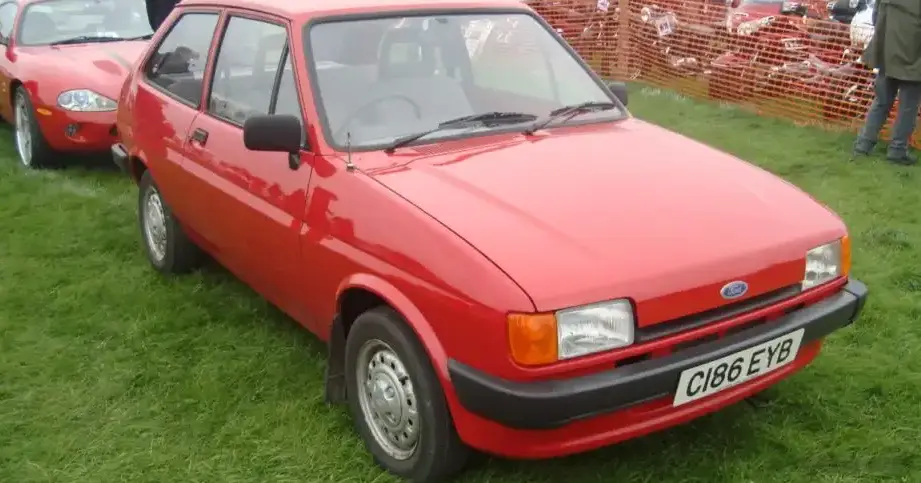
The Ford Fiesta Mk2 1.6 D (FBD), produced between 1984 and 1989, represented a crucial expansion of the Fiesta range, offering a diesel-powered option aimed at maximizing fuel economy and appealing to drivers covering high annual mileages. This variant, powered by the FBD engine, was positioned as the entry-level diesel offering within the Mk2 Fiesta lineup, sitting below the later, more powerful 1.8D models. It played a significant role in establishing the Fiesta as a practical and affordable choice in the European small car market, particularly in countries where diesel fuel was heavily subsidized and demand for economical vehicles was high. The Mk2 Fiesta itself was a significant evolution of the original Fiesta, offering improved refinement, space, and build quality.
Technical Specifications
| Brand | Ford |
| Model | Fiesta |
| Generation | Fiesta II (Mk2) |
| Type (Engine) | 1.6 D (FBD) (54 Hp) |
| Start of production | 1984 |
| End of production | 1989 |
| Powertrain Architecture | Internal Combustion engine |
| Body type | Hatchback |
| Fuel Type | Diesel |
| Power | 54 Hp |
| Engine Model/Code | FBD |
| Engine aspiration | Naturally aspirated engine |
| Engine oil capacity | 5 l (5.28 US qt | 4.4 UK qt) |
| Coolant capacity | 8.5 l (8.98 US qt | 7.48 UK qt) |
Powertrain & Engine Architecture
The heart of the Fiesta 1.6 D was the Ford FBD engine, a 1597cc inline-four cylinder diesel. This engine was a naturally aspirated, indirect injection diesel, utilizing a Bosch rotary injection pump. Indirect injection, common for diesels of this era, involved injecting fuel into a pre-chamber where it partially combusted before entering the main combustion chamber. This design reduced engine noise and improved cold-starting performance compared to direct injection systems, but at the cost of some efficiency. The FBD engine featured a cast iron block and cylinder head, contributing to its robustness and longevity. The engine’s valvetrain consisted of a single overhead camshaft operating two valves per cylinder. The engine produced 54 horsepower (40 kW) at 4200 rpm and 88 lb-ft (120 Nm) of torque at 1700 rpm. The Fiesta 1.6 D was exclusively offered with a four-speed manual transmission. An automatic transmission was not available for this engine/trim combination.
Driving Characteristics
The Fiesta 1.6 D, with its modest 54 horsepower, was not designed for outright performance. Acceleration was leisurely, with a 0-60 mph time estimated around 18-20 seconds. However, the engine’s torque characteristics made it surprisingly capable in everyday driving situations. The peak torque of 88 lb-ft, available at relatively low engine speeds, provided adequate pulling power for navigating city streets and country roads. The four-speed manual transmission was geared for economy, with relatively tall ratios. This contributed to good fuel economy – typically around 50-55 mpg – but meant that the engine often felt strained when overtaking or climbing hills. Compared to the later 1.8D Fiesta, the 1.6D offered less power and torque, resulting in slower acceleration and a lower top speed. However, the 1.6D was generally considered to be smoother and quieter than the 1.8D, due to the smaller displacement and lower compression ratio.
Equipment & Trim Levels
The Fiesta 1.6 D was typically offered in fairly basic trim levels, reflecting its position as the entry-level diesel model. Standard equipment generally included cloth upholstery, a basic dashboard with analog gauges, and steel wheels with hubcaps. Power steering and central locking were rarely fitted as standard, often being offered as optional extras. Interior trim was typically dark grey or blue. Optional extras included a sunroof, upgraded stereo systems, and different wheel trims. The Fiesta 1.6 D was often chosen by fleet buyers and company car drivers, so many examples were equipped with minimal extras to keep costs down. The overall interior design was functional and durable, prioritizing practicality over luxury.
Chassis & Braking
The Fiesta Mk2 utilized a front-wheel-drive layout with a MacPherson strut independent suspension at the front and a twist-beam rear suspension. The 1.6 D variant typically featured drum brakes on the rear wheels and disc brakes on the front. The suspension setup was tuned for comfort and ride quality, rather than sporty handling. Stabilizer bars were often omitted on the base models to further reduce cost. The steering was unassisted on many examples, requiring a reasonable amount of effort at low speeds. The chassis was relatively lightweight, contributing to the car’s nimble handling characteristics, despite the modest power output. The braking system, while adequate for normal driving, lacked the stopping power of more modern vehicles.
Market Reception & Comparison
The Ford Fiesta 1.6 D was well-received in the European market as an affordable and economical diesel-powered hatchback. Critics praised its fuel efficiency and robust engine, but noted its lack of performance. Compared to its petrol-powered siblings, the 1.6 D offered significantly better fuel economy, but at the expense of acceleration and refinement. Against competitors such as the Peugeot 205 Diesel and the Renault 5 Diesel, the Fiesta 1.6 D offered a comparable level of economy and practicality. However, some competitors offered more sophisticated features or a more refined driving experience. The Fiesta’s reputation for reliability and low running costs made it a popular choice for drivers covering high annual mileages.
Legacy
The Ford Fiesta Mk2 1.6 D, while not a performance icon, remains a fondly remembered and relatively reliable classic car. The FBD engine, when properly maintained, is known for its durability and longevity. Today, examples of the Fiesta 1.6 D are becoming increasingly sought after by classic car enthusiasts and collectors, particularly those looking for a simple, affordable, and economical classic. Parts availability is generally good, although some trim-specific components can be difficult to find. The Fiesta 1.6 D represents a significant chapter in the Fiesta’s history, demonstrating Ford’s commitment to providing affordable and practical transportation to a wide range of customers. Its enduring appeal lies in its simplicity, reliability, and fuel efficiency – qualities that remain highly valued in the used car market.