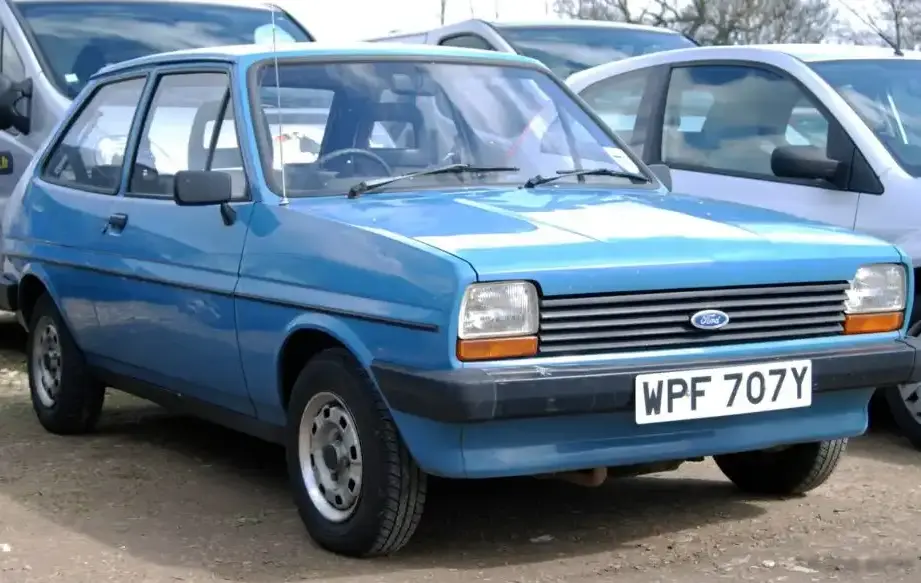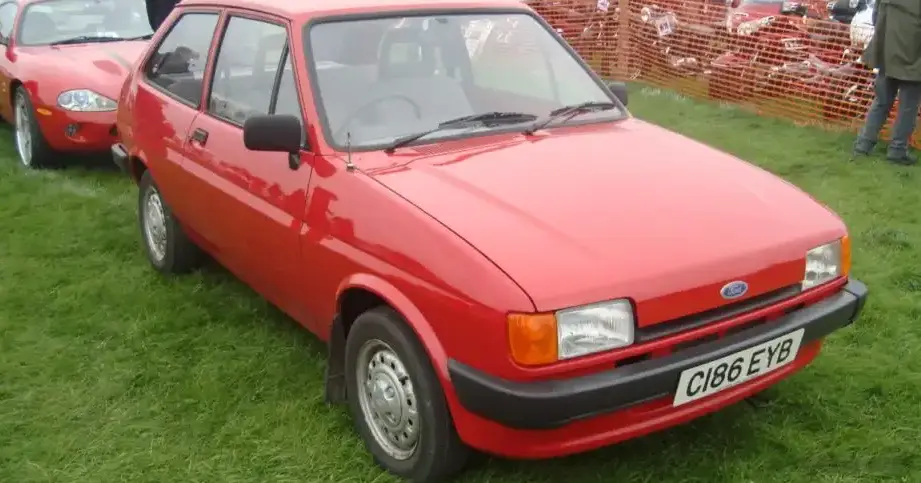
The Ford Fiesta Mk2 1.6 XR2, internally designated as the FBD model, was a performance-oriented variant of the second-generation Fiesta, produced between 1984 and 1989. Positioned as the flagship trim level, the XR2 aimed to deliver a more engaging driving experience than the standard Fiesta models. It represented Ford’s attempt to capture a segment of the market seeking a sporty, yet affordable, hatchback. The XR2 was a significant model for Ford in Europe, contributing to the Fiesta’s growing popularity and establishing a performance lineage that would continue in subsequent generations.
Technical Specifications
| Brand | Ford |
| Model | Fiesta |
| Generation | Fiesta II (Mk2) |
| Type (Engine) | 1.6 XR2 (FBD) (95 Hp) |
| Start of production | 1984 |
| End of production | 1989 |
| Powertrain Architecture | Internal Combustion engine |
| Body type | Hatchback |
| Seats | 4 |
| Doors | 3 |
| Fuel consumption (urban) | 9.1 l/100 km (25.8 US mpg, 31 UK mpg, 11 km/l) |
| Fuel Type | Petrol (Gasoline) |
| Acceleration 0 – 100 km/h | 9.3 sec |
| Acceleration 0 – 62 mph | 9.3 sec |
| Acceleration 0 – 60 mph | 8.8 sec |
| Maximum speed | 180 km/h (111.85 mph) |
| Weight-to-power ratio | 8.8 kg/Hp, 113.1 Hp/tonne |
| Weight-to-torque ratio | 6.3 kg/Nm, 158.3 Nm/tonne |
| Power | 95 Hp @ 6000 rpm |
| Power per litre | 59.4 Hp/l |
| Torque | 133 Nm @ 4000 rpm (98.1 lb.-ft. @ 4000 rpm) |
| Engine Model/Code | LUD |
| Engine displacement | 1598 cm3 (97.52 cu. in.) |
| Number of cylinders | 4 |
| Compression ratio | 9:1 |
| Engine aspiration | Naturally aspirated |
| Engine oil capacity | 3.5 l (3.7 US qt | 3.08 UK qt) |
| Coolant | 8 l (8.45 US qt | 7.04 UK qt) |
| Kerb Weight | 840 kg (1851.88 lbs.) |
| Max. weight | 1275 kg (2810.89 lbs.) |
| Max load | 435 kg (959.01 lbs.) |
| Trunk (boot) space – minimum | 215 l (7.59 cu. ft.) |
| Trunk (boot) space – maximum | 900 l (31.78 cu. ft.) |
| Fuel tank capacity | 40 l (10.57 US gal | 8.8 UK gal) |
| Length | 4710 mm (185.43 in.) |
| Width | 1620 mm (63.78 in.) |
| Height | 1335 mm (52.56 in.) |
| Wheelbase | 2290 mm (90.16 in.) |
| Minimum turning circle | 10.3 m (33.79 ft.) |
| Drivetrain Architecture | Front wheel drive |
| Number of gears and type of gearbox | 5 gears, manual transmission |
| Front brakes | Ventilated discs |
| Rear brakes | Drum |
| Tires size | 185/60 HR13 |
Powertrain & Engine Architecture
The heart of the Fiesta XR2 was the 1.6-liter, inline-four cylinder engine, bearing the Ford code LUD. This engine was a significant upgrade over the standard Fiesta’s smaller displacement units. It featured a single overhead camshaft (SOHC) valvetrain, operating two valves per cylinder. Fuel delivery was managed by a Bosch K-Jetronic mechanical fuel injection system, a relatively sophisticated setup for its time, contributing to improved fuel efficiency and responsiveness. The engine produced 95 horsepower at 6000 rpm and 133 Nm (98.1 lb-ft) of torque at 4000 rpm. The engine’s 9:1 compression ratio was a compromise between performance and the fuel quality available in European markets. The XR2 exclusively came with a five-speed manual transmission, designed to handle the increased power output and provide a more engaging driving experience.
Driving Characteristics
The Fiesta XR2 offered a noticeably more spirited driving experience compared to the base Fiesta models. The 1.6-liter engine provided brisk acceleration, with a 0-60 mph time of around 8.8 seconds and a top speed of 112 mph. While not a sports car by modern standards, the XR2 was considered quick for its class in the 1980s. The five-speed gearbox allowed for effective use of the engine’s powerband, although the gear ratios were somewhat widely spaced. Handling was generally good, thanks to the XR2’s stiffer suspension and responsive steering. However, the car’s relatively short wheelbase and front-wheel-drive layout could lead to understeer when pushed hard. Compared to later, more powerful XR2 variants (like those with 1.8-liter engines), the 1.6-liter version offered a more balanced and accessible driving experience, prioritizing agility over outright power.
Equipment & Trim Levels
The XR2 trim level was well-equipped for its time. Standard features included a unique front spoiler, side skirts, and a rear spoiler, giving the car a more aggressive appearance. Inside, the XR2 featured sport seats with enhanced bolstering, a leather-wrapped steering wheel, and a more comprehensive instrument cluster with additional gauges. The interior trim was typically dark grey or black. Optional extras included a sunroof, central locking, and upgraded audio systems. The XR2 was positioned as the premium Fiesta variant, offering a combination of performance and comfort.
Chassis & Braking
The Fiesta XR2 featured a modified chassis compared to the standard Fiesta. The suspension was stiffened with firmer springs and dampers, improving handling and reducing body roll. The front suspension utilized MacPherson struts, while the rear suspension employed a twist-beam axle. Braking duties were handled by ventilated disc brakes at the front and drum brakes at the rear. While the front discs provided adequate stopping power, the rear drums were a point of criticism, as they lacked the stopping power of disc brakes. The XR2 also featured a thicker stabilizer bar compared to the standard Fiesta, further enhancing its handling characteristics.
Market Reception & Comparison
The Fiesta XR2 was generally well-received by automotive critics. It was praised for its sporty handling, responsive engine, and attractive styling. However, some critics noted the limitations of the rear drum brakes and the somewhat basic interior. Compared to other hot hatchbacks of the era, such as the Volkswagen Golf GTI, the Fiesta XR2 offered a more affordable and accessible entry point into the performance market. It was also seen as a more focused and engaging driver’s car than some of its rivals. Fuel economy was reasonable for a performance car of the time, averaging around 31 mpg in mixed driving. Reliability was generally good, although the K-Jetronic fuel injection system could require occasional maintenance.
Legacy
The Ford Fiesta Mk2 XR2, particularly the 1.6-liter variant, has become a sought-after classic car among enthusiasts. Its combination of affordability, performance, and retro styling has made it a popular choice for restoration and modification. The engine, while not overly powerful by modern standards, is known for its durability and relatively simple maintenance requirements. The XR2’s legacy extends beyond its performance capabilities; it helped establish the Fiesta as a sporty and desirable hatchback, paving the way for future performance models. Today, well-maintained examples of the Fiesta XR2 command a premium in the used car market, reflecting its enduring appeal and historical significance.