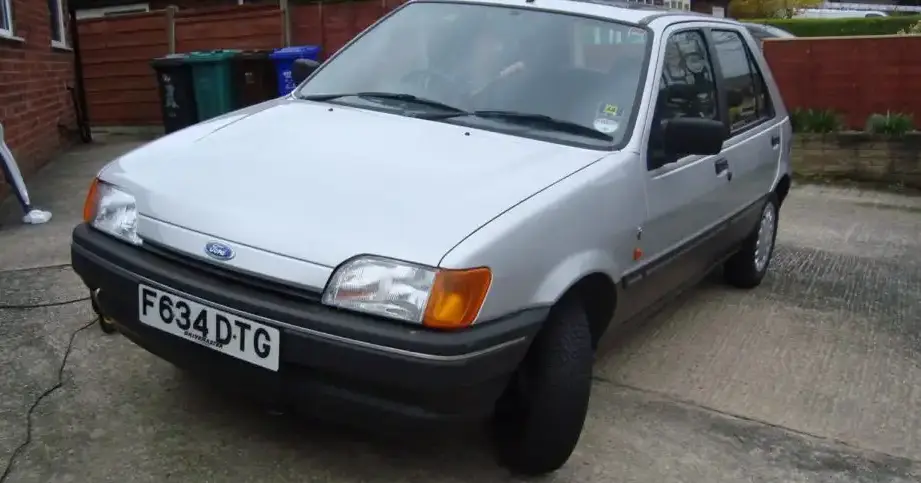
The Ford Fiesta Mk3 1.3 CAT, produced between 1991 and 1995, represented a significant evolution of Ford’s popular supermini. Falling within the Mk3 generation (1989-1997), this variant was positioned as the entry-level offering in many European markets, providing affordable and economical transportation. The “CAT” designation indicated the presence of a catalytic converter, reflecting increasingly stringent emissions regulations. It served as a crucial model for Ford, broadening the Fiesta’s appeal to budget-conscious buyers and those prioritizing fuel efficiency. This particular trim played a key role in maintaining the Fiesta’s position as one of Europe’s best-selling small cars.
Technical Specifications
| Brand | Ford |
| Model | Fiesta |
| Generation | Fiesta III (Mk3) |
| Type (Engine) | 1.3 CAT (60 Hp) |
| Start of production | 1991 |
| End of production | 1995 |
| Powertrain Architecture | Internal Combustion engine |
| Body type | Hatchback |
| Seats | 5 |
| Doors | 5 |
| Fuel Type | Petrol (Gasoline) |
| Power | 60 Hp |
| Engine layout | Front, Transverse |
| Engine Model/Code | J6B |
| Number of cylinders | 4 |
| Fuel injection system | Single-point injection |
| Engine aspiration | Naturally aspirated engine |
| Engine oil capacity | 3.25 l (3.43 US qt | 2.86 UK qt) |
| Coolant capacity | 7.1 l (7.5 US qt | 6.25 UK qt) |
| Fuel tank capacity | 42 l (11.1 US gal | 9.24 UK gal) |
| Drivetrain Architecture | The Internal combustion engine (ICE) drives the front wheels of the vehicle. |
| Drive wheel | Front wheel drive |
| Number of gears and type of gearbox | 5 gears, manual transmission |
| Front brakes | Disc |
| Rear brakes | Drum |
| Steering type | Steering rack and pinion |
| Tires size | 155/70 R13 |
| Wheel rims size | 13 |
Powertrain & Engine Architecture
The heart of the Fiesta 1.3 CAT was the Ford J6B engine, a 1.3-liter inline-four cylinder petrol engine. This engine utilized a single-point fuel injection system, a relatively simple and cost-effective technology for the time. Unlike later multi-point injection systems, the single-point system featured a single injector positioned in the throttle body, delivering fuel to all four cylinders. The engine employed a simple overhead valve (OHV) valvetrain with two valves per cylinder. The J6B engine was known for its durability and ease of maintenance, though it wasn’t a powerhouse in terms of performance. The catalytic converter, a key feature denoted by the “CAT” in the model name, was implemented to reduce harmful emissions, complying with emerging European environmental standards. The engine produced 60 horsepower and a modest amount of torque, prioritizing fuel economy over outright speed. The engine’s relatively low compression ratio and simple design contributed to its reliability, making it a popular choice for drivers seeking a dependable and economical vehicle.
Driving Characteristics
The Fiesta 1.3 CAT, with its 60 hp output and five-speed manual transmission, offered a practical but uninspiring driving experience. Acceleration was leisurely, and overtaking required careful planning. The gear ratios were tuned for economy, meaning the engine often needed to be revved to achieve optimal performance. Compared to the higher-spec Fiesta models equipped with larger engines (like the 1.6), the 1.3 CAT felt noticeably slower. However, its light weight and nimble handling made it enjoyable to drive around town. The steering was precise, and the suspension provided a comfortable ride, albeit with some body roll in corners. The five-speed gearbox allowed for efficient cruising on highways, though sustained high-speed driving was not its forte. The clutch was light and easy to operate, making it a suitable choice for novice drivers. The engine’s powerband was narrow, requiring frequent gear changes to maintain momentum, especially when climbing hills or carrying a full load.
Equipment & Trim Levels
The 1.3 CAT trim level was generally considered the base model. Standard equipment typically included basic cloth upholstery, a simple dashboard layout, and manual windows and door locks. Power steering was often an optional extra, as was a radio. The interior was functional and durable, prioritizing practicality over luxury. The seats offered adequate support for short journeys, but lacked the bolstering found in higher-spec trims. Optional extras could include upgraded interior trim, a sunroof, and alloy wheels, allowing buyers to personalize their Fiesta to some extent. The overall aesthetic was understated and functional, reflecting the car’s budget-friendly positioning. Features like a rear window wiper and basic instrumentation were standard, but more advanced options like central locking and electric windows were typically reserved for higher trim levels.
Chassis & Braking
The Fiesta Mk3 utilized a relatively simple chassis design. The front suspension consisted of MacPherson struts, while the rear suspension employed a twist beam setup. This configuration provided a good balance between ride comfort and handling. The 1.3 CAT models typically featured disc brakes on the front wheels and drum brakes on the rear. This braking setup was adequate for the car’s performance and weight, but lacked the stopping power of the all-disc brake systems found on higher-spec models. The steering was a rack and pinion system, providing precise and responsive steering feel. The 13-inch wheels were fitted with 155/70 R13 tires, offering a reasonable compromise between grip and fuel efficiency. The relatively simple suspension setup contributed to the car’s affordability and ease of maintenance, but it also limited its handling capabilities compared to more sophisticated suspension designs.
Market Reception & Comparison
The Fiesta 1.3 CAT was generally well-received as an affordable and reliable small car. Critics praised its fuel efficiency and ease of driving, but noted its lack of performance. Compared to other small cars of the era, such as the Peugeot 205 and the Renault Clio, the Fiesta offered a more practical and less sporty driving experience. Within the Fiesta lineup, the 1.3 CAT served as a stepping stone to the more powerful 1.6 and 1.8 models. The 1.6 offered a significant performance boost, while the 1.8 provided even more power and refinement. However, the 1.3 CAT remained a popular choice for buyers who prioritized economy and affordability. Its simple mechanicals also contributed to lower maintenance costs. The 1.3 CAT appealed to a broad demographic, including first-time car buyers, city dwellers, and those seeking a reliable and economical runabout.
Legacy
The Ford Fiesta Mk3 1.3 CAT has proven to be a remarkably durable and reliable car. Many examples are still on the road today, testament to the quality of its construction and the simplicity of its design. The J6B engine is known for its longevity, and parts availability remains relatively good. In the used car market, the 1.3 CAT is often sought after by enthusiasts looking for a classic and affordable small car. While it may not offer the performance or features of more modern vehicles, it provides a charming and nostalgic driving experience. Its enduring popularity is a reflection of its practicality, reliability, and affordability – qualities that continue to resonate with car buyers today. The Fiesta Mk3, and the 1.3 CAT variant in particular, cemented the Fiesta’s reputation as a dependable and economical choice in the supermini segment. Its influence can still be seen in the design and engineering of modern small cars, emphasizing the importance of fuel efficiency and affordability.