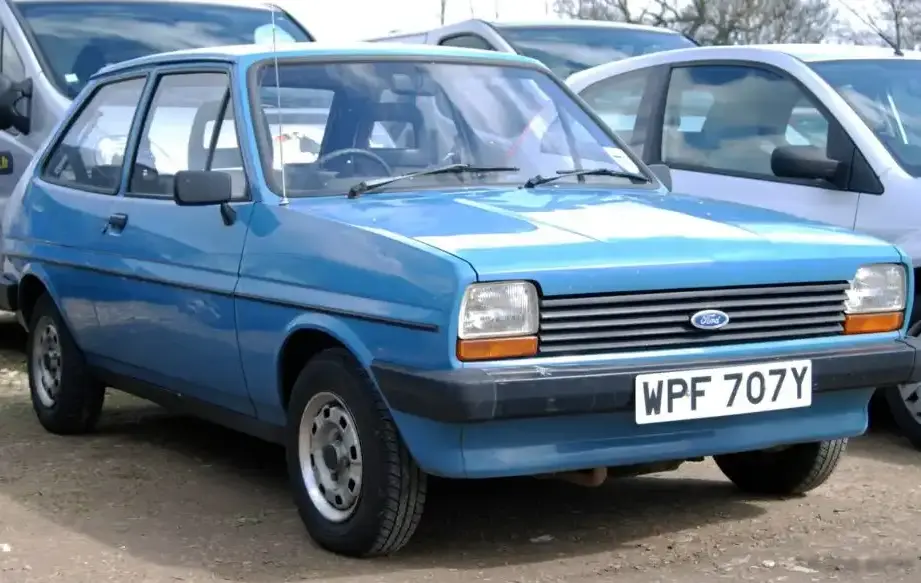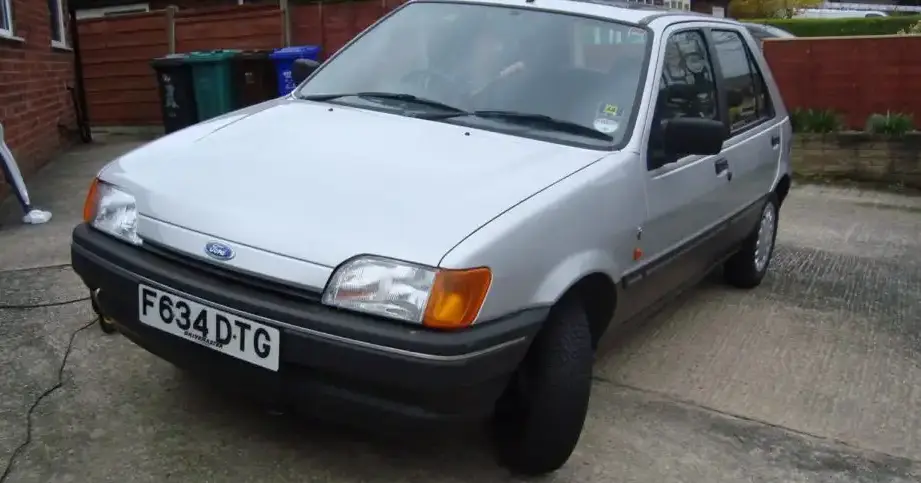
The Ford Fiesta Mk3 1.6i Turbo, produced between 1990 and 1992, represented a performance-oriented variant within the third generation Fiesta lineup. Positioned as a sporty offering, it aimed to provide a more engaging driving experience than the standard, naturally aspirated models. This variant was available in both 3-door and 5-door hatchback configurations, catering to a range of buyers seeking a compact yet spirited vehicle. It was a relatively short-lived model, bridging the gap between the more economical Fiesta trims and the potential for a full-fledged hot hatch.
Technical Specifications
| Brand | Ford |
| Model | Fiesta |
| Generation | Fiesta III (Mk3) |
| Type (Engine) | 1.6 i Turbo (133 Hp) |
| Start of production | 1990 |
| End of production | 1992 |
| Powertrain Architecture | Internal Combustion engine |
| Body type | Hatchback |
| Seats | 5 |
| Doors | 3/5 |
| Fuel Type | Petrol (Gasoline) |
| Acceleration 0 – 100 km/h | 8.2 sec |
| Acceleration 0 – 62 mph | 8.2 sec |
| Acceleration 0 – 60 mph | 7.8 sec |
| Maximum speed | 205 km/h (127.38 mph) |
| Weight-to-power ratio | 6.9 kg/Hp, 144.6 Hp/tonne |
| Weight-to-torque ratio | 5 kg/Nm, 200 Nm/tonne |
| Power | 133 Hp @ 5500 rpm |
| Power per litre | 83.2 Hp/l |
| Torque | 184 Nm @ 2400 rpm (135.71 lb.-ft. @ 2400 rpm) |
| Engine layout | Front, Transverse |
| Engine Model/Code | LHA |
| Engine displacement | 1598 cm3 (97.52 cu. in.) |
| Number of cylinders | 4 |
| Engine configuration | Inline |
| Piston Stroke | 79.5 mm (3.13 in.) |
| Compression ratio | 8.2:1 |
| Number of valves per cylinder | 2 |
| Fuel injection system | Multi-port manifold injection |
| Engine aspiration | Turbocharger |
| Valvetrain | OHC |
| Engine oil capacity | 3.6 l (3.8 US qt | 3.17 UK qt) |
| Coolant | 7 l (7.4 US qt | 6.16 UK qt) |
| Kerb Weight | 920 kg (2028.25 lbs) |
| Max. weight | 1350 kg (2976.24 lbs) |
| Max load | 430 kg (947.99 lbs) |
| Trunk (boot) space – minimum | 250 l (8.83 cu. ft.) |
| Trunk (boot) space – maximum | 625 l (22.07 cu. ft.) |
| Fuel tank capacity | 42 l (11.1 US gal | 9.24 UK gal) |
| Length | 3743 mm (147.36 in.) |
| Width | 1606 mm (63.23 in.) |
| Height | 1379 mm (54.29 in.) |
| Wheelbase | 2446 mm (96.3 in.) |
| Front track | 1392 mm (54.8 in.) |
| Rear (Back) track | 1384 mm (54.49 in.) |
| Drivetrain Architecture | The Internal combustion engine (ICE) drives the front wheels of the vehicle. |
| Drive wheel | Front wheel drive |
| Number of gears and type of gearbox | 5 gears, manual transmission |
| Front suspension | Coil spring |
| Rear suspension | Coil spring |
| Front brakes | Ventilated discs |
| Rear brakes | Ventilated discs |
| Assisting systems | ABS (Anti-lock braking system) |
| Steering type | Steering rack and pinion |
| Tires size | 185/55 R14 |
Introduction
The Fiesta Mk3 1.6i Turbo, launched in 1990, was a notable addition to the Fiesta range. Built on the Mk3 platform (often referred to as the 1HX0/A3 chassis), it aimed to offer a more exciting driving experience than the standard 1.1L, 1.3L, and 1.6L naturally aspirated models. It was positioned as a performance upgrade, though not a full-blown hot hatch like the later XR2. The model was produced for a relatively short period, ending production in 1992, making it a somewhat rare and collectible variant today.
Powertrain & Engine Architecture
The heart of the 1.6i Turbo was the LHA engine, a 1598cc inline-four cylinder gasoline engine. This engine featured a turbocharger and multi-port fuel injection, allowing it to produce 133 horsepower at 5500 rpm and 184 Nm (135.71 lb-ft) of torque at 2400 rpm. The engine utilized an overhead camshaft (OHC) valvetrain with two valves per cylinder. The turbocharger provided a significant boost in power compared to the naturally aspirated 1.6L engine, offering improved acceleration and overall performance. The engine was transversely mounted, driving the front wheels. The transmission was a 5-speed manual gearbox, chosen to complement the engine’s power output and provide a more engaging driving experience.
Driving Characteristics
The 1.6i Turbo offered a noticeable improvement in performance over the standard Fiesta models. The turbocharger provided a surge of power in the mid-range, making overtaking and climbing hills considerably easier. While not as raw or focused as a dedicated hot hatch, the 1.6i Turbo provided a good balance between performance and everyday usability. The 5-speed manual transmission allowed drivers to keep the engine in its optimal power band. Compared to the standard 1.6L, the turbo model felt significantly more responsive and capable. The gear ratios were tuned to provide brisk acceleration, although the turbo lag was noticeable at lower engine speeds.
Equipment & Trim Levels
The 1.6i Turbo typically came with a higher level of standard equipment than the base Fiesta models. This included features like power steering, upgraded interior trim, and often, alloy wheels. Interior upholstery was typically cloth, with a sporty design. Optional extras could include a sunroof, central locking, and upgraded audio systems. The dashboard layout was similar to other Mk3 Fiestas, but the 1.6i Turbo often featured additional gauges, such as a boost gauge, to monitor the turbocharger’s performance. The trim level was generally positioned as a mid-range offering, bridging the gap between the basic models and the more luxurious trims.
Chassis & Braking
The Fiesta Mk3 1.6i Turbo utilized a relatively simple suspension setup, consisting of coil springs and dampers all around. The front suspension featured independent coil springs, while the rear suspension used a twist beam arrangement. Braking was provided by ventilated discs on all four wheels, a significant upgrade over the rear drum brakes found on some lower-spec Fiesta models. An Anti-lock Braking System (ABS) was often included as standard equipment, enhancing safety and control during braking. The chassis was reinforced in certain areas to handle the increased power output of the turbocharged engine.
Market Reception & Comparison
The Fiesta Mk3 1.6i Turbo was generally well-received by automotive critics. It was praised for its improved performance and engaging driving experience. However, some reviewers noted the presence of turbo lag and the relatively basic interior compared to some of its rivals. Compared to other trims in the Fiesta lineup, the 1.6i Turbo offered a significant performance advantage, but at a higher price point. Fuel economy was also slightly lower than the naturally aspirated models due to the increased power output. Compared to rivals like the Peugeot 205 GTI or the Volkswagen Polo GT, the Fiesta 1.6i Turbo offered a more affordable and accessible entry point into the world of performance hatchbacks.
Legacy
The Fiesta Mk3 1.6i Turbo has gained a cult following among enthusiasts in recent years. The LHA engine, while not without its quirks, is generally considered to be a reliable unit when properly maintained. Common issues include turbocharger wear and potential oil leaks. Today, well-maintained examples are becoming increasingly rare and sought after by collectors. The 1.6i Turbo represents a significant chapter in the Fiesta’s history, demonstrating Ford’s commitment to offering a range of models to suit different tastes and budgets. Its blend of performance, affordability, and practicality has ensured its enduring appeal in the used car market.