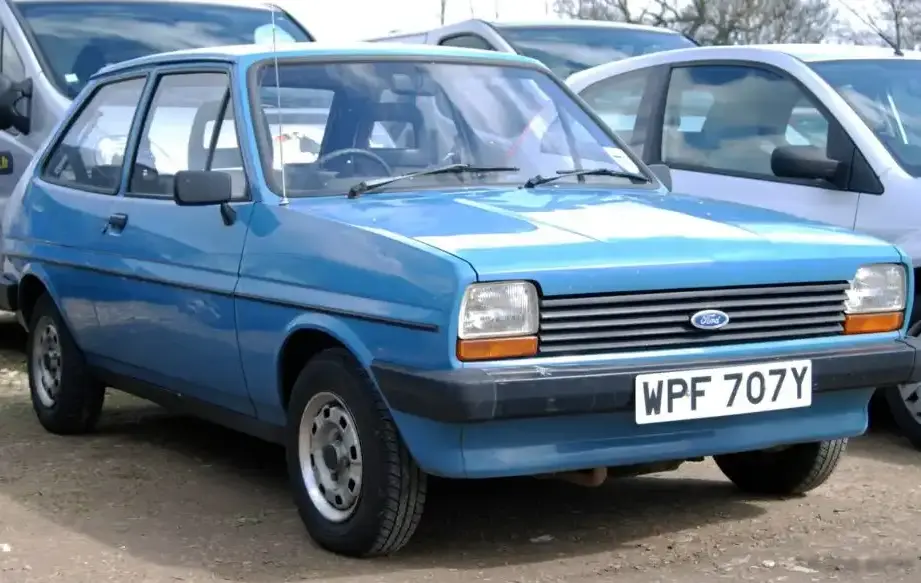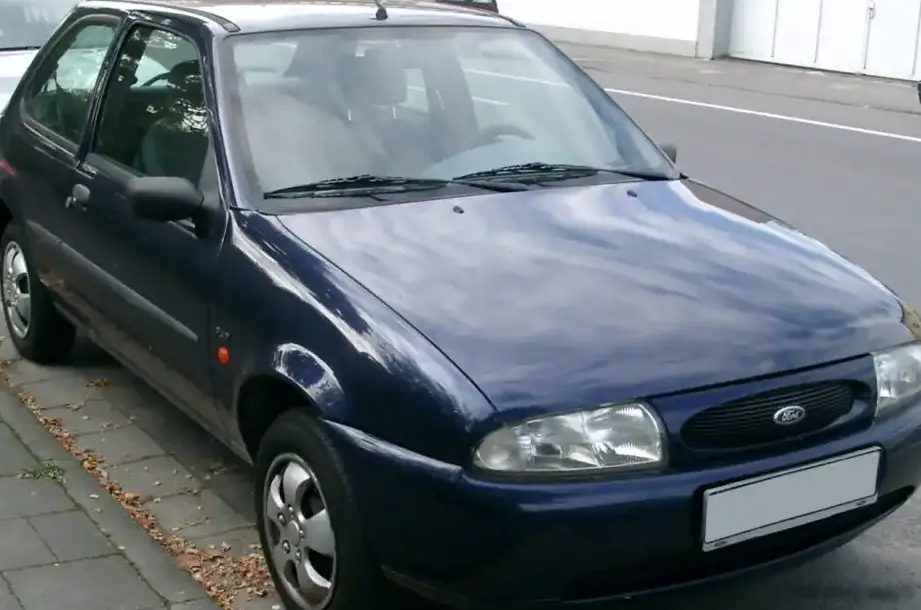
The Ford Fiesta Mk4, produced between 1996 and 1999, marked a significant evolution for Ford’s supermini. The 3-door 1.3i variant, powered by a 60 horsepower engine, served as the entry point to the Mk4 Fiesta range. This model was primarily targeted towards budget-conscious buyers, first-time drivers, and those prioritizing economical transportation. It occupied the base trim level, positioned below the 1.4 and 1.6-liter models, and considerably below the sportier Zetec versions. The Mk4 Fiesta was a vital model for Ford of Europe, building upon the success of its predecessors and establishing a strong foothold in the competitive small car segment.
Technical Specifications
| Brand | Ford |
| Model | Fiesta |
| Generation | Fiesta IV (Mk4) 3 door |
| Type (Engine) | 1.3 i (60 Hp) |
| Start of production | January, 1996 |
| End of production | September, 1999 |
| Powertrain Architecture | Internal Combustion engine |
| Body type | Hatchback |
| Seats | 5 |
| Doors | 3 |
| Fuel consumption (combined) | 7.1 l/100 km |
| Fuel consumption (US mpg) | 33.1 US mpg |
| Fuel consumption (UK mpg) | 39.8 UK mpg |
| Fuel consumption (km/l) | 14.1 km/l |
| CO2 emissions | 161 g/km |
| Fuel Type | Petrol (Gasoline) |
| Acceleration 0 – 100 km/h | 15.9 sec |
| Acceleration 0 – 62 mph | 15.9 sec |
| Acceleration 0 – 60 mph | 15.1 sec |
| Maximum speed | 155 km/h (96.31 mph) |
| Weight-to-power ratio | 17.1 kg/Hp |
| Weight-to-torque ratio | 9.8 kg/Nm |
| Power | 60 Hp @ 5000 rpm |
| Power per litre | 46.2 Hp/l |
| Torque | 105 Nm @ 2500 rpm (77.44 lb.-ft. @ 2500 rpm) |
| Engine layout | Front, Transverse |
| Engine Model/Code | J4C, J4J, J4L, J4Q, J4R, J4T, JBC |
| Engine displacement | 1299 cm3 (79.27 cu. in.) |
| Number of cylinders | 4 |
| Engine configuration | Inline |
| Cylinder Bore | 74 mm (2.91 in.) |
| Piston Stroke | 75.5 mm (2.97 in.) |
| Compression ratio | 9.5:1 |
| Number of valves per cylinder | 2 |
| Fuel injection system | Multi-port manifold injection |
| Engine aspiration | Naturally aspirated engine |
| Valvetrain | OHC |
| Engine oil capacity | 3.25 l (3.43 US qt | 2.86 UK qt) |
| Coolant capacity | 7.1 l (7.5 US qt | 6.25 UK qt) |
| Kerb Weight | 1024 kg (2257.53 lbs.) |
| Max. weight | 1460 kg (3218.75 lbs.) |
| Max load | 436 kg (961.22 lbs.) |
| Trunk (boot) space – minimum | 250 l (8.83 cu. ft.) |
| Trunk (boot) space – maximum | 930 l (32.84 cu. ft.) |
| Fuel tank capacity | 42 l (11.1 US gal | 9.24 UK gal) |
| Max. roof load | 75 kg (165.35 lbs.) |
| Permitted trailer load with brakes (12%) | 900 kg (1984.16 lbs.) |
| Permitted trailer load without brakes | 310 kg (683.43 lbs.) |
| Length | 3828 mm (150.71 in.) |
| Width | 1634 mm (64.33 in.) |
| Height | 1334 mm (52.52 in.) |
| Wheelbase | 2446 mm (96.3 in.) |
| Front track | 1429 mm (56.26 in.) |
| Rear track | 1384 mm (54.49 in.) |
| Drivetrain Architecture | Front wheel drive |
| Number of gears | 5 gears, manual transmission |
| Front suspension | Coil spring |
| Rear suspension | Coil spring |
| Front brakes | Disc |
| Rear brakes | Drum |
| Assisting systems | ABS (Anti-lock braking system) |
| Steering type | Steering rack and pinion |
| Power steering | Hydraulic Steering |
| Tires size | 165/70 R13 |
| Wheel rims size | 13 |
Powertrain & Engine Architecture
The 1.3-liter engine, identified by engine codes such as J4C, J4J, J4L, J4Q, J4R, J4T, and JBC, was a naturally aspirated, inline-four cylinder unit. It featured a single overhead camshaft (OHC) valvetrain with two valves per cylinder. Fuel delivery was managed by a multi-port fuel injection system, a common setup for the era. This engine was known for its simplicity and relatively low maintenance requirements. The 60 horsepower output was achieved at 5000 rpm, while peak torque of 105 Nm (77.44 lb-ft) arrived at 2500 rpm. The engine was transversely mounted in the front of the vehicle, driving the front wheels. The Fiesta 1.3i was typically equipped with a five-speed manual transmission, although a four-speed automatic transmission was also available, albeit less common. The automatic transmission, while offering convenience, did impact acceleration and fuel economy.
Driving Characteristics
The 1.3i Fiesta with the manual transmission offered adequate, though not exhilarating, performance. Acceleration to 60 mph took around 15.1 seconds, and top speed was approximately 155 km/h (96 mph). The automatic version was noticeably slower. The engine felt strained when pushed hard, particularly when fully loaded or climbing hills. The gear ratios in the manual transmission were well-spaced for everyday driving, providing reasonable flexibility. The automatic transmission, while smooth, lacked the responsiveness of more modern units. Handling was typical of a small hatchback – light and nimble, making it easy to maneuver in urban environments. The suspension provided a comfortable ride, although it could feel somewhat bouncy on uneven surfaces.
Equipment & Trim Levels
The base 1.3i Fiesta was fairly spartan in terms of equipment. Standard features generally included power steering, central locking, and an adjustable steering column. Interior upholstery was typically cloth, and the dashboard featured a simple, functional design. Optional extras included electric front windows, a sunroof, and upgraded audio systems. Higher trim levels, such as the LX and Zetec, added features like alloy wheels, body-colored bumpers, and more luxurious interior trim.
Chassis & Braking
The Mk4 Fiesta utilized a relatively simple chassis design. Front suspension consisted of coil springs and MacPherson struts, while the rear employed a twist beam setup with coil springs. Brakes were disc on the front wheels and drum brakes on the rear. ABS (Anti-lock Braking System) was available as an option, enhancing safety. The suspension was tuned for comfort rather than outright handling prowess. The relatively light weight of the 1.3i model helped to compensate for its modest power output.
Market Reception & Comparison
The 1.3i Fiesta was generally well-received as an affordable and practical city car. Critics praised its fuel economy and ease of driving, but noted its lack of performance. Compared to the 1.4 and 1.6-liter models, the 1.3i offered significantly less power and acceleration. However, it was more economical to run and cheaper to insure. The 1.3i also differed from the sportier Zetec variants, which featured more powerful engines, upgraded suspension, and a more aggressive styling package. The 1.3i appealed to a different demographic – those prioritizing affordability and practicality over performance.
Legacy
The 1.3i Fiesta Mk4 remains a relatively common sight on European roads today, testament to its durability and reliability. The engine, while not particularly powerful, is known for its longevity when properly maintained. Common issues include oil leaks and wear in the suspension components. The availability of spare parts is generally good, making it a relatively affordable car to keep running. In the used car market, the 1.3i Fiesta Mk4 represents a budget-friendly option for those seeking a simple, reliable, and economical mode of transportation. Its simplicity makes it a popular choice for novice mechanics and those looking for a straightforward project car.