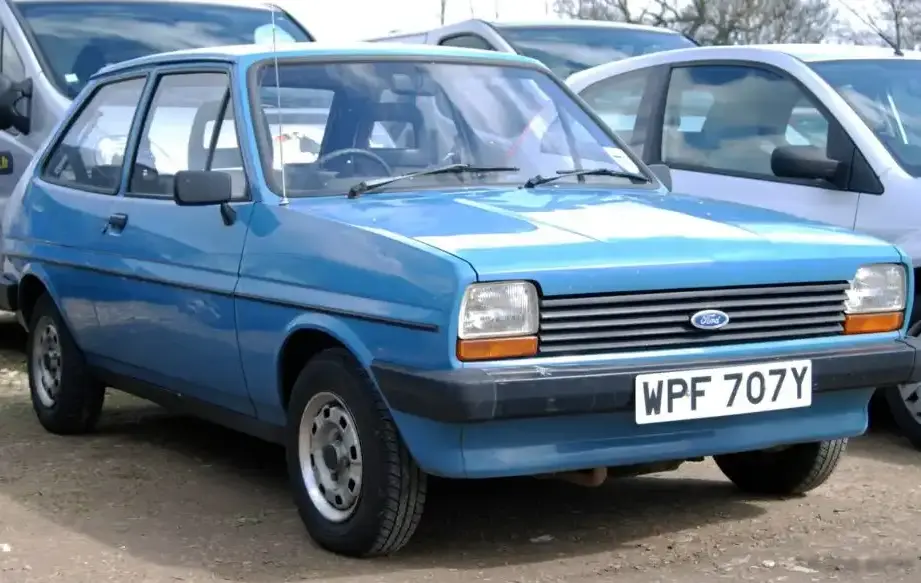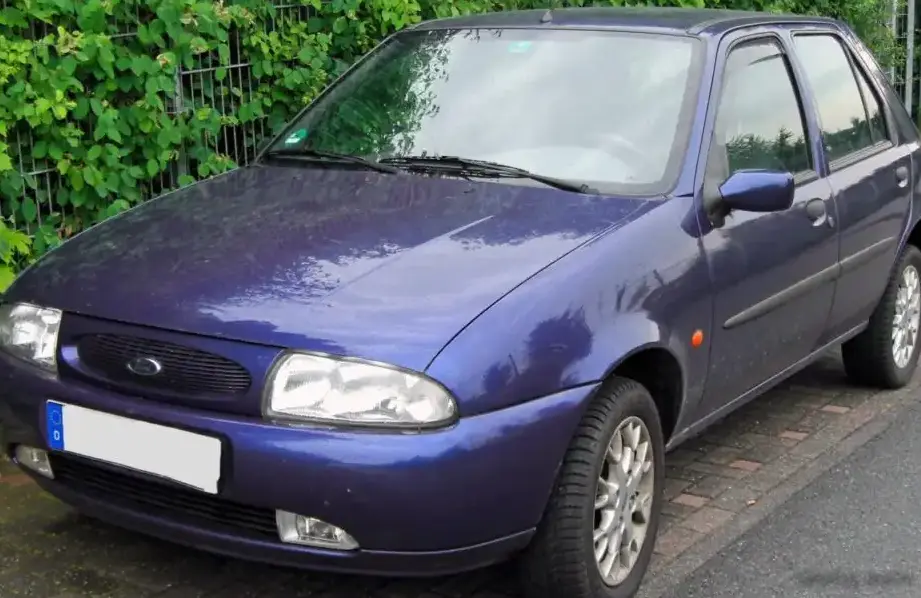
The Ford Fiesta Mk4, produced between 1995 and 2002, represented a significant step forward for Ford’s supermini. The 1.25i 16V variant, available with a five-speed manual transmission, was a mainstay of the range from 1996 to 1999. Positioned as an entry-level to mid-range offering, it aimed to provide affordable and economical transportation for a broad customer base. This model was particularly important in the European market, where the Fiesta competed directly with rivals like the Peugeot 206, Renault Clio, and Volkswagen Polo. The Mk4 Fiesta was a departure from its predecessor, offering increased interior space, improved safety features, and a more modern design.
Technical Specifications
| Brand | Ford |
| Model | Fiesta |
| Generation | Fiesta IV (Mk4) 5 door |
| Type (Engine) | 1.25i 16V (75 Hp) |
| Start of production | 1996 |
| End of production | 1999 |
| Powertrain Architecture | Internal Combustion engine |
| Body type | Hatchback |
| Seats | 5 |
| Doors | 5 |
| Fuel consumption (combined) | 7.1 l/100 km |
| Fuel consumption (US mpg) | 33.1 US mpg |
| Fuel consumption (UK mpg) | 39.8 UK mpg |
| Fuel consumption (km/l) | 14.1 km/l |
| CO2 emissions | 166 g/km |
| Fuel Type | Petrol (Gasoline) |
| Acceleration 0 – 100 km/h | 12.7 sec |
| Acceleration 0 – 62 mph | 12.7 sec |
| Acceleration 0 – 60 mph | 12.1 sec |
| Maximum speed | 170 km/h (105.63 mph) |
| Weight-to-power ratio | 13.9 kg/Hp |
| Weight-to-torque ratio | 9.5 kg/Nm |
| Power | 75 Hp @ 5500 rpm |
| Power per litre | 60.4 Hp/l |
| Torque | 110 Nm @ 4200 rpm (81.13 lb.-ft. @ 4200 rpm) |
| Engine layout | Front, Transverse |
| Engine Model/Code | DHA, DHB, DHC, DHD, DHE, DHF, DHG |
| Engine displacement | 1242 cm3 (75.79 cu. in.) |
| Number of cylinders | 4 |
| Engine configuration | Inline |
| Cylinder Bore | 71.9 mm (2.83 in.) |
| Piston Stroke | 76.5 mm (3.01 in.) |
| Compression ratio | 10:1 |
| Number of valves per cylinder | 4 |
| Fuel injection system | Multi-port manifold injection |
| Engine aspiration | Naturally aspirated engine |
| Valvetrain | DOHC |
| Engine oil capacity | 4 l (4.23 US qt | 3.52 UK qt) |
| Coolant capacity | 6 l (6.34 US qt | 5.28 UK qt) |
| Kerb Weight | 1043 kg (2299.42 lbs.) |
| Max. weight | 1475 kg (3251.82 lbs.) |
| Max load | 432 kg (952.4 lbs.) |
| Trunk (boot) space – minimum | 250 l (8.83 cu. ft.) |
| Trunk (boot) space – maximum | 930 l (32.84 cu. ft.) |
| Fuel tank capacity | 42 l (11.1 US gal | 9.24 UK gal) |
| Max. roof load | 75 kg (165.35 lbs.) |
| Permitted trailer load with brakes (12%) | 900 kg (1984.16 lbs.) |
| Permitted trailer load without brakes | 310 kg (683.43 lbs.) |
| Length | 3828 mm (150.71 in.) |
| Width | 1634 mm (64.33 in.) |
| Height | 1334 mm (52.52 in.) |
| Wheelbase | 2446 mm (96.3 in.) |
| Front track | 1429 mm (56.26 in.) |
| Rear track | 1384 mm (54.49 in.) |
| Minimum turning circle | 9.9 m (32.48 ft.) |
| Drivetrain Architecture | Front wheel drive |
| Number of gears | 5 gears, manual transmission |
| Front suspension | Independent type McPherson |
| Rear suspension | Torsion |
| Front brakes | Disc |
| Rear brakes | Drum |
| Assisting systems | ABS (Anti-lock braking system) |
| Steering type | Steering rack and pinion |
| Power steering | Hydraulic Steering |
| Tires size | 185/55R14 |
| Wheel rims size | 14 |
Powertrain & Engine Architecture
The heart of the Fiesta 1.25i 16V is the Ford DHA/DHB engine family. This 1.242-liter inline-four cylinder engine utilizes a multi-port fuel injection system, delivering fuel directly into the intake ports. The engine features a double overhead camshaft (DOHC) valvetrain, operating four valves per cylinder. This configuration, while not groundbreaking, provided a good balance of power and efficiency for its time. The engine codes (DHA, DHB, DHC, DHD, DHE, DHF, DHG) denote minor variations in calibration and emissions control equipment depending on the specific market. The five-speed manual transmission was the standard offering, providing a reasonably well-spaced gear ratio for everyday driving. The transmission itself is a conventional design, known for its durability and relatively low maintenance requirements.
Driving Characteristics
The 75 horsepower and 81 lb-ft of torque produced by the 1.25i engine translated to adequate, but not exhilarating, performance. Acceleration from 0-60 mph took around 12.1 seconds, and top speed was approximately 105 mph. In real-world driving, the Fiesta felt lively enough for urban commutes and shorter trips. However, overtaking maneuvers required careful planning, and the engine could feel strained when fully loaded or climbing hills. Compared to the more powerful 1.4 and 1.6-liter variants, the 1.25i offered a more economical driving experience, but at the expense of outright performance. The manual transmission allowed for precise control, but the gear ratios were geared towards fuel efficiency rather than sporty driving.
Equipment & Trim Levels
The 1.25i 16V Fiesta typically came equipped with basic, but functional, features. Standard equipment included power steering, central locking, and an adjustable steering column. Interior upholstery was typically cloth, and the dashboard featured a simple, straightforward design. Optional extras included air conditioning, electric windows, and a radio/cassette player. Higher trim levels, such as the ‘Style’ or ‘LX’, added features like alloy wheels, upgraded interior trim, and body-colored bumpers. The 5-door configuration was popular for its practicality, offering easier access to the rear seats compared to the 3-door model.
Chassis & Braking
The Fiesta Mk4 utilized a McPherson strut front suspension and a torsion beam rear suspension. This setup provided a comfortable ride quality, although it wasn’t particularly sporty. The front brakes were discs, while the rear brakes were drums – a common configuration for cars in this price range. Anti-lock Braking System (ABS) was available as an option, enhancing safety by preventing wheel lockup during hard braking. The steering was hydraulic power-assisted, providing light and easy steering feel. The relatively lightweight construction of the Fiesta contributed to its nimble handling characteristics.
Market Reception & Comparison
The Fiesta 1.25i 16V was generally well-received by critics as a practical and affordable supermini. It was praised for its fuel efficiency, comfortable ride, and relatively spacious interior. However, some reviewers noted its lack of outright performance compared to rivals. In terms of fuel economy, the 1.25i offered competitive figures, typically achieving around 33-40 mpg in mixed driving conditions. Reliability was generally good, although regular maintenance was essential to prevent issues with the fuel injection system and cooling system. Compared to the higher-spec Fiesta models, the 1.25i represented a more budget-friendly option, appealing to buyers who prioritized economy and practicality over performance.
Legacy
The Ford Fiesta Mk4 1.25i 16V remains a popular choice among used car buyers looking for an affordable and reliable supermini. The DHA/DHB engine is known for its durability, although regular servicing is crucial to maintain its longevity. Parts availability is generally good, and maintenance costs are relatively low. While not a particularly exciting car to drive, the Fiesta 1.25i 16V offers a practical and economical solution for everyday transportation, and its simple design makes it relatively easy to maintain and repair. It represents a significant milestone in Ford’s history, solidifying the Fiesta’s position as one of Europe’s most popular superminis.