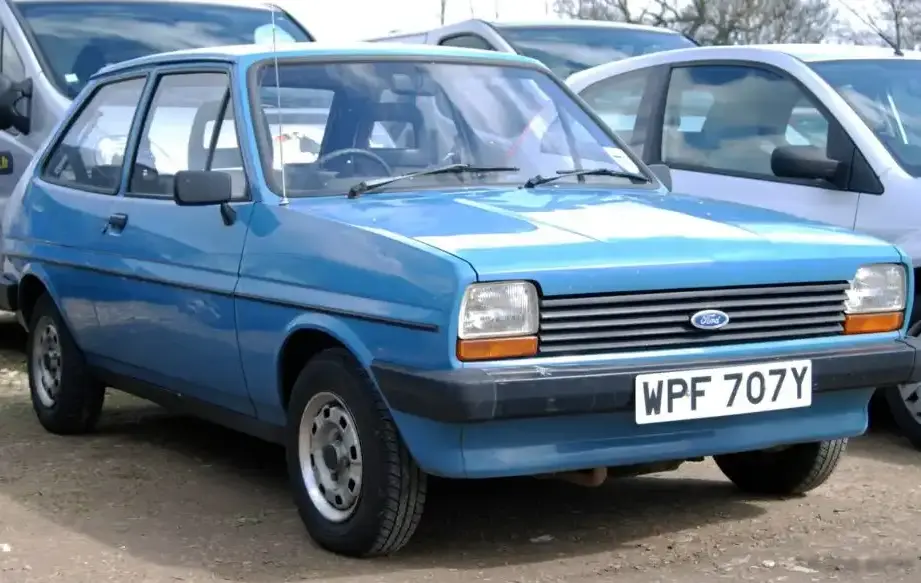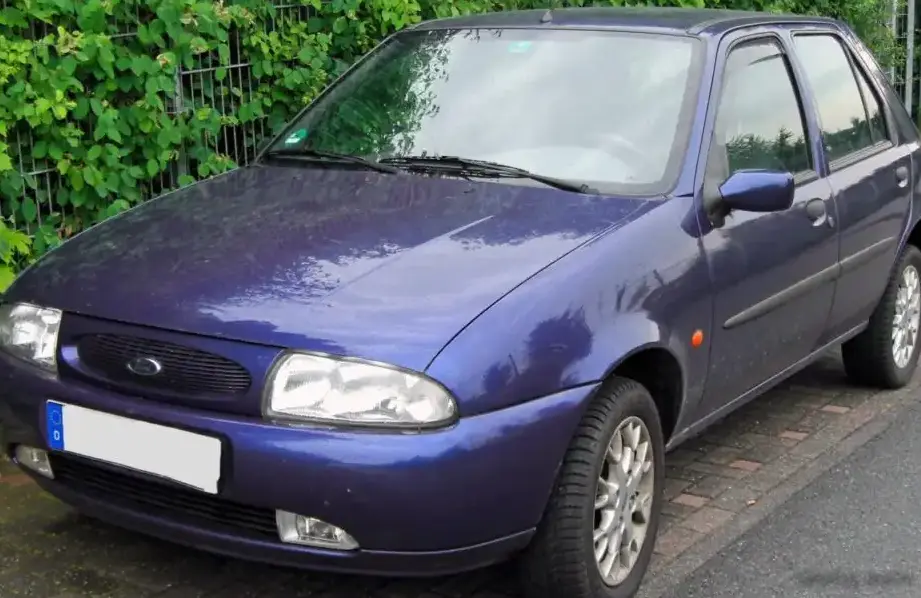
The Ford Fiesta Mk4, produced from 1996 to 1999, represented a significant step forward for Ford’s supermini in terms of refinement and practicality. The 5-door hatchback body style became increasingly popular during this generation, offering enhanced accessibility for families. Within the Mk4 Fiesta range, the 1.3 i variant, producing 50 horsepower, served as the entry point to the model line, aimed at budget-conscious buyers and those prioritizing fuel economy over outright performance. This model occupied a crucial position in the European market, where small, economical cars were – and continue to be – in high demand. While not a performance leader, the 1.3 Fiesta provided reliable and affordable transportation for a wide range of drivers.
Technical Specifications
| Brand | Ford |
| Model | Fiesta |
| Generation | Fiesta IV (Mk4) 5 door |
| Type (Engine) | 1.3 i (50 Hp) |
| Start of production | January, 1996 |
| End of production | September, 1999 |
| Powertrain Architecture | Internal Combustion engine |
| Body type | Hatchback |
| Seats | 5 |
| Doors | 5 |
| Fuel consumption (urban) | 8.7 l/100 km (27 US mpg, 32.5 UK mpg, 11.5 km/l) |
| Fuel consumption (extra urban) | 5.9 l/100 km (39.9 US mpg, 47.9 UK mpg, 16.9 km/l) |
| Fuel consumption (combined) | 6.9 l/100 km (34.1 US mpg, 40.9 UK mpg, 14.5 km/l) |
| Fuel Type | Petrol (Gasoline) |
| Acceleration 0 – 100 km/h | 19.5 sec |
| Acceleration 0 – 62 mph | 19.5 sec |
| Acceleration 0 – 60 mph | 18.5 sec |
| Maximum speed | 143 km/h (88.86 mph) |
| Weight-to-power ratio | 20.7 kg/Hp, 48.4 Hp/tonne |
| Weight-to-torque ratio | 11 kg/Nm, 91 Nm/tonne |
| Power | 50 Hp @ 4500 rpm |
| Power per litre | 38.5 Hp/l |
| Torque | 94 Nm @ 2500 rpm (69.33 lb.-ft. @ 2500 rpm) |
| Engine layout | Front, Transverse |
| Engine Model/Code | JJA, JJC, JJE, JJJ, JJK, JJM |
| Engine displacement | 1299 cm3 (79.27 cu. in.) |
| Number of cylinders | 4 |
| Engine configuration | Inline |
| Cylinder Bore | 74 mm (2.91 in.) |
| Piston Stroke | 75.5 mm (2.97 in.) |
| Compression ratio | 9.5:1 |
| Number of valves per cylinder | 2 |
| Fuel injection system | Multi-port manifold injection |
| Engine aspiration | Naturally aspirated engine |
| Valvetrain | OHC |
| Engine oil capacity | 3.25 l (3.43 US qt, 2.86 UK qt) |
| Coolant | 7.1 l (7.5 US qt, 6.25 UK qt) |
| Kerb Weight | 1033 kg (2277.38 lbs.) |
| Max. weight | 1450 kg (3196.7 lbs.) |
| Max load | 417 kg (919.33 lbs.) |
| Trunk (boot) space – minimum | 250 l (8.83 cu. ft.) |
| Trunk (boot) space – maximum | 930 l (32.84 cu. ft.) |
| Fuel tank capacity | 42 l (11.1 US gal, 9.24 UK gal) |
| Max. roof load | 75 kg (165.35 lbs.) |
| Permitted trailer load with brakes (12%) | 900 kg (1984.16 lbs.) |
| Permitted trailer load without brakes | 310 kg (683.43 lbs.) |
| Length | 3828 mm (150.71 in.) |
| Width | 1634 mm (64.33 in.) |
| Height | 1334 mm (52.52 in.) |
| Wheelbase | 2446 mm (96.3 in.) |
| Front track | 1429 mm (56.26 in.) |
| Rear (Back) track | 1384 mm (54.49 in.) |
| Drivetrain Architecture | The Internal combustion engine (ICE) drives the front wheels of the vehicle. |
| Drive wheel | Front wheel drive |
| Number of gears and type of gearbox | 5 gears, manual transmission |
| Front suspension | Coil spring |
| Rear suspension | Coil spring |
| Front brakes | Disc |
| Rear brakes | Drum |
| Assisting systems | ABS (Anti-lock braking system) |
| Steering type | Steering rack and pinion |
| Power steering | Hydraulic Steering |
| Tires size | 165/70 R13 |
Powertrain & Engine Architecture
The heart of the Fiesta 1.3 i was the Ford JJA/JJC/JJE/JJJ/JJK/JJM engine, a 1.3-liter inline-four cylinder petrol engine. This engine, a descendant of Ford’s earlier OHV designs, featured an overhead camshaft (OHC) valvetrain operating two valves per cylinder. The engine utilized a multi-port fuel injection system, a significant improvement over earlier carbureted designs, contributing to better fuel efficiency and smoother operation. The 1.3-liter engine produced 50 horsepower at 4500 rpm and 94 Nm (69.33 lb-ft) of torque at 2500 rpm. The engine’s relatively low output was a result of its small displacement and conservative tuning, prioritizing fuel economy and reliability over performance. The engine was typically paired with a five-speed manual transmission, although a three-speed automatic transmission was also available, albeit less common. The automatic transmission, while offering convenience, further reduced acceleration performance.
Driving Characteristics
The Fiesta 1.3 i with the manual transmission offered adequate, if uninspiring, performance. Acceleration from 0-60 mph took around 18.5 seconds, and top speed was approximately 88.86 mph. The engine felt strained at higher speeds, and overtaking required careful planning. The automatic transmission version was noticeably slower, with even longer acceleration times. The gear ratios were optimized for fuel efficiency rather than spirited driving. The Fiesta’s light weight helped to mitigate the engine’s lack of power, making it reasonably nimble in urban environments. The steering was light and precise, contributing to a pleasant driving experience, even if not a particularly exciting one.
Equipment & Trim Levels
The 1.3 i Fiesta typically came with a basic level of equipment. Standard features included power steering, central locking, and an adjustable steering column. Interior upholstery was typically cloth, and the dashboard featured a simple, functional design. Optional extras included electric front windows, a sunroof, and upgraded audio systems. The trim level was generally considered the base model, appealing to buyers seeking the most affordable Fiesta option. Higher trim levels, such as the Si, offered more features and a more powerful engine.
Chassis & Braking
The Fiesta Mk4 utilized a relatively simple chassis design, featuring coil spring suspension at both the front and rear. The front suspension employed MacPherson struts, while the rear used a twist beam setup. The braking system consisted of disc brakes at the front and drum brakes at the rear. Anti-lock braking system (ABS) was available as an option, enhancing safety. The suspension was tuned for comfort, providing a reasonably smooth ride, although it could feel somewhat wallowy when pushed hard. Stabilizer bars were fitted to improve handling, but their effectiveness was limited by the car’s overall weight and power.
Market Reception & Comparison
The Fiesta 1.3 i was generally well-received as an affordable and economical city car. Critics praised its fuel efficiency and ease of driving, but noted its lack of performance. Compared to higher-spec Fiesta models, such as the 1.6 or 1.8, the 1.3 i felt significantly underpowered. The 1.8 models offered a much more engaging driving experience, while the diesel variants (like the 1.8 TDI) provided superior fuel economy. However, the 1.3 i remained a popular choice for buyers on a budget or those who prioritized practicality over performance. Its fuel economy of around 34.1 US mpg combined was a key selling point.
Legacy
The Fiesta Mk4 1.3 i has proven to be a relatively reliable car, with many examples still on the road today. The engine is known for its durability, although regular maintenance is essential. Common issues include oil leaks and wear on the timing belt. The availability of spare parts remains good, making it relatively easy and affordable to keep these cars running. In the used car market, the 1.3 i Fiesta represents a very affordable entry point into classic Ford ownership, appealing to first-time car owners or those seeking a simple, reliable runabout.