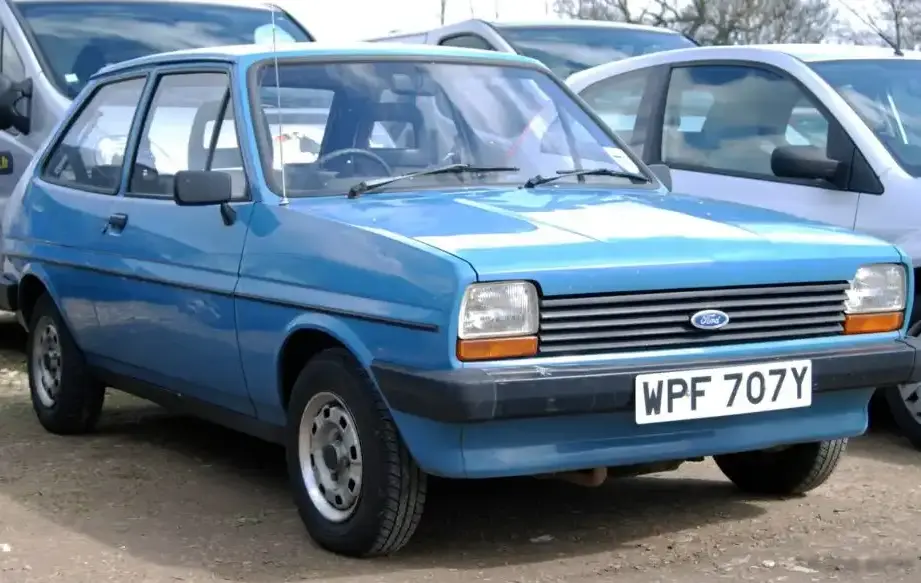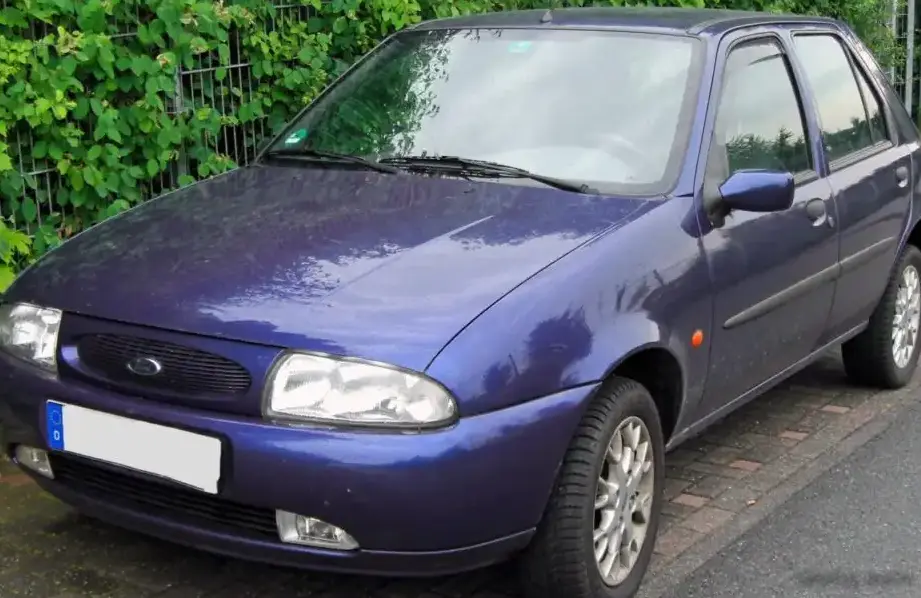
The Ford Fiesta Mk4, produced from 1996 to 1999, represented a significant step forward for Ford’s supermini offering. The 1.3i variant, equipped with a 60 horsepower engine and a five-speed manual transmission, served as the entry point into the Mk4 Fiesta range. This model was primarily aimed at budget-conscious buyers and those seeking economical transportation, particularly in European markets where smaller, fuel-efficient cars were highly valued. It was a common sight on city streets and proved popular with first-time drivers and those needing a practical, affordable vehicle.
Technical Specifications
| Brand | Ford |
| Model | Fiesta |
| Generation | Fiesta IV (Mk4) 5 door |
| Type (Engine) | 1.3 i (60 Hp) |
| Start of production | January, 1996 |
| End of production | September, 1999 |
| Powertrain Architecture | Internal Combustion engine |
| Body type | Hatchback |
| Seats | 5 |
| Doors | 5 |
| Fuel consumption (combined) | 6.9 l/100 km (34.1 US mpg, 40.9 UK mpg, 14.5 km/l) |
| CO2 emissions | 161 g/km |
| Fuel Type | Petrol (Gasoline) |
| Acceleration 0 – 100 km/h | 15.9 sec |
| Acceleration 0 – 62 mph | 15.9 sec |
| Acceleration 0 – 60 mph | 15.1 sec |
| Maximum speed | 155 km/h (96.31 mph) |
| Weight-to-power ratio | 17.2 kg/Hp, 58.1 Hp/tonne |
| Weight-to-torque ratio | 9.8 kg/Nm, 101.6 Nm/tonne |
| Power | 60 Hp @ 5000 rpm |
| Power per litre | 46.2 Hp/l |
| Torque | 105 Nm @ 2500 rpm (77.44 lb.-ft. @ 2500 rpm) |
| Engine layout | Front, Transverse |
| Engine Model/Code | J4C, J4J, J4L, J4Q, J4R, J4T, JBC |
| Engine displacement | 1299 cm3 (79.27 cu. in.) |
| Number of cylinders | 4 |
| Engine configuration | Inline |
| Cylinder Bore | 74 mm (2.91 in.) |
| Piston Stroke | 75.5 mm (2.97 in.) |
| Compression ratio | 9.5:1 |
| Number of valves per cylinder | 2 |
| Fuel injection system | Multi-port manifold injection |
| Engine aspiration | Naturally aspirated engine |
| Valvetrain | OHC |
| Engine oil capacity | 3.25 l (3.43 US qt | 2.86 UK qt) |
| Coolant | 7.1 l (7.5 US qt | 6.25 UK qt) |
| Kerb Weight | 1033 kg (2277.38 lbs.) |
| Max. weight | 1465 kg (3229.77 lbs.) |
| Max load | 432 kg (952.4 lbs.) |
| Trunk (boot) space – minimum | 250 l (8.83 cu. ft.) |
| Trunk (boot) space – maximum | 930 l (32.84 cu. ft.) |
| Fuel tank capacity | 42 l (11.1 US gal | 9.24 UK gal) |
| Max. roof load | 75 kg (165.35 lbs.) |
| Permitted trailer load with brakes (12%) | 900 kg (1984.16 lbs.) |
| Permitted trailer load without brakes | 310 kg (683.43 lbs.) |
| Length | 3828 mm (150.71 in.) |
| Width | 1634 mm (64.33 in.) |
| Height | 1334 mm (52.52 in.) |
| Wheelbase | 2446 mm (96.3 in.) |
| Front track | 1429 mm (56.26 in.) |
| Rear (Back) track | 1384 mm (54.49 in.) |
| Minimum turning circle | 9.9 m (32.48 ft.) |
| Drivetrain Architecture | Front wheel drive |
| Number of gears and type of gearbox | 5 gears, manual transmission |
| Front suspension | Coil spring |
| Rear suspension | Coil spring |
| Front brakes | Disc |
| Rear brakes | Drum |
| Assisting systems | ABS (Anti-lock braking system) |
| Steering type | Steering rack and pinion |
| Power steering | Hydraulic Steering |
| Tires size | 165/70 R13 |
Powertrain & Engine Architecture
The heart of the Fiesta 1.3i was the Ford J4C (and related codes like J4J, J4L) engine, a 1.3-liter inline-four cylinder petrol engine. This engine featured a single overhead camshaft (SOHC) valvetrain with two valves per cylinder. Fuel delivery was handled by a multi-port fuel injection system, a relatively modern feature for its time, contributing to improved fuel efficiency and reduced emissions compared to carbureted engines. The engine’s relatively simple design prioritized reliability and ease of maintenance. The five-speed manual transmission was a standard offering, providing a reasonable spread of gears for both urban driving and highway cruising. While not a performance-oriented setup, the transmission was known for its smooth operation and durability.
Driving Characteristics
The 1.3i Fiesta was not designed for outright speed. With only 60 horsepower, acceleration was modest, taking nearly 16 seconds to reach 60 mph. However, the engine proved surprisingly tractable, offering adequate power for everyday driving. The five-speed gearbox allowed drivers to keep the engine in its optimal power band, making overtaking maneuvers possible, albeit requiring careful planning. Compared to the more powerful 1.6-liter and diesel variants, the 1.3i felt noticeably slower, but it compensated with superior fuel economy and a lighter, more nimble feel. The steering was light and precise, making it easy to maneuver in tight spaces.
Equipment & Trim Levels
The 1.3i Fiesta typically came with a basic level of equipment, reflecting its position as the entry-level model. Standard features generally included power steering, central locking, and an AM/FM radio. Interior upholstery was typically cloth, and the dashboard featured a simple, functional design. Optional extras, such as air conditioning, electric windows, and alloy wheels, were available, but these added to the vehicle’s cost. The trim level was often denoted by the presence of these optional features, with higher trims offering more comfort and convenience.
Chassis & Braking
The Fiesta Mk4 utilized a relatively simple chassis design, featuring coil spring suspension at both the front and rear. The front brakes were discs, providing adequate stopping power, while the rear brakes were drums, a cost-saving measure common in this class of vehicle. Anti-lock Braking System (ABS) was available as an option, enhancing safety by preventing wheel lockup during hard braking. The suspension was tuned for comfort, providing a reasonably smooth ride over uneven surfaces. Stabilizer bars were fitted to improve handling and reduce body roll.
Market Reception & Comparison
The Fiesta 1.3i was generally well-received by critics as a practical and affordable supermini. Its fuel economy was a major selling point, and its reliability was also praised. However, its lack of power was often noted, and some reviewers felt that it struggled on steep hills or when fully loaded. Compared to rivals such as the Peugeot 206 and Renault Clio, the Fiesta 1.3i offered a competitive package, but it lacked the stylish design and more refined interior of some of its competitors. The 1.6-liter Fiesta offered significantly more performance, but at a higher price point. The diesel variants provided even better fuel economy, but were generally more expensive to purchase and maintain.
Legacy
The Ford Fiesta Mk4 1.3i remains a popular choice among classic car enthusiasts and those seeking an affordable, reliable runabout. The J4C engine is known for its durability, and parts are still readily available. While not a particularly collectible model, the 1.3i Fiesta represents a significant chapter in Ford’s history and remains a testament to the enduring appeal of the supermini segment. Today, well-maintained examples can be found for relatively low prices, making them an attractive option for those looking for a classic Ford experience.