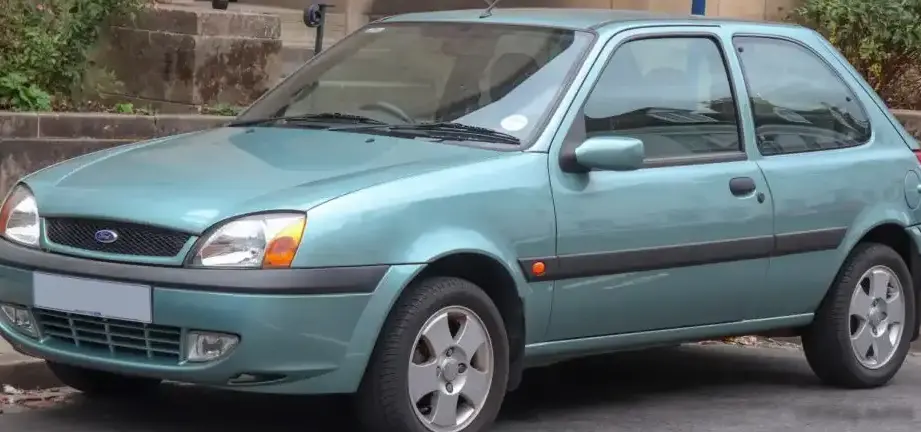
The Ford Fiesta Mk5, produced between 1999 and 2001, represented a significant step forward for Ford’s supermini. The 3-door 1.3i variant, equipped with a 50 horsepower engine, served as the entry point into the Mk5 Fiesta range. Positioned as an affordable and economical option, it was primarily aimed at first-time drivers, city commuters, and those seeking a low-cost vehicle. This generation Fiesta (internally designated as the B50 platform) aimed to improve upon the previous generation in terms of refinement, safety, and interior space, while maintaining the Fiesta’s reputation for nimble handling. The 1.3i model, while not the most powerful in the lineup, offered a practical and reliable transportation solution.
Technical Specifications
| Brand | Ford |
| Model | Fiesta |
| Generation | Fiesta V (Mk5) 3 door |
| Type (Engine) | 1.3 i (50 Hp) |
| Start of production | September, 1999 |
| End of production | November, 2001 |
| Powertrain Architecture | Internal Combustion engine |
| Body type | Hatchback |
| Seats | 5 |
| Doors | 3 |
| Fuel consumption (urban) | 8.7 l/100 km (27 US mpg, 32.5 UK mpg, 11.5 km/l) |
| Fuel consumption (extra urban) | 6.9 l/100 km (34.1 US mpg, 40.9 UK mpg, 14.5 km/l) |
| CO2 emissions | 161 g/km |
| Fuel Type | Petrol (Gasoline) |
| Acceleration 0 – 100 km/h | 19.5 sec |
| Acceleration 0 – 62 mph | 19.5 sec |
| Acceleration 0 – 60 mph | 18.5 sec |
| Maximum speed | 143 km/h (88.86 mph) |
| Weight-to-power ratio | 20.1 kg/Hp, 49.8 Hp/tonne |
| Weight-to-torque ratio | 10.6 kg/Nm, 94.5 Nm/tonne |
| Power | 50 Hp @ 4500 rpm |
| Power per litre | 38.5 Hp/l |
| Torque | 95 Nm @ 2000 rpm (70.07 lb.-ft. @ 2000 rpm) |
| Engine layout | Front, Transverse |
| Engine Model/Code | JJA, JJC, JJE, JJJ, JJK, JJM |
| Engine displacement | 1299 cm3 (79.27 cu. in.) |
| Number of cylinders | 4 |
| Engine configuration | Inline |
| Cylinder Bore | 74 mm (2.91 in.) |
| Piston Stroke | 75.5 mm (2.97 in.) |
| Compression ratio | 9.5:1 |
| Number of valves per cylinder | 2 |
| Fuel injection system | Multi-port manifold injection |
| Engine aspiration | Naturally aspirated engine |
| Valvetrain | OHC |
| Engine oil capacity | 3.25 l (3.43 US qt, 2.86 UK qt) |
| Coolant capacity | 7.1 l (7.5 US qt, 6.25 UK qt) |
| Kerb Weight | 1005 kg (2215.65 lbs.) |
| Max. weight | 1415 kg (3119.54 lbs.) |
| Max load | 410 kg (903.9 lbs.) |
| Trunk (boot) space – minimum | 250 l (8.83 cu. ft.) |
| Trunk (boot) space – maximum | 930 l (32.84 cu. ft.) |
| Fuel tank capacity | 42 l (11.1 US gal, 9.24 UK gal) |
| Length | 3833 mm (150.91 in.) |
| Width | 1634 mm (64.33 in.) |
| Height | 1334 mm (52.52 in.) |
| Wheelbase | 2446 mm (96.3 in.) |
| Front track | 1429 mm (56.26 in.) |
| Rear (Back) track | 1384 mm (54.49 in.) |
| Drivetrain Architecture | The Internal combustion engine (ICE) drives the front wheels of the vehicle. |
| Drive wheel | Front wheel drive |
| Number of gears and type of gearbox | 5 gears, manual transmission |
| Front suspension | Coil spring |
| Rear suspension | Coil spring |
| Front brakes | Disc |
| Rear brakes | Drum |
| Assisting systems | ABS (Anti-lock braking system) |
| Steering type | Steering rack and pinion |
| Power steering | Hydraulic Steering |
| Tires size | 185/55 R14 |
| Wheel rims size | 14 |
INTRODUCTION
The Ford Fiesta Mk5 1.3i 3-door, produced from 1999 to 2001, was a cornerstone of Ford’s European and, to a lesser extent, North American small car offerings. Built on the B50 platform, shared with other Ford models of the era, the Mk5 aimed to provide a more refined and spacious experience than its predecessor. The 1.3i engine, while modest in output, was chosen for its fuel efficiency and affordability, making it a popular choice for budget-conscious buyers. This variant occupied the base trim level, offering essential transportation without the added cost of more powerful engines or luxurious features. It was a common sight in European cities and served as a reliable and economical vehicle for a wide range of drivers.
Powertrain & Engine Architecture
The heart of the Fiesta 1.3i is the Ford JJA/JJC/JJE/JJJ/JJK/JJM series 1.3-liter inline-four cylinder engine. This engine, a descendant of the earlier Kent series, utilizes a single overhead camshaft (SOHC) valvetrain with two valves per cylinder. Fuel delivery is managed by a multi-port fuel injection system, providing a balance between efficiency and performance. The engine’s relatively simple design contributed to its reliability and ease of maintenance. The 1.3i engine produced 50 horsepower at 4500 rpm and 95 Nm (70 lb-ft) of torque at 2000 rpm. This power was transmitted to the front wheels through a five-speed manual transmission. The transmission was chosen for its durability and relatively simple operation, although it wasn’t known for particularly quick shifts. The engine’s architecture prioritized fuel economy over outright performance, making it well-suited for urban driving.
Driving Characteristics
The Fiesta 1.3i 3-door offered a predictable, if uninspiring, driving experience. Acceleration was leisurely, taking approximately 19.5 seconds to reach 62 mph (100 km/h). The engine felt strained when pushed hard, and overtaking required careful planning. However, the Fiesta’s light weight (around 1005 kg or 2215 lbs) and well-tuned suspension provided nimble handling and a comfortable ride, especially on city streets. The five-speed manual transmission allowed drivers to keep the engine in its optimal power band, but the long throws and somewhat vague shift feel weren’t particularly engaging. Compared to the higher-output 1.6-liter or even the diesel variants, the 1.3i felt significantly slower. However, it offered a more forgiving and economical driving experience, making it ideal for novice drivers or those prioritizing fuel efficiency.
Equipment & Trim Levels
The 1.3i Fiesta Mk5 was typically equipped with basic, but functional, features. Standard equipment included power steering, central locking, and an AM/FM radio. Interior upholstery was typically a durable cloth material, and the dashboard featured a simple, straightforward design. Optional extras included power windows, air conditioning, and alloy wheels. The trim level was deliberately kept basic to maintain affordability. The interior plastics were of reasonable quality for the price point, but lacked the refinement of higher-spec models. Safety features were also relatively basic, with ABS being a common, but not universal, inclusion.
Chassis & Braking
The Fiesta Mk5 1.3i utilized a MacPherson strut front suspension and a twist-beam rear suspension. This setup provided a good balance between ride comfort and handling. The front brakes were disc brakes, while the rear brakes were drum brakes – a cost-saving measure common in this segment. ABS (Anti-lock Braking System) was often included as standard or an optional extra, enhancing braking performance and safety. The steering was a hydraulic power-assisted rack and pinion system, providing light and responsive steering feel. The suspension was tuned for comfort, but still offered decent body control in corners. The relatively light weight of the vehicle contributed to its agile handling characteristics.
Market Reception & Comparison
The Fiesta 1.3i was generally well-received as an affordable and reliable city car. Critics praised its nimble handling and fuel efficiency, but noted its lack of power. Compared to the more powerful 1.6-liter Fiesta, the 1.3i offered significantly less performance, but at a lower price point. The 1.4 and 1.6 liter engines offered a more spirited driving experience, but came with a higher purchase price and increased fuel consumption. The diesel variants, while offering excellent fuel economy, were often criticized for their noise and vibration. The 1.3i struck a balance between affordability, fuel efficiency, and usability, making it a popular choice for budget-conscious buyers.
Legacy
The Ford Fiesta Mk5 1.3i remains a relatively common sight on roads today, testament to its durability and reliability. The 1.3-liter engine is known for its longevity, and with regular maintenance, can provide many years of service. However, age-related issues such as corrosion and wear and tear on suspension components are common. In the used car market, the 1.3i Fiesta Mk5 represents an extremely affordable entry point into car ownership. While not a performance car, it offers a practical and reliable transportation solution for those seeking a low-cost vehicle. Its simplicity and ease of maintenance make it a popular choice for DIY mechanics and those looking for a straightforward and dependable car.