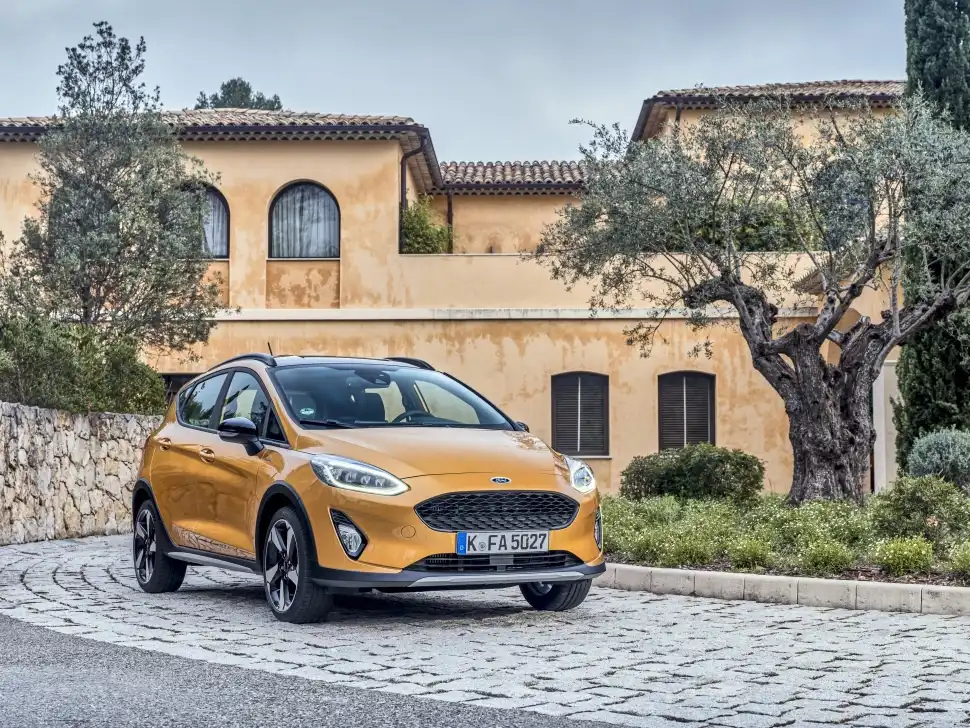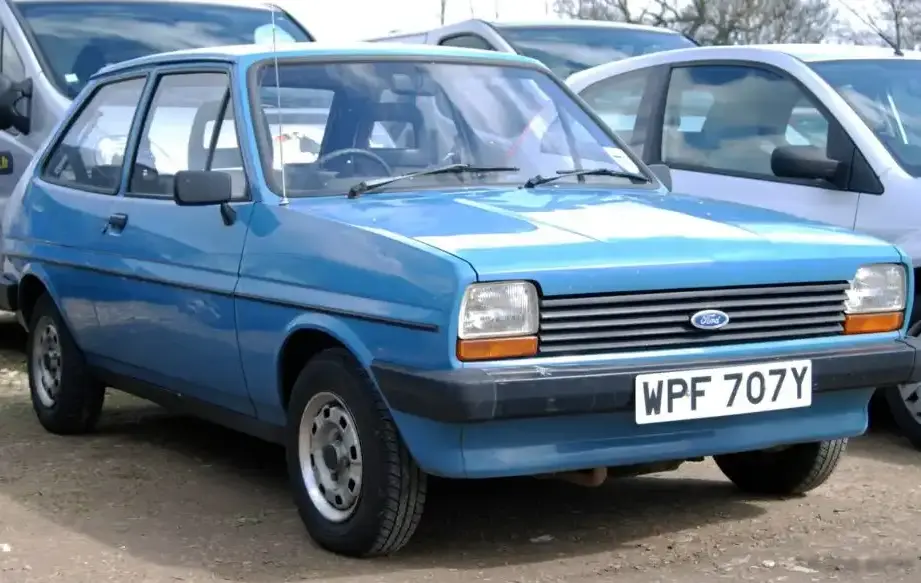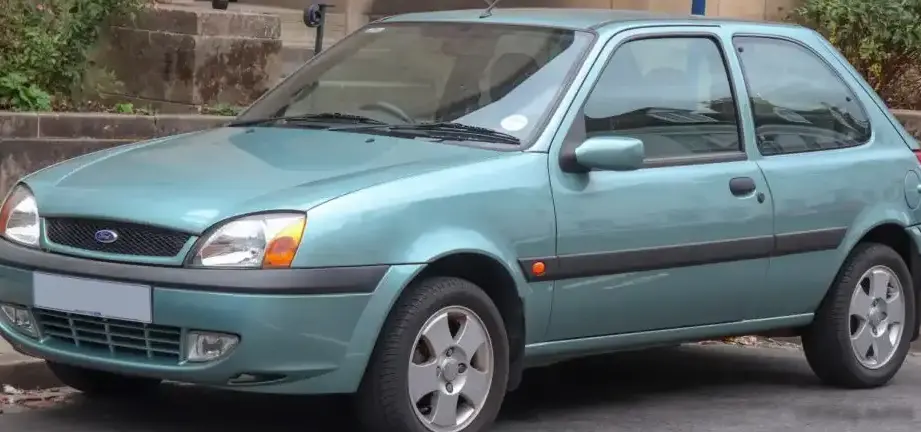
The Ford Fiesta Mk5, produced between 1995 and 2002, represented a significant step forward for Ford’s supermini offering. The 3-door variant, particularly the 1.8 D model introduced in late 1999 and continuing into early 2000, occupied a unique position within the Fiesta lineup. While the Mk5 Fiesta was primarily a European market vehicle, it gained some limited traction in other regions. This specific 1.8 D (60 hp) version was aimed at buyers seeking fuel economy and practicality, offering a diesel option in a segment often dominated by petrol engines. It served as an entry-level diesel offering, positioned below the more powerful TDCi models that would arrive later in the Mk5’s production run.
Technical Specifications
| Brand | Ford |
| Model | Fiesta |
| Generation | Fiesta V (Mk5) 3 door |
| Type (Engine) | 1.8 D (60 Hp) |
| Start of production | September, 1999 |
| End of production | December, 1999 |
| Powertrain Architecture | Internal Combustion engine |
| Body type | Hatchback |
| Seats | 5 |
| Doors | 3 |
| Fuel consumption (combined) | 6.1 l/100 km (38.6 US mpg, 46.3 UK mpg, 16.4 km/l) |
| Fuel Type | Diesel |
| Acceleration 0 – 100 km/h | 17.6 sec |
| Acceleration 0 – 62 mph | 17.6 sec |
| Acceleration 0 – 60 mph | 16.7 sec |
| Maximum speed | 155 km/h (96.31 mph) |
| Weight-to-power ratio | 18.3 kg/Hp, 54.7 Hp/tonne |
| Weight-to-torque ratio | 10.4 kg/Nm, 95.7 Nm/tonne |
| Power | 60 Hp @ 4800 rpm |
| Power per litre | 34.2 Hp/l |
| Torque | 105 Nm @ 2200 rpm (77.44 lb.-ft. @ 2200 rpm) |
| Engine layout | Front, Transverse |
| Engine Model/Code | RTJ, RTK |
| Engine displacement | 1753 cm3 (106.97 cu. in.) |
| Number of cylinders | 4 |
| Engine configuration | Inline |
| Cylinder Bore | 82.5 mm (3.25 in.) |
| Piston Stroke | 82 mm (3.23 in.) |
| Compression ratio | 21.5:1 |
| Number of valves per cylinder | 2 |
| Fuel injection system | Precombustion chamber injection |
| Engine aspiration | Naturally aspirated engine |
| Valvetrain | OHC |
| Engine oil capacity | 5 l (5.28 US qt | 4.4 UK qt) |
| Coolant | 9.3 l (9.83 US qt | 8.18 UK qt) |
| Kerb Weight | 1097 kg (2418.47 lbs.) |
| Max. weight | 1510 kg (3328.98 lbs.) |
| Max load | 413 kg (910.51 lbs.) |
| Trunk (boot) space – minimum | 250 l (8.83 cu. ft.) |
| Trunk (boot) space – maximum | 930 l (32.84 cu. ft.) |
| Fuel tank capacity | 40 l (10.57 US gal | 8.8 UK gal) |
| Length | 3833 mm (150.91 in.) |
| Width | 1634 mm (64.33 in.) |
| Height | 1334 mm (52.52 in.) |
| Wheelbase | 2446 mm (96.3 in.) |
| Front track | 1429 mm (56.26 in.) |
| Rear (Back) track | 1384 mm (54.49 in.) |
| Minimum turning circle | 9.9 m (32.48 ft.) |
| Drivetrain Architecture | The Internal combustion engine (ICE) drives the front wheels of the vehicle. |
| Drive wheel | Front wheel drive |
| Number of gears and type of gearbox | 5 gears, manual transmission |
| Front suspension | Coil spring |
| Rear suspension | Coil spring |
| Front brakes | Disc |
| Rear brakes | Drum |
| Assisting systems | ABS (Anti-lock braking system) |
| Steering type | Steering rack and pinion |
| Power steering | Hydraulic Steering |
| Tires size | 165/70 R13 |
| Wheel rims size | 13 |
Powertrain & Engine Architecture
The heart of this Fiesta variant is the 1.8-liter, inline-four cylinder diesel engine, designated with engine codes RTJ or RTK. This engine is a naturally aspirated unit employing precombustion chamber injection. This system, common in older diesel designs, utilizes a small precombustion chamber connected to the main cylinder. Fuel is injected into the precombustion chamber, igniting and creating a hot, turbulent charge that then ignites the main fuel injection in the cylinder. The engine features an overhead camshaft (OHC) valvetrain with two valves per cylinder. The 1.8 D produced a modest 60 horsepower at 4800 rpm and 105 Nm (77.44 lb-ft) of torque at 2200 rpm. The engine’s design prioritized fuel efficiency and durability over outright performance. The manual transmission offered was a standard 5-speed unit, geared for economy rather than spirited driving.
Driving Characteristics
The 1.8 D Fiesta was not known for its blistering acceleration. With a 0-60 mph time of around 16.7 seconds, it was decidedly slow by modern standards. The engine’s torque delivery was relatively low-end focused, providing adequate pulling power for everyday driving but lacking the responsiveness of higher-output engines. The 5-speed manual transmission helped to keep the engine within its optimal operating range, but frequent downshifts were often necessary for overtaking or climbing hills. Compared to the 1.4 or 1.6-liter petrol versions, the 1.8 D offered significantly better fuel economy but at the expense of performance. It also felt noticeably heavier due to the diesel engine’s construction.
Equipment & Trim Levels
The 1.8 D Fiesta typically came with a basic level of equipment. Standard features included power steering, central locking, and an adjustable steering column. Interior upholstery was typically cloth, and the dashboard featured a simple, functional design. Optional extras included electric front windows, a sunroof, and upgraded audio systems. The trim level was generally considered entry-level, appealing to buyers prioritizing affordability and practicality. Air conditioning was a relatively rare option on these models.
Chassis & Braking
The Fiesta Mk5 utilized a relatively simple chassis design. Front suspension consisted of coil springs and MacPherson struts, while the rear employed a coil-sprung twist beam axle. This setup provided a comfortable ride, but handling was not particularly sharp. The 1.8 D models typically featured disc brakes on the front wheels and drum brakes on the rear. Anti-lock Braking System (ABS) was often included as standard equipment, enhancing safety. The suspension was tuned for comfort and stability, rather than sporty handling.
Market Reception & Comparison
The 1.8 D Fiesta was generally well-received by buyers seeking an economical and reliable small car. Critics praised its fuel efficiency and durability, but noted its lack of performance. Compared to the petrol-powered Fiesta models, the 1.8 D offered superior fuel economy, making it an attractive option for high-mileage drivers. However, the petrol engines provided a more engaging driving experience. The 1.8 D also faced competition from other small diesel cars, such as the Peugeot 206 HDi and the Renault Clio dCi, which offered more modern technology and higher performance.
Legacy
The 1.8 D Fiesta, while not a performance icon, proved to be a durable and reliable workhorse. The RTJ and RTK engines, when properly maintained, are known for their longevity. Today, these cars are relatively rare and are often sought after by enthusiasts looking for a simple, affordable, and economical classic. Parts availability can be a challenge, but many components are still available through specialist suppliers. The 1.8 D Fiesta represents a significant chapter in Ford’s supermini history, offering a practical and fuel-efficient option for budget-conscious buyers.