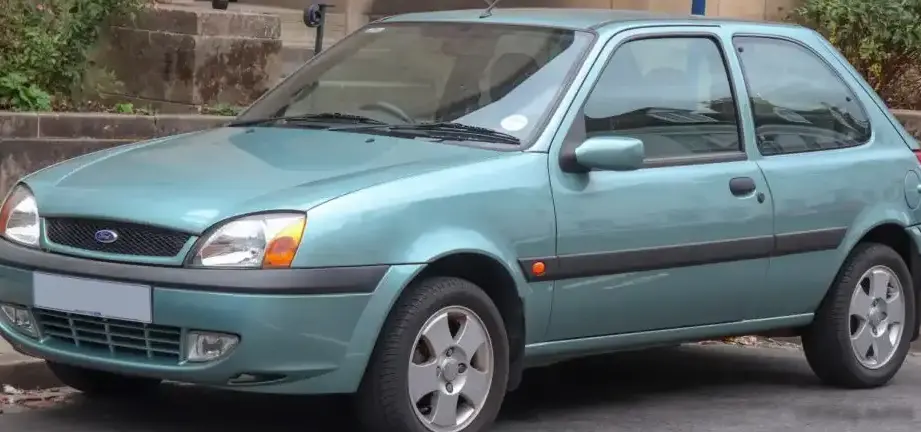
The Ford Fiesta Mk5, produced between 1995 and 2002, represented a significant step forward for Ford’s supermini. The 3-door 1.8 DI variant, available from December 1999 to November 2001, occupied a unique position within the range, offering a diesel-powered option with a focus on fuel economy rather than outright performance. This model was primarily aimed at European markets where diesel engines were, and continue to be, highly popular due to favorable taxation and fuel costs. It sat below the more powerful petrol variants like the 1.6 Zetec, and above the base 1.25 models, offering a compromise between running costs and usability. The Fiesta Mk5, built on the B56 platform, was a crucial model for Ford, solidifying its position as a leading manufacturer in the small car segment.
Technical Specifications
| Brand | Ford |
| Model | Fiesta |
| Generation | Fiesta V (Mk5) 3 door |
| Type (Engine) | 1.8 DI (75 Hp) |
| Start of production | December, 1999 |
| End of production | November, 2001 |
| Powertrain Architecture | Internal Combustion engine |
| Body type | Hatchback |
| Seats | 5 |
| Doors | 3 |
| Fuel consumption (urban) | 6.5 l/100 km (36.2 US mpg, 43.5 UK mpg, 15.4 km/l) |
| Fuel consumption (combined) | 5 l/100 km (47 US mpg, 56.5 UK mpg, 20 km/l) |
| CO2 emissions | 136 g/km |
| Fuel Type | Diesel |
| Acceleration 0 – 100 km/h | 14.3 sec |
| Acceleration 0 – 62 mph | 14.3 sec |
| Acceleration 0 – 60 mph | 13.6 sec |
| Maximum speed | 168 km/h (104.39 mph) |
| Weight-to-power ratio | 14.6 kg/Hp, 68.4 Hp/tonne |
| Weight-to-torque ratio | 7.8 kg/Nm, 127.6 Nm/tonne |
| Power | 75 Hp @ 4000 rpm |
| Power per litre | 42.8 Hp/l |
| Torque | 140 Nm @ 1900 rpm (103.26 lb.-ft. @ 1900 rpm) |
| Engine layout | Front, Transverse |
| Engine Model/Code | RTN, RTP, RTQ |
| Engine displacement | 1753 cm3 (106.97 cu. in.) |
| Number of cylinders | 4 |
| Engine configuration | Inline |
| Cylinder Bore | 82.5 mm (3.25 in.) |
| Piston Stroke | 82 mm (3.23 in.) |
| Compression ratio | 19.4:1 |
| Number of valves per cylinder | 2 |
| Fuel injection system | Diesel Commonrail |
| Engine aspiration | Turbocharger |
| Engine oil capacity | 5.6 l (5.92 US qt | 4.93 UK qt) |
| Coolant | 9.3 l (9.83 US qt | 8.18 UK qt) |
| Kerb Weight | 1097 kg (2418.47 lbs.) |
| Max. weight | 1510 kg (3328.98 lbs.) |
| Max load | 413 kg (910.51 lbs.) |
| Trunk (boot) space – minimum | 250 l (8.83 cu. ft.) |
| Trunk (boot) space – maximum | 930 l (32.84 cu. ft.) |
| Fuel tank capacity | 40 l (10.57 US gal | 8.8 UK gal) |
| Length | 3833 mm (150.91 in.) |
| Width | 1634 mm (64.33 in.) |
| Height | 1334 mm (52.52 in.) |
| Wheelbase | 2446 mm (96.3 in.) |
| Front track | 1429 mm (56.26 in.) |
| Rear (Back) track | 1384 mm (54.49 in.) |
| Minimum turning circle | 9.9 m (32.48 ft.) |
| Drivetrain Architecture | The Internal combustion engine (ICE) drives the front wheels of the vehicle. |
| Drive wheel | Front wheel drive |
| Number of gears | 5 gears, manual transmission |
| Front suspension | Coil spring |
| Rear suspension | Coil spring |
| Front brakes | Disc |
| Rear brakes | Drum |
| Assisting systems | ABS (Anti-lock braking system) |
| Steering type | Steering rack and pinion |
| Power steering | Hydraulic Steering |
| Tires size | 175/65 R14 |
Powertrain & Engine Architecture
The 1.8 DI engine, utilizing the RTN, RTP, or RTQ engine codes, was a 1.8-liter inline-four cylinder diesel engine. It featured a turbocharger and, crucially for the time, a common rail direct injection system. This system allowed for more precise fuel delivery, resulting in improved fuel economy and reduced emissions compared to older diesel injection technologies. The engine produced 75 horsepower at 4000 rpm and 140 Nm (103 lb-ft) of torque at a low 1900 rpm. This torque delivery was a key characteristic, providing reasonable pulling power for everyday driving. The engine’s 19.4:1 compression ratio was typical for a direct injection diesel. The Fiesta 1.8 DI was exclusively offered with a 5-speed manual transmission. This transmission was chosen to maximize fuel efficiency and provide a more engaging driving experience, although it did mean the 1.8 DI wasn’t available with the convenience of an automatic gearbox.
Driving Characteristics
The 1.8 DI Fiesta offered a distinctly different driving experience compared to its petrol-powered siblings. While lacking the outright acceleration of the 1.6 Zetec, the 1.8 DI excelled in fuel economy and low-speed torque. The 0-60 mph time of around 13.6 seconds and a top speed of 104 mph reflected its focus on efficiency rather than performance. The turbocharger provided a noticeable boost in power once spooled up, but there was some turbo lag present. The 5-speed manual transmission was well-matched to the engine, with gear ratios designed to keep the engine within its optimal torque band. Compared to the 1.25 or 1.4 models, the 1.8 DI felt more capable on the highway and when carrying a full load. However, it wasn’t as rev-happy or responsive as the petrol engines.
Equipment & Trim Levels
The 1.8 DI trim level generally fell into the mid-range of the Fiesta Mk5 lineup. Standard equipment typically included power steering, central locking, an adjustable steering column, and basic audio system. Interior upholstery was usually cloth, with a relatively simple dashboard layout. Optional extras included air conditioning, electric windows, and alloy wheels. The 3-door body style emphasized a sportier aesthetic, appealing to younger buyers or those prioritizing practicality. The interior space, while adequate for a supermini, was somewhat compromised by the 3-door configuration, making access to the rear seats less convenient.
Chassis & Braking
The Fiesta Mk5 utilized a relatively simple chassis design, with coil springs and dampers at all four corners. The front suspension featured independent MacPherson struts, while the rear employed a twist beam setup. The 1.8 DI models typically featured disc brakes on the front wheels and drum brakes on the rear. ABS (Anti-lock Braking System) was often included as standard equipment, enhancing safety. The suspension tuning was geared towards comfort and ride quality, rather than sporty handling. Stabilizer bars were fitted to reduce body roll, but the Fiesta Mk5 wasn’t known for its particularly sharp handling characteristics.
Market Reception & Comparison
The 1.8 DI Fiesta received mixed reviews. Critics praised its fuel economy and low-speed torque, but some found the engine to be somewhat noisy and lacking in refinement compared to petrol alternatives. The lack of an automatic transmission was also a drawback for some buyers. Compared to the 1.6 Zetec, the 1.8 DI offered significantly lower running costs but sacrificed performance. Against the smaller-engined models, the 1.8 DI provided a more relaxed and capable driving experience, particularly on longer journeys. Reliability was generally good, although diesel engines can be more susceptible to issues with the fuel injection system and turbocharger.
Legacy
The Ford Fiesta Mk5 1.8 DI remains a relatively common sight on European roads today, testament to its durability and fuel efficiency. While not a particularly sought-after model by enthusiasts, it represents a practical and economical choice for those seeking a reliable supermini. The common rail diesel technology introduced in this generation of Fiesta paved the way for more advanced diesel engines in subsequent models. In the used car market, these Fiestas are typically affordable and offer good value for money, provided they have been well-maintained. The RTN, RTP, and RTQ engine codes are generally considered robust, but potential buyers should be aware of the potential for issues with the turbocharger and fuel injection system.