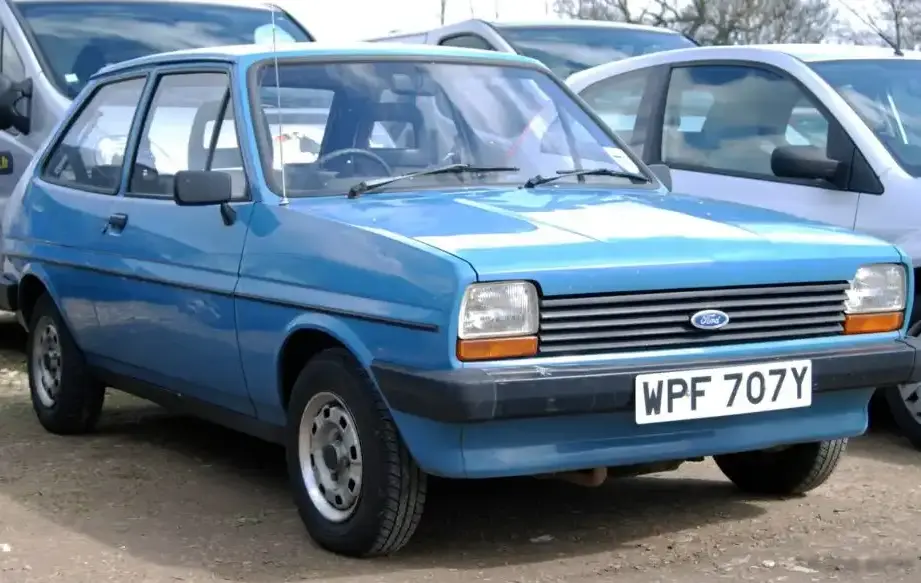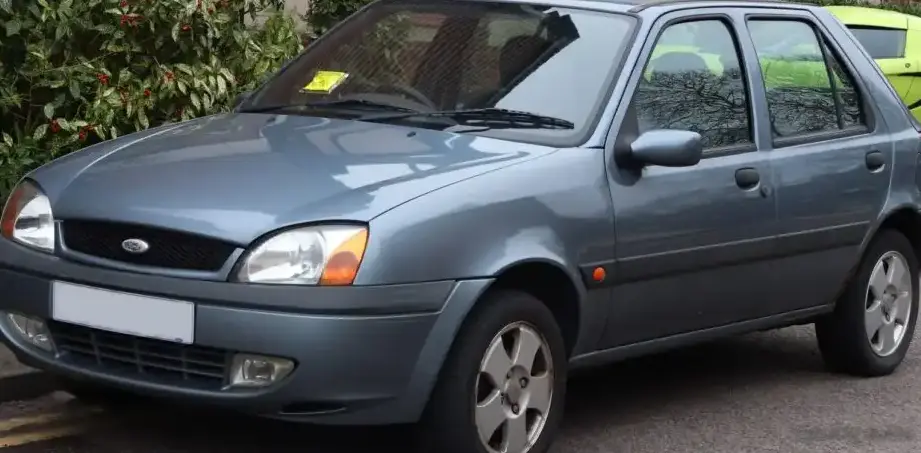
The Ford Fiesta Mk5, produced between 1999 and 2002, represented a significant step forward for Ford’s supermini. The 1.25i 16V variant, generating 75 horsepower, was a mainstay of the lineup, particularly in the five-door body style. This model occupied the entry-level to mid-range position within the Mk5 Fiesta range, appealing to buyers seeking affordable, economical transportation. It was a common sight on European roads, designed to compete with rivals like the Renault Clio, Peugeot 206, and Volkswagen Polo. This specific configuration, with its focus on fuel efficiency and practicality, was a key component of the Fiesta’s continued success in the competitive small car segment.
Technical Specifications
| Brand | Ford |
| Model | Fiesta |
| Generation | Fiesta V (Mk5) 5 door |
| Type (Engine) | 1.25i 16V (75 Hp) |
| Start of production | September, 1999 |
| End of production | November, 2001 |
| Powertrain Architecture | Internal Combustion engine |
| Body type | Hatchback |
| Seats | 5 |
| Doors | 5 |
| Fuel consumption (combined) | 6.9 l/100 km (34.1 US mpg, 40.9 UK mpg, 14.5 km/l) |
| CO2 emissions | 161 g/km |
| Fuel Type | Petrol (Gasoline) |
| Acceleration 0 – 100 km/h | 12.7 sec |
| Acceleration 0 – 62 mph | 12.7 sec |
| Acceleration 0 – 60 mph | 12.1 sec |
| Maximum speed | 170 km/h (105.63 mph) |
| Weight-to-power ratio | 14.1 kg/Hp, 71 Hp/tonne |
| Weight-to-torque ratio | 9.6 kg/Nm, 104.1 Nm/tonne |
| Power | 75 Hp @ 5200 rpm |
| Power per litre | 60.4 Hp/l |
| Torque | 110 Nm @ 2500 rpm (81.13 lb.-ft. @ 2500 rpm) |
| Engine layout | Front, Transverse |
| Engine Model/Code | DHA, DHB, DHC, DHD, DHE, DHF, DHG |
| Engine displacement | 1242 cm3 (75.79 cu. in.) |
| Number of cylinders | 4 |
| Engine configuration | Inline |
| Cylinder Bore | 71.9 mm (2.83 in.) |
| Piston Stroke | 76.5 mm (3.01 in.) |
| Compression ratio | 10:1 |
| Number of valves per cylinder | 4 |
| Fuel injection system | Multi-port manifold injection |
| Engine aspiration | Naturally aspirated engine |
| Engine oil capacity | 4 l (4.23 US qt | 3.52 UK qt) |
| Coolant | 6 l (6.34 US qt | 5.28 UK qt) |
| Kerb Weight | 1057 kg (2330.29 lbs.) |
| Max. weight | 1475 kg (3251.82 lbs.) |
| Max load | 418 kg (921.53 lbs.) |
| Trunk (boot) space – minimum | 250 l (8.83 cu. ft.) |
| Trunk (boot) space – maximum | 930 l (32.84 cu. ft.) |
| Fuel tank capacity | 40 l (10.57 US gal | 8.8 UK gal) |
| Length | 3833 mm (150.91 in.) |
| Width | 1634 mm (64.33 in.) |
| Height | 1334 mm (52.52 in.) |
| Wheelbase | 2446 mm (96.3 in.) |
| Front track | 1429 mm (56.26 in.) |
| Rear (Back) track | 1384 mm (54.49 in.) |
| Minimum turning circle | 9.9 m (32.48 ft.) |
| Drivetrain Architecture | The Internal combustion engine (ICE) drives the front wheels of the vehicle. |
| Drive wheel | Front wheel drive |
| Number of gears and type of gearbox | 5 gears, manual transmission |
| Front suspension | Independent type McPherson |
| Rear suspension | Torsion |
| Front brakes | Disc |
| Rear brakes | Drum |
| Assisting systems | ABS (Anti-lock braking system) |
| Steering type | Steering rack and pinion |
| Power steering | Hydraulic Steering |
| Tires size | 185/55R14 |
| Wheel rims size | 14 |
Powertrain & Engine Architecture
The heart of the Fiesta 1.25i 16V is the Duratec 1.25-liter inline-four cylinder engine. Engine codes such as DHA, DHB, DHC, DHD, DHE, DHF, and DHG were used depending on the specific market and emissions regulations. This engine featured a single overhead camshaft (SOHC) design with four valves per cylinder, contributing to its relatively efficient breathing. Fuel delivery was handled by a multi-port fuel injection system, providing precise fuel metering for improved combustion and reduced emissions. The engine’s 10:1 compression ratio was a standard figure for the time, balancing performance and fuel economy. The 1.25L engine was known for its simplicity and relative ease of maintenance. The five-speed manual transmission was the standard offering, providing a reasonable spread of gears for both urban driving and highway cruising. The transmission was a conventional design, prioritizing durability and cost-effectiveness over sporty shift feel.
Driving Characteristics
The 75 horsepower and 81 lb-ft of torque produced by the 1.25i engine translated to adequate, but not exhilarating, performance. Acceleration from 0-60 mph took around 12.1 seconds, and top speed was approximately 105 mph. The engine felt most comfortable in the mid-range, providing sufficient power for everyday driving situations. However, overtaking maneuvers required careful planning, and the engine could feel strained when pushed hard. The five-speed manual transmission was well-matched to the engine’s characteristics, allowing drivers to keep the engine in its optimal power band. Compared to the higher-output 1.4 or 1.6-liter versions, the 1.25i felt noticeably slower, but it offered a more forgiving and fuel-efficient driving experience. The gear ratios were tuned for economy, meaning the engine would rev relatively high at highway speeds.
Equipment & Trim Levels
The 1.25i 16V Fiesta typically came with a modest level of standard equipment. Features included power steering, central locking, and an adjustable steering column. Interior upholstery was typically cloth, with a simple, functional dashboard layout. Optional extras included air conditioning, electric front windows, and an upgraded audio system. Higher trim levels, such as the ‘Style’ or ‘Zetec’ variants, added features like alloy wheels, body-colored bumpers, and more luxurious interior trim. The five-door body style offered increased practicality and easier access to the rear seats, making it a popular choice for families.
Chassis & Braking
The Fiesta Mk5 utilized a MacPherson strut front suspension and a torsion beam rear suspension. This setup provided a good balance of ride comfort and handling. The front brakes were discs, offering adequate stopping power, while the rear brakes were drums, a cost-saving measure common in this class of vehicle. ABS (Anti-lock Braking System) was available as an option, enhancing safety in emergency braking situations. The steering was rack and pinion, providing precise and responsive steering feel. The relatively lightweight construction of the Fiesta contributed to its nimble handling characteristics.
Market Reception & Comparison
The Fiesta 1.25i 16V was generally well-received by automotive critics as a practical and economical small car. It was praised for its fuel efficiency, reliability, and ease of driving. However, some critics noted its lack of outright performance and its relatively basic interior. Compared to the more powerful Fiesta variants, the 1.25i offered significantly better fuel economy, making it an attractive option for budget-conscious buyers. Its reliability was generally considered good, although regular maintenance was essential to prevent issues. Against competitors like the Renault Clio and Peugeot 206, the Fiesta offered a slightly more conservative driving experience, but it was often seen as a more robust and dependable option.
Legacy
The Fiesta Mk5 1.25i 16V powertrain has proven to be remarkably durable, with many examples still on the road today. The engine is known for its longevity and relatively low maintenance costs. However, like any older vehicle, it is susceptible to age-related issues such as oil leaks and corrosion. In the used car market, these Fiestas are typically affordable and represent a good value for money, particularly for first-time drivers or those seeking a reliable and economical runabout. The Mk5 Fiesta, and the 1.25i variant in particular, cemented the Fiesta’s reputation as a dependable and practical small car, a legacy that continues to this day.