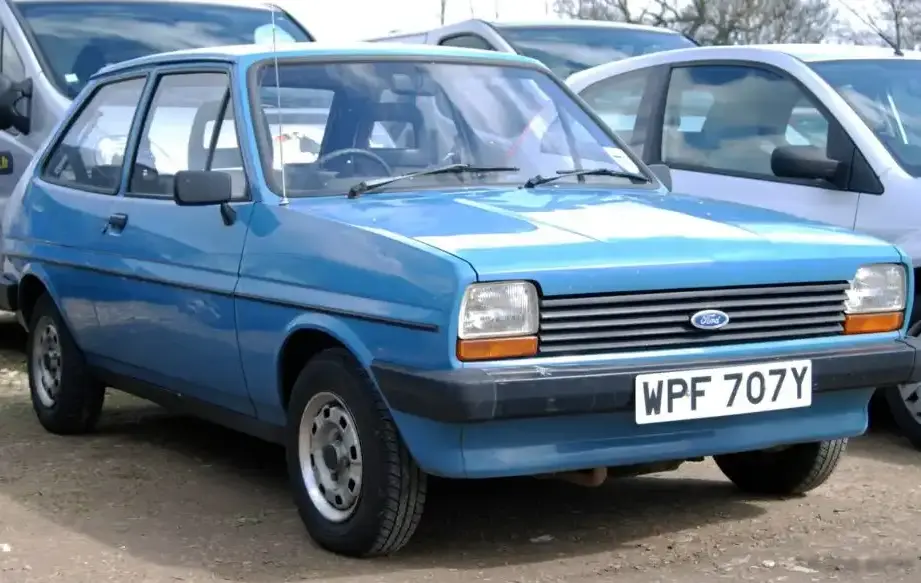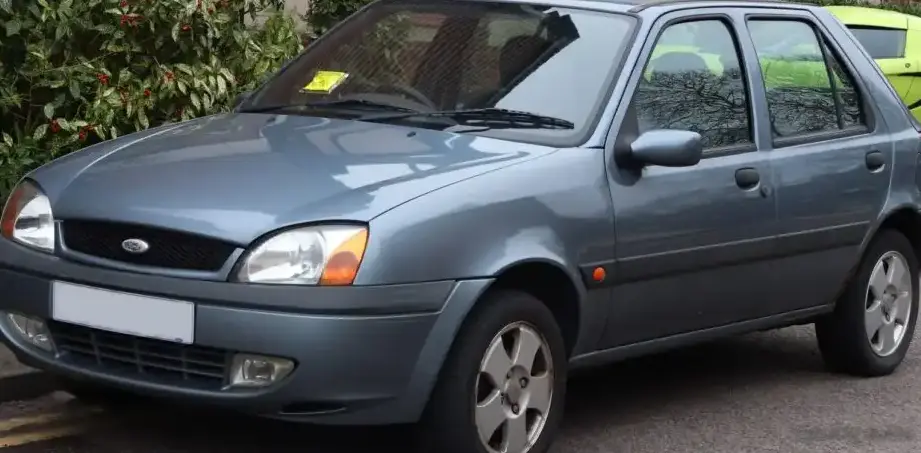
The Ford Fiesta Mk5, produced from 1999 to 2001, represented a significant step forward for Ford’s supermini. The 1.3i variant, equipped with a 5-speed manual transmission, served as the entry point into the Mk5 Fiesta range. Positioned as the most affordable option, it aimed to provide economical transportation for first-time buyers and those prioritizing fuel efficiency. This model was a key component of Ford’s strategy to offer a diverse Fiesta lineup catering to a broad spectrum of customer needs within the European market, and later, with some modifications, in other regions. It was built on the B3 platform, shared with other Ford models of the era.
Technical Specifications
| Brand | Ford |
| Model | Fiesta |
| Generation | Fiesta V (Mk5) 5 door |
| Type (Engine) | 1.3 i (50 Hp) |
| Start of production | September, 1999 |
| End of production | November, 2001 |
| Powertrain Architecture | Internal Combustion engine |
| Body type | Hatchback |
| Seats | 5 |
| Doors | 5 |
| Fuel consumption (urban) | 8.7 l/100 km (27 US mpg, 32.5 UK mpg, 11.5 km/l) |
| Fuel consumption (combined) | 6.9 l/100 km (34.1 US mpg, 40.9 UK mpg, 14.5 km/l) |
| CO2 emissions | 161 g/km |
| Fuel Type | Petrol (Gasoline) |
| Acceleration 0 – 100 km/h | 19.5 sec |
| Acceleration 0 – 62 mph | 19.5 sec |
| Acceleration 0 – 60 mph | 18.5 sec |
| Maximum speed | 143 km/h (88.86 mph) |
| Weight-to-power ratio | 20.1 kg/Hp, 49.8 Hp/tonne |
| Weight-to-torque ratio | 10.6 kg/Nm, 94.5 Nm/tonne |
| Power | 50 Hp @ 4500 rpm |
| Power per litre | 38.5 Hp/l |
| Torque | 95 Nm @ 2000 rpm (70.07 lb.-ft. @ 2000 rpm) |
| Engine layout | Front, Transverse |
| Engine Model/Code | JJA, JJC, JJE, JJJ, JJK, JJM |
| Engine displacement | 1299 cm3 (79.27 cu. in.) |
| Number of cylinders | 4 |
| Engine configuration | Inline |
| Cylinder Bore | 74 mm (2.91 in.) |
| Piston Stroke | 75.5 mm (2.97 in.) |
| Compression ratio | 9.5:1 |
| Number of valves per cylinder | 2 |
| Fuel injection system | Multi-port manifold injection |
| Engine aspiration | Naturally aspirated engine |
| Valvetrain | OHC |
| Engine oil capacity | 3.25 l (3.43 US qt, 2.86 UK qt) |
| Coolant | 7.1 l (7.5 US qt, 6.25 UK qt) |
| Kerb Weight | 1005 kg (2215.65 lbs.) |
| Max. weight | 1415 kg (3119.54 lbs.) |
| Max load | 410 kg (903.9 lbs.) |
| Trunk (boot) space – minimum | 250 l (8.83 cu. ft.) |
| Trunk (boot) space – maximum | 930 l (32.84 cu. ft.) |
| Fuel tank capacity | 42 l (11.1 US gal, 9.24 UK gal) |
| Length | 3833 mm (150.91 in.) |
| Width | 1634 mm (64.33 in.) |
| Height | 1334 mm (52.52 in.) |
| Wheelbase | 2446 mm (96.3 in.) |
| Front track | 1429 mm (56.26 in.) |
| Rear (Back) track | 1384 mm (54.49 in.) |
| Minimum turning circle | 9.9 m (32.48 ft.) |
| Drivetrain Architecture | Front wheel drive |
| Number of gears | 5 gears, manual transmission |
| Front suspension | Coil spring |
| Rear suspension | Coil spring |
| Front brakes | Disc |
| Rear brakes | Drum |
| Assisting systems | ABS (Anti-lock braking system) |
| Steering type | Steering rack and pinion |
| Power steering | Hydraulic Steering |
| Tires size | 185/55 R14 |
| Wheel rims size | 14 |
Powertrain & Engine Architecture
The heart of the Fiesta 1.3i was the Ford JJA/JJC/JJE/JJJ/JJK/JJM engine, a 1.3-liter inline-four cylinder petrol engine. This engine was a mainstay in Ford’s European lineup for many years, known for its simplicity and reliability. It featured a single overhead camshaft (SOHC) valvetrain with two valves per cylinder. Fuel delivery was handled by a multi-port fuel injection system, a significant improvement over earlier carburetor-equipped models. The engine produced 50 horsepower at 4500 rpm and 95 Nm (70 lb-ft) of torque at 2000 rpm. The 5-speed manual transmission was a standard feature, providing adequate gear ratios for everyday driving. The transmission was chosen for its cost-effectiveness and durability, aligning with the Fiesta 1.3i’s positioning as an affordable vehicle.
Driving Characteristics
The Fiesta 1.3i, with its modest 50 horsepower, wasn’t designed for spirited performance. Acceleration was leisurely, taking around 19.5 seconds to reach 62 mph (100 km/h). However, the engine proved surprisingly tractable in urban environments, offering sufficient power for navigating city streets. The 5-speed gearbox allowed drivers to keep the engine in its optimal power band, although frequent downshifts were often necessary for overtaking or climbing hills. Compared to higher-spec Fiesta models equipped with larger engines (like the 1.6 or 1.8), the 1.3i felt noticeably slower. The manual transmission provided a more engaging driving experience than the optional automatic transmission available on some trims, offering greater control and responsiveness.
Equipment & Trim Levels
The 1.3i Fiesta typically came with a basic level of equipment. Standard features included power steering, central locking, and an adjustable steering column. Interior upholstery was typically cloth, with a simple dashboard layout. Optional extras included air conditioning, electric front windows, and a radio/cassette player. The trim level was generally considered the base model, focusing on providing essential features at an affordable price point. Higher trim levels, such as the LX or Ghia, offered more luxurious appointments and additional features.
Chassis & Braking
The Fiesta Mk5 featured a MacPherson strut front suspension and a twist-beam rear suspension. This setup provided a comfortable ride quality, although handling was not as sharp as some of its competitors. The front brakes were disc brakes, while the rear brakes were drum brakes – a cost-saving measure common in entry-level models. Anti-lock Braking System (ABS) was available as an option, enhancing braking performance and safety. The relatively light weight of the 1.3i model (around 1005 kg or 2215 lbs) helped to offset the engine’s limited power, contributing to reasonable fuel economy.
Market Reception & Comparison
The Fiesta 1.3i was generally well-received as an affordable and economical city car. Critics praised its fuel efficiency and ease of driving, but noted its lack of performance. Compared to other superminis of the time, such as the Volkswagen Polo or the Renault Clio, the Fiesta 1.3i offered a competitive price point but lacked some of the refinement and features of its rivals. The 1.6-liter Fiesta models offered significantly better performance, but at a higher cost. The 1.8 diesel models provided excellent fuel economy but were considerably slower. The 1.3i found its niche among buyers prioritizing affordability and low running costs.
Legacy
The Ford Fiesta Mk5 1.3i remains a relatively common sight on European roads today, testament to its durability and reliability. The JJA/JJC engine is known for its longevity, and with proper maintenance, can continue to provide years of service. In the used car market, these models are typically very affordable, making them attractive to first-time car owners or those seeking a cheap and reliable runabout. While not a performance icon, the Fiesta 1.3i played a vital role in making Ford’s Fiesta a popular and enduring choice for budget-conscious drivers.