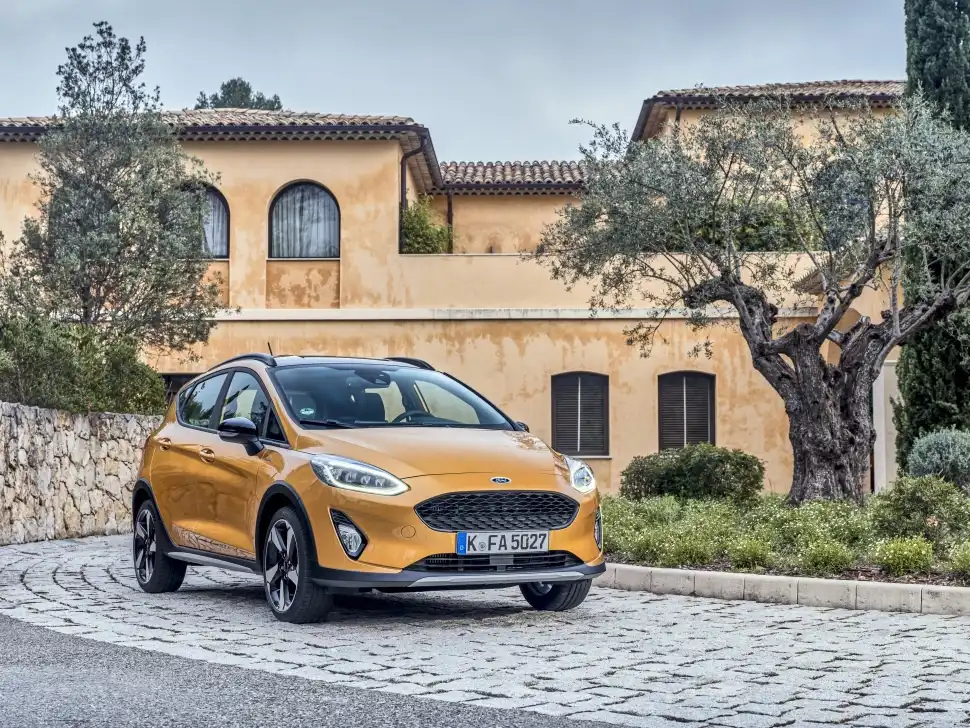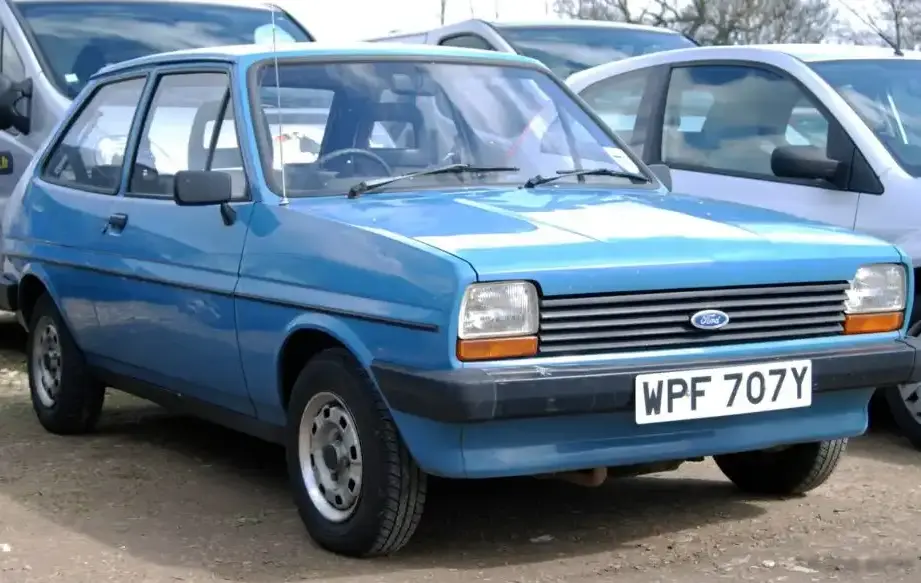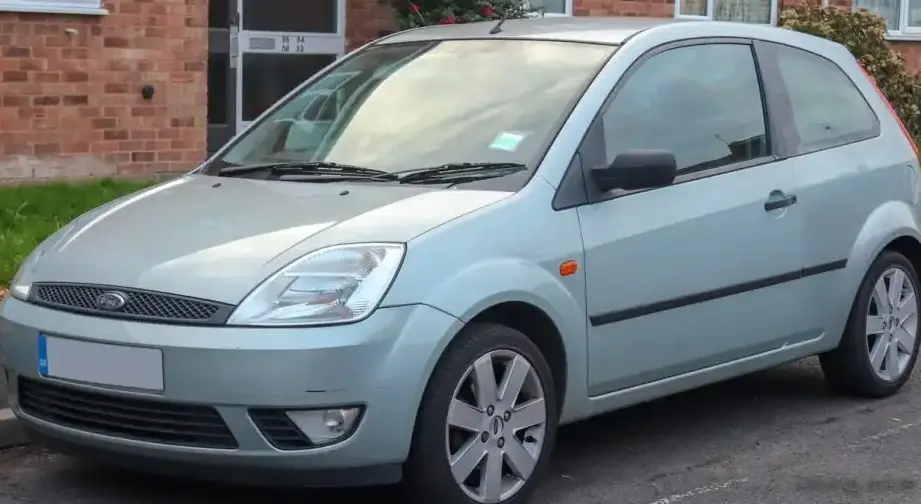
The Ford Fiesta Mk6, produced from 2002 to 2008, represented a significant step forward for Ford’s supermini. The 3-door 1.6 Duratec 16V variant, generating 100 horsepower, was a popular choice in the European market, positioned as a step up from the base 1.25 and 1.4 liter models, offering a blend of performance and affordability. This model year (2002-2005) falls within the early production run of the Mk6, built on the B3 platform, and aimed at buyers seeking a more engaging driving experience than the lower-powered options. It served as a bridge between the more economical trims and the sportier ST variants that would follow.
Technical Specifications
| Brand | Ford |
| Model | Fiesta |
| Generation | Fiesta VI (Mk6) 3 door |
| Type (Engine) | 1.6 Duratec 16V (100 Hp) |
| Start of production | 2002 |
| End of production | 2005 |
| Powertrain Architecture | Internal Combustion engine |
| Body type | Hatchback |
| Seats | 5 |
| Doors | 3 |
| Fuel consumption (urban) | 9.1 l/100 km (25.8 US mpg, 31 UK mpg) |
| Fuel consumption (extra urban) | 5.2 l/100 km (45.2 US mpg, 54.3 UK mpg) |
| Fuel consumption (combined) | 6.6 l/100 km (35.6 US mpg, 42.8 UK mpg) |
| CO2 emissions | 157 g/km |
| Fuel Type | Petrol (Gasoline) |
| Acceleration 0 – 100 km/h | 10.6 sec |
| Acceleration 0 – 62 mph | 10.6 sec |
| Acceleration 0 – 60 mph | 10.1 sec |
| Maximum speed | 184 km/h (114.33 mph) |
| Emission standard | Euro 4 |
| Weight-to-power ratio | 10.3 kg/Hp |
| Weight-to-torque ratio | 7 kg/Nm |
| Power | 100 Hp @ 6000 rpm |
| Torque | 146 Nm @ 4000 rpm (107.68 lb.-ft. @ 4000 rpm) |
| Engine layout | Front, Transverse |
| Engine Model/Code | FYJA |
| Engine displacement | 1596 cm3 (97.39 cu. in.) |
| Number of cylinders | 4 |
| Engine configuration | Inline |
| Cylinder Bore | 79 mm (3.11 in.) |
| Piston Stroke | 81.4 mm (3.2 in.) |
| Compression ratio | 11:1 |
| Number of valves per cylinder | 4 |
| Fuel injection system | Multi-port manifold injection |
| Engine aspiration | Naturally aspirated |
| Valvetrain | DOHC |
| Engine oil capacity | 4.1 l (4.33 US qt, 3.61 UK qt) |
| Coolant capacity | 5 l (5.28 US qt, 4.4 UK qt) |
| Kerb Weight | 1026 kg (2261.94 lbs.) |
| Max. weight | 1525 kg (3362.05 lbs.) |
| Max load | 499 kg (1100.11 lbs.) |
| Trunk (boot) space (min) | 268 l (9.46 cu. ft.) |
| Trunk (boot) space (max) | 945 l (33.37 cu. ft.) |
| Fuel tank capacity | 45 l (11.89 US gal, 9.9 UK gal) |
| Permitted trailer load (braked) | 900 kg (1984.16 lbs.) |
| Permitted trailer load (unbraked) | 500 kg (1102.31 lbs.) |
| Length | 3917 mm (154.21 in.) |
| Width | 1683 mm (66.26 in.) |
| Width (including mirrors) | 1905 mm (75 in.) |
| Height | 1467 mm (57.76 in.) |
| Wheelbase | 2487 mm (97.91 in.) |
| Front track | 1474 mm (58.03 in.) |
| Rear track | 1444 mm (56.85 in.) |
| Minimum turning circle | 9.8 m (32.15 ft.) |
| Drivetrain | Front wheel drive |
| Number of gears | 5 |
| Gearbox type | Manual transmission |
| Front suspension | Independent type McPherson, Transverse stabilizer |
| Rear suspension | Coil spring, Torsion |
| Front brakes | Disc |
| Rear brakes | Drum |
| Assisting systems | ABS (Anti-lock braking system) |
| Steering type | Steering rack and pinion |
| Power steering | Hydraulic |
| Tires size | 175/65 R14 |
| Wheel rims size | 5.5J x 14 |
Powertrain & Engine Architecture
The heart of this Fiesta variant is the 1.6-liter Duratec 16V engine, designated FYJA. This engine is a naturally aspirated, inline-four cylinder unit featuring a double overhead camshaft (DOHC) valvetrain and multi-port fuel injection. The Duratec series was designed to be a modular engine family, offering a balance of performance, refinement, and reliability. The 1.6L version produced 100 horsepower at 6000 rpm and 146 Nm (107.68 lb-ft) of torque at 4000 rpm. The engine’s 11:1 compression ratio contributed to its relatively lively performance for a supermini. The five-speed manual transmission was the standard offering, providing a direct connection to the engine and enhancing the driving experience. The transmission’s gear ratios were tuned for a balance of acceleration and fuel efficiency.
Driving Characteristics
The 1.6L Fiesta Mk6 offered a noticeable improvement in performance over the smaller-engined models. While not a sports car, the 100 hp engine provided sufficient power for confident overtaking and comfortable cruising on motorways. The five-speed manual transmission allowed drivers to keep the engine in its optimal power band. Compared to the 1.25 or 1.4 liter versions, the 1.6 felt more responsive and less strained, particularly when fully loaded or tackling inclines. The steering was light and precise, making it easy to maneuver in urban environments. The suspension, while tuned for comfort, provided adequate body control, although it wasn’t as firm or sporty as the later Fiesta ST models.
Equipment & Trim Levels
The 1.6 Duratec models typically came with a reasonable level of standard equipment. This included central locking, power steering, front airbags, and an adjustable steering column. Higher trim levels, such as the Style or Zetec, added features like alloy wheels, air conditioning, electric front windows, and a CD player. Interior upholstery was typically cloth, with a relatively simple but functional dashboard layout. Optional extras included metallic paint, a sunroof, and upgraded audio systems.
Chassis & Braking
The Fiesta Mk6 utilized a McPherson strut front suspension and a torsion beam rear suspension. This setup provided a good balance of ride comfort and handling. The front brakes were disc brakes, while the rear brakes were drum brakes – a common configuration for this class of vehicle at the time. Anti-lock Braking System (ABS) was standard, enhancing safety by preventing wheel lock-up during hard braking. The chassis was relatively lightweight, contributing to the car’s agility and fuel efficiency.
Market Reception & Comparison
The 1.6L Fiesta Mk6 was generally well-received by automotive critics. It was praised for its lively engine, comfortable ride, and practical interior. Compared to rivals like the Renault Clio and Volkswagen Polo, the Fiesta offered a competitive package in terms of price, performance, and equipment. The 1.6L variant was often seen as the sweet spot in the Fiesta range, offering a good balance between affordability and driving enjoyment. Fuel economy was respectable for its class, averaging around 35.6 US mpg in combined driving. Reliability was generally good, although some owners reported minor issues with the electrical system.
Legacy
The 1.6 Duratec engine proved to be a reliable and durable unit. Fiesta Mk6 models with this engine continue to be found on the used car market today, often offering a cost-effective and practical transportation solution. While not as sought-after as the later Fiesta ST models, the 1.6L variant remains a popular choice for those seeking a well-rounded and affordable supermini. Its simplicity and relatively low maintenance costs make it an attractive option for first-time car buyers or those looking for a dependable daily driver. The engine’s robust design means many examples are still running well with reasonable mileage, demonstrating its long-term durability.