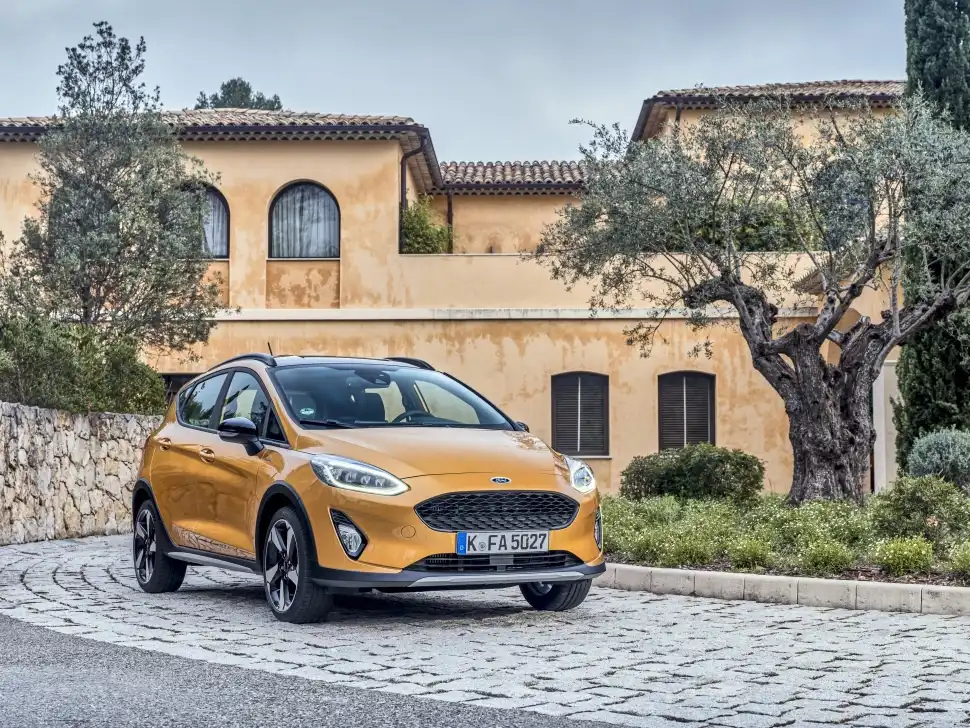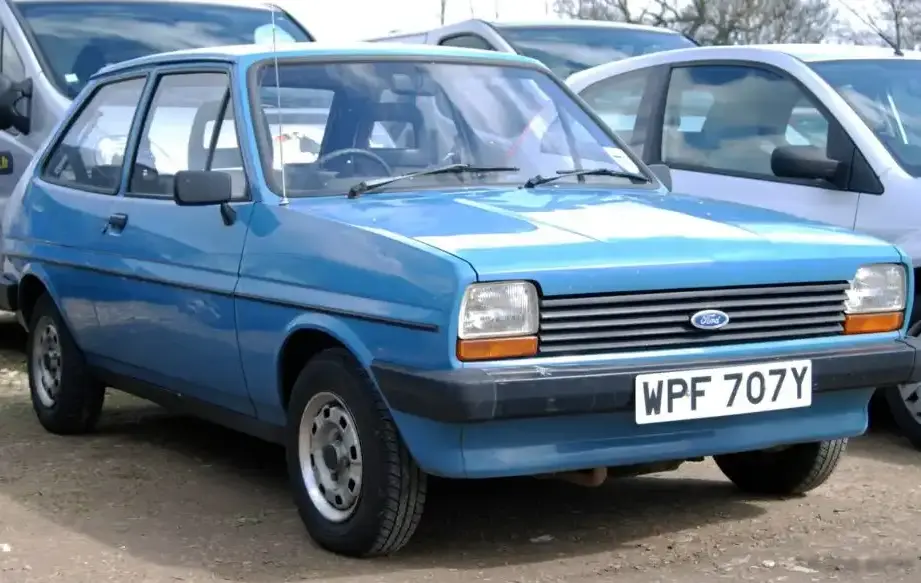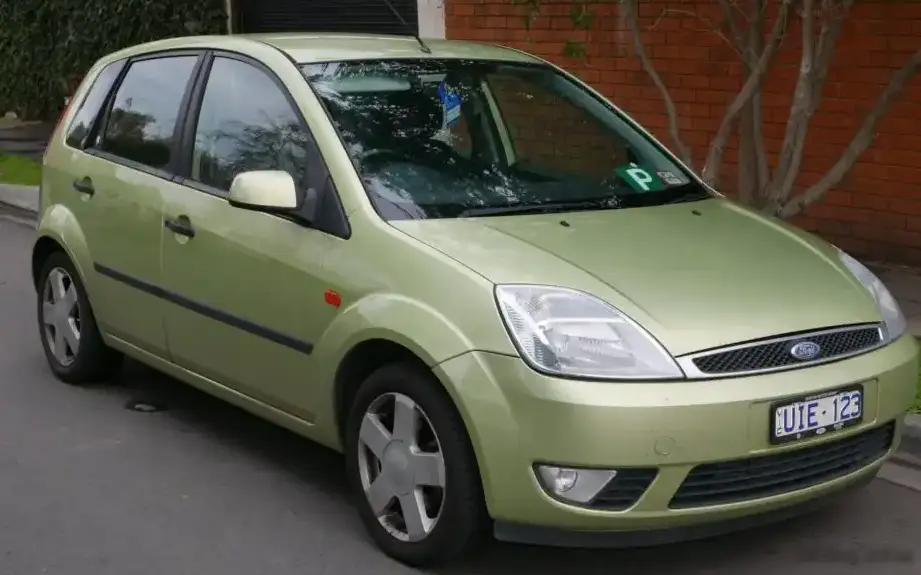
The Ford Fiesta Mk6, produced from 2002 to 2008, represented a significant step forward for Ford’s supermini. The 1.25 Duratec variant, outputting 75 horsepower, was a mainstay of the lineup, particularly in the early production years (2002-2005). Positioned as the entry-level engine option in the five-door body style, it aimed to provide affordable and economical transportation for a broad customer base. This model played a crucial role in maintaining the Fiesta’s popularity in the European market, where fuel efficiency and practicality were highly valued. It was a direct successor to the Fiesta Mk5 and paved the way for the more technologically advanced Mk7.
Technical Specifications
| Brand | Ford |
| Model | Fiesta |
| Generation | Fiesta VI (Mk6) 5 door |
| Type (Engine) | 1.25 Duratec (75 Hp) |
| Start of production | 2002 |
| End of production | 2005 |
| Powertrain Architecture | Internal Combustion engine |
| Body type | Hatchback |
| Seats | 5 |
| Doors | 5 |
| Fuel consumption (urban) | 8.6 l/100 km (27.4 US mpg, 32.8 UK mpg, 11.6 km/l) |
| Fuel consumption (extra urban) | 4.9 l/100 km (48 US mpg, 57.6 UK mpg, 20.4 km/l) |
| Fuel consumption (combined) | 6.2 l/100 km (37.9 US mpg, 45.6 UK mpg, 16.1 km/l) |
| CO2 emissions | 148 g/km |
| Fuel Type | Petrol (Gasoline) |
| Acceleration 0 – 100 km/h | 14.5 sec |
| Acceleration 0 – 62 mph | 14.5 sec |
| Acceleration 0 – 60 mph | 13.8 sec |
| Maximum speed | 163 km/h (101.28 mph) |
| Weight-to-power ratio | 14.8 kg/Hp, 67.8 Hp/tonne |
| Weight-to-torque ratio | 10.1 kg/Nm, 99.4 Nm/tonne |
| Power | 75 Hp @ 5500 rpm |
| Power per litre | 60.4 Hp/l |
| Torque | 110 Nm @ 4200 rpm (81.13 lb.-ft. @ 4200 rpm) |
| Engine layout | Front, Transverse |
| Engine Model/Code | FUJA, FUJB |
| Engine displacement | 1242 cm3 (75.79 cu. in.) |
| Number of cylinders | 4 |
| Engine configuration | Inline |
| Cylinder Bore | 71.9 mm (2.83 in.) |
| Piston Stroke | 76.5 mm (3.01 in.) |
| Compression ratio | 10:1 |
| Number of valves per cylinder | 4 |
| Fuel injection system | Multi-port manifold injection |
| Engine aspiration | Naturally aspirated engine |
| Valvetrain | DOHC |
| Engine oil capacity | 3.8 l (4.02 US qt | 3.34 UK qt) |
| Coolant | 5 l (5.28 US qt | 4.4 UK qt) |
| Kerb Weight | 1107 kg (2440.52 lbs.) |
| Max. weight | 1540 kg (3395.12 lbs.) |
| Max load | 433 kg (954.6 lbs.) |
| Trunk (boot) space – minimum | 284 l (10.03 cu. ft.) |
| Trunk (boot) space – maximum | 947 l (33.44 cu. ft.) |
| Fuel tank capacity | 45 l (11.89 US gal | 9.9 UK gal) |
| Permitted trailer load with brakes (12%) | 600 kg (1322.77 lbs.) |
| Permitted trailer load without brakes | 500 kg (1102.31 lbs.) |
| Length | 3916 mm (154.17 in.) |
| Width | 1683 mm (66.26 in.) |
| Width including mirrors | 1905 mm (75 in.) |
| Height | 1463 mm (57.6 in.) |
| Wheelbase | 2486 mm (97.87 in.) |
| Front track | 1477 mm (58.15 in.) |
| Rear (Back) track | 1444 mm (56.85 in.) |
| Minimum turning circle | 10.3 m (33.79 ft.) |
| Drivetrain Architecture | Front wheel drive |
| Drive wheel | Front wheel drive |
| Number of gears and type of gearbox | 5 gears, manual transmission |
| Front suspension | Wishbone |
| Rear suspension | Spring Strut |
| Front brakes | Disc |
| Rear brakes | Drum |
| Assisting systems | ABS (Anti-lock braking system) |
| Steering type | Steering rack and pinion |
| Power steering | Hydraulic Steering |
| Tires size | 175/65 R14 |
| Wheel rims size | 14 |
Powertrain & Engine Architecture
The heart of this Fiesta variant is the 1.25-liter Duratec engine, specifically the FUJA or FUJB engine codes. This engine is a naturally aspirated, inline-four cylinder unit featuring a double overhead camshaft (DOHC) valvetrain and multi-port fuel injection. The Duratec family was designed for simplicity and reliability, prioritizing fuel economy over outright performance. The 1.25L engine utilizes a relatively high compression ratio of 10:1, contributing to its efficiency. The engine’s modest output of 75 horsepower at 5500 rpm and 110 Nm (81.13 lb-ft) of torque at 4200 rpm is delivered through a five-speed manual transmission. While an automatic transmission was offered in some markets, it was less common with this engine and generally resulted in even slower acceleration.
Driving Characteristics
The 1.25L Fiesta is not known for its blistering speed. Acceleration from 0-60 mph takes around 13.8 seconds, and top speed is limited to 101.28 mph. The focus is on usability and economy. The engine feels adequate for city driving and short commutes, but struggles when fully loaded or attempting to overtake on the highway. The five-speed gearbox is well-matched to the engine’s characteristics, allowing drivers to keep the engine in its optimal power band. Compared to the more powerful 1.6L variants, the 1.25L feels significantly slower, but offers a smoother and more relaxed driving experience. The manual transmission provides a more engaging driving experience than the optional automatic.
Equipment & Trim Levels
The 1.25 Duratec models typically came with a basic level of equipment. Standard features included power steering, central locking, and an adjustable steering column. Interior upholstery was typically cloth, and the dashboard featured a simple, functional design. Optional extras included air conditioning, electric front windows, and an upgraded audio system. Trim levels varied by market, but generally followed a progression from base ‘Style’ to mid-range ‘Zetec’ and higher-spec ‘Ghia’ models. The 1.25L engine was most commonly found in the ‘Style’ and ‘Zetec’ trims.
Chassis & Braking
The Fiesta Mk6 utilizes a front-wheel-drive layout with a MacPherson strut front suspension and a twist-beam rear suspension. The braking system consists of disc brakes on the front wheels and drum brakes on the rear. ABS (Anti-lock Braking System) was standard equipment. The suspension setup is tuned for comfort and ride quality, rather than sporty handling. The relatively light weight of the 1.25L variant helps to mitigate the effects of the less powerful engine and provides decent handling characteristics for everyday driving.
Market Reception & Comparison
The 1.25L Fiesta was generally well-received as an affordable and economical city car. Critics praised its fuel efficiency and ease of driving, but noted its lack of performance. Compared to the 1.6L variants, the 1.25L offered significantly lower running costs but at the expense of driving enjoyment. The 1.4L engine offered a compromise between performance and economy. In terms of reliability, the Duratec engine proved to be generally robust, although regular maintenance was essential. Fuel economy figures of around 37.9 US mpg combined made it an attractive option for budget-conscious buyers.
Legacy
The 1.25 Duratec-powered Fiesta Mk6 remains a relatively common sight on used car markets today. Its simplicity and reliability have contributed to its longevity. While not a performance icon, it represents a practical and affordable option for those seeking a dependable supermini. The engine itself is known for its durability, but potential buyers should be aware of the possibility of age-related issues such as oil leaks and worn suspension components. The 1.25L Fiesta Mk6 holds a place as a solid, no-frills transportation option that served a large segment of the European car market well.