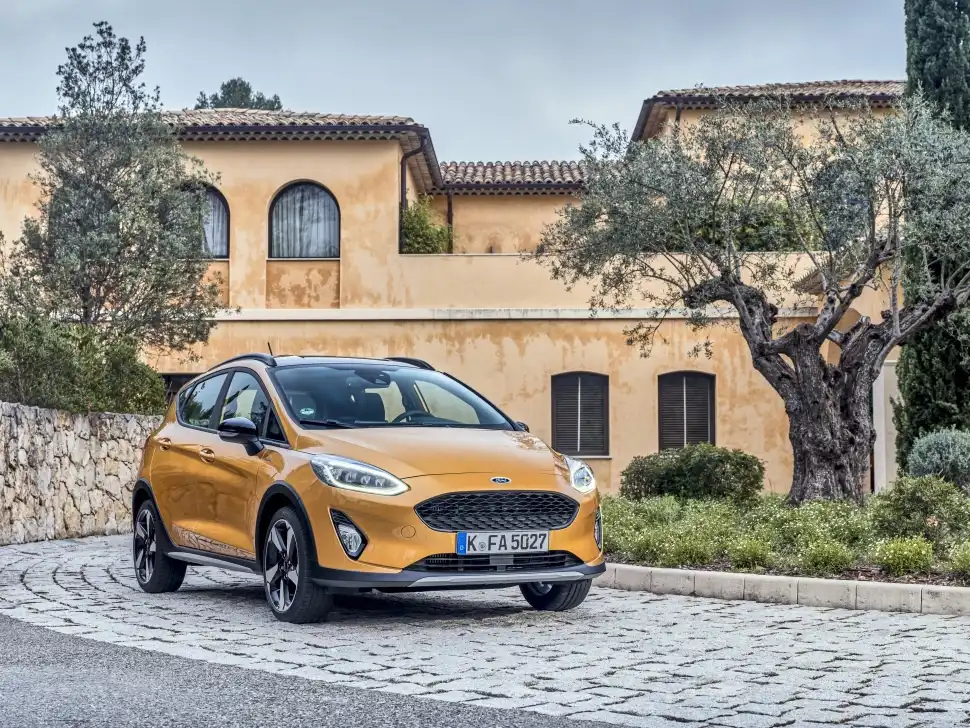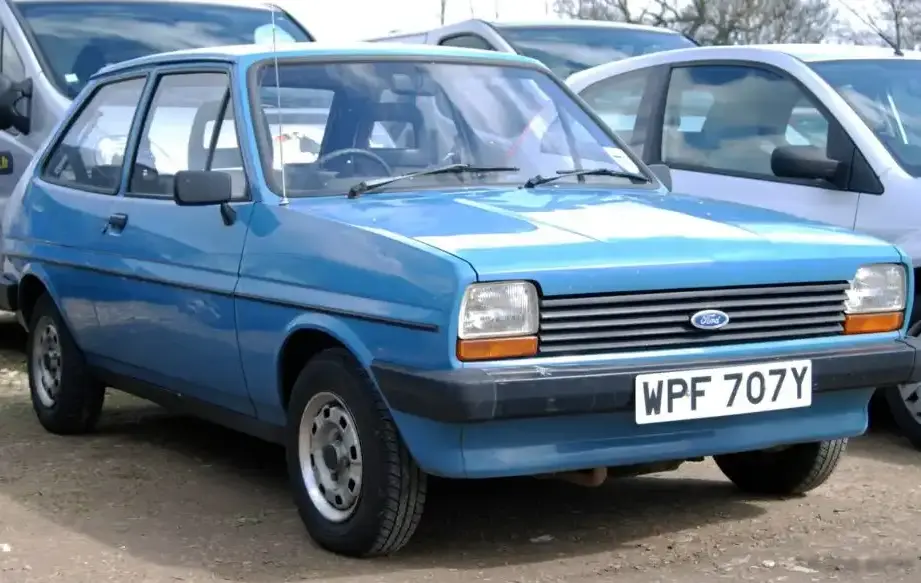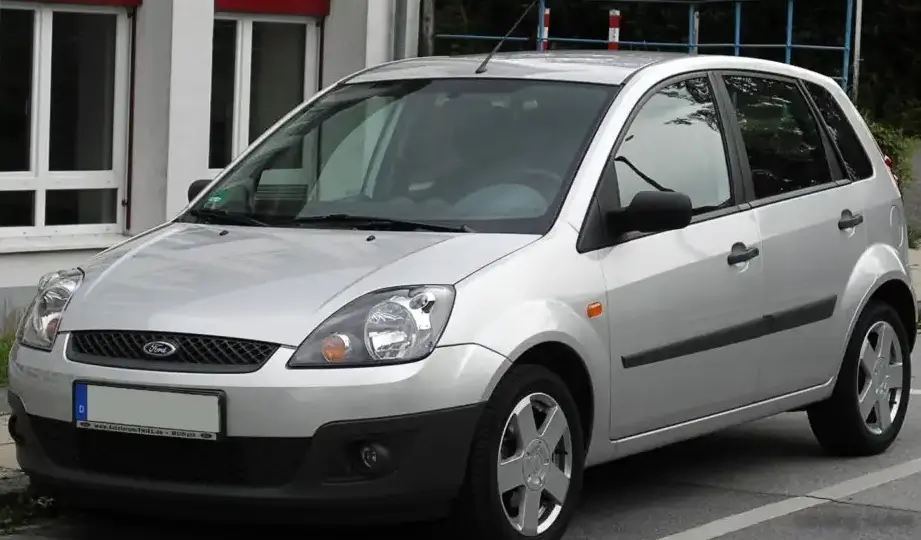
The Ford Fiesta Mk6, specifically the 5-door hatchback variant equipped with the 1.6-liter Duratec engine producing 100 horsepower and paired with the Durashift automatic transmission, was a significant offering in the European small car market from 2005 to 2008. This version represented a middle-ground option within the Mk6 Fiesta lineup, aiming to provide a balance between affordability, practicality, and ease of driving. It was positioned above the base 1.25-liter models and below the sportier, higher-performance ST variants. The facelifted Mk6, introduced in 2005, brought revised styling and updated features, solidifying the Fiesta’s position as a popular choice for budget-conscious buyers.
Technical Specifications
| Brand | Ford |
| Model | Fiesta |
| Generation | Fiesta VI (Mk6, facelift 2005) 5 door |
| Type (Engine) | 1.6 Duratec (100 Hp) Durashift |
| Start of production | 2005 |
| End of production | 2008 |
| Powertrain Architecture | Internal Combustion engine |
| Body type | Hatchback |
| Seats | 5 |
| Doors | 5 |
| Fuel consumption (urban) | 10.2 l/100 km (23.1 US mpg, 27.7 UK mpg, 9.8 km/l) |
| Fuel consumption (extra urban) | 5.8 l/100 km (40.6 US mpg, 48.7 UK mpg, 17.2 km/l) |
| Fuel consumption (combined) | 7.4 l/100 km (31.8 US mpg, 38.2 UK mpg, 13.5 km/l) |
| CO2 emissions | 176 g/km |
| Fuel Type | Petrol (Gasoline) |
| Acceleration 0 – 100 km/h | 11.9 sec |
| Acceleration 0 – 62 mph | 11.9 sec |
| Acceleration 0 – 60 mph | 11 sec |
| Maximum speed | 179 km/h (111.23 mph) |
| Emission standard | Euro 4 |
| Weight-to-power ratio | 10.7 kg/Hp, 93.4 Hp/tonne |
| Weight-to-torque ratio | 7.3 kg/Nm, 136.3 Nm/tonne |
| Power | 100 Hp @ 6000 rpm |
| Power per litre | 62.7 Hp/l |
| Torque | 146 Nm @ 4000 rpm (107.68 lb.-ft. @ 4000 rpm) |
| Engine layout | Front, Transverse |
| Engine Model/Code | FYJA |
| Engine displacement | 1596 cm3 (97.39 cu. in.) |
| Number of cylinders | 4 |
| Engine configuration | Inline |
| Number of valves per cylinder | 4 |
| Fuel injection system | Multi-port manifold injection |
| Engine aspiration | Naturally aspirated engine |
| Valvetrain | DOHC |
| Engine oil capacity | 4.1 l (4.33 US qt, 3.61 UK qt) |
| Coolant capacity | 5 l (5.28 US qt, 4.4 UK qt) |
| Kerb Weight | 1071 kg (2361.15 lbs) |
| Max. weight | 1570 kg (3461.26 lbs) |
| Max load | 499 kg (1100.11 lbs) |
| Trunk (boot) space – minimum | 284 l (10.03 cu. ft.) |
| Trunk (boot) space – maximum | 947 l (33.44 cu. ft.) |
| Fuel tank capacity | 45 l (11.89 US gal, 9.9 UK gal) |
| Max. roof load | 75 kg (165.35 lbs) |
| Permitted trailer load with brakes (12%) | 750 kg (1653.47 lbs) |
| Length | 3924 mm (154.49 in) |
| Width | 1685 mm (66.34 in) |
| Width including mirrors | 1912 mm (75.28 in) |
| Height | 1464 mm (57.64 in) |
| Wheelbase | 2486 mm (97.87 in) |
| Front track | 1464-1474 mm (57.64 – 58.03 in) |
| Rear track | 1435-1444 mm (56.5 – 56.85 in) |
| Minimum turning circle | 9.3 m (30.51 ft) |
| Drivetrain | Front wheel drive |
| Number of gears | 4 |
| Gearbox type | Automatic transmission Durashift |
| Front suspension | Independent type McPherson, Transverse stabilizer |
| Rear suspension | Coil spring, Elastic beam |
| Front brakes | Disc |
| Rear brakes | Drum |
| Assisting systems | ABS (Anti-lock braking system) |
| Steering type | Steering rack and pinion |
| Power steering | Hydraulic Steering |
| Tires size | 195/50 R 15 |
| Wheel rims size | 15 |
INTRODUCTION
The 1.6 Duratec 100 hp automatic Fiesta Mk6, produced between 2005 and 2008, was a key model in Ford’s European lineup. Built on the B3 platform (also known as the 1HX0/A3 platform shared with the Mazda 2 and Volvo S40/V50), this variant aimed to provide a comfortable and convenient driving experience for those prioritizing ease of use over outright performance. The facelift in 2005 brought subtle but noticeable cosmetic changes, including a revised front grille and headlight design, along with interior upgrades. This model was primarily sold in Europe, where the demand for compact, fuel-efficient hatchbacks was high. It served as a practical and affordable option for city driving and everyday commuting.
Powertrain & Engine Architecture
At the heart of this Fiesta variant lies the Ford Duratec 1.6-liter inline-four cylinder engine, designated as the FYJA. This engine is a naturally aspirated unit featuring a double overhead camshaft (DOHC) valvetrain with four valves per cylinder. It utilizes a multi-port fuel injection system, delivering fuel directly into the intake ports. The Duratec engine family was known for its relatively smooth operation and decent fuel economy. The 100 horsepower output is achieved at 6000 rpm, while peak torque of 146 Nm (107.68 lb-ft) arrives at 4000 rpm. Paired with this engine is Ford’s Durashift 4-speed automatic transmission. This transmission, while providing convenience, wasn’t known for its particularly quick shifts or fuel efficiency compared to manual alternatives. The Durashift transmission uses a traditional torque converter design and electronic controls.
Driving Characteristics
The 1.6L Duratec with the Durashift automatic offered a comfortable, if not particularly exciting, driving experience. Acceleration from 0-60 mph took around 11 seconds, and the top speed was approximately 111 mph. The automatic transmission’s gear ratios were geared towards fuel economy and smooth cruising rather than spirited acceleration. Compared to the manual transmission versions of the 1.6, the automatic felt noticeably slower, especially during overtaking maneuvers. The power delivery was linear, but the engine lacked the punch of the higher-output variants like the 1.6 Ti-VCT or the sporty ST models. The suspension, tuned for comfort, provided a reasonably compliant ride, absorbing bumps and imperfections in the road surface effectively. However, this came at the expense of handling sharpness.
Equipment & Trim Levels
The 1.6 Duratec automatic Fiesta typically came equipped with a reasonable level of standard features. These included power steering, central locking, electric front windows, and an adjustable steering column. Interior upholstery was typically cloth, with a relatively simple dashboard layout. Optional extras included air conditioning, alloy wheels, a CD player, and upgraded trim materials. Higher trim levels, such as the Style or Zetec, added features like body-colored bumpers, side skirts, and more premium interior appointments. Safety features included ABS (Anti-lock Braking System) and driver and passenger airbags.
Chassis & Braking
The Fiesta Mk6 utilized a McPherson strut front suspension setup with a transverse stabilizer bar, providing decent handling and stability. The rear suspension employed a semi-independent elastic beam configuration, which was cost-effective but less sophisticated than a fully independent setup. Braking duties were handled by disc brakes at the front and drum brakes at the rear. While adequate for everyday driving, the rear drum brakes were a cost-saving measure and didn’t offer the same stopping power as disc brakes on all four wheels. The chassis was designed to balance weight and rigidity, providing a stable platform for the engine and transmission.
Market Reception & Comparison
The 1.6 Duratec automatic Fiesta received mixed reviews. Critics generally praised its comfort, practicality, and affordability, but criticized its lack of performance and the somewhat dated Durashift automatic transmission. Compared to the manual transmission versions, the automatic suffered from slower acceleration and reduced fuel economy. The 1.6L engine offered a good compromise between power and efficiency, but it wasn’t as refined or powerful as the engines found in some of its competitors, such as the Volkswagen Polo or the Renault Clio. However, its lower price point made it an attractive option for budget-conscious buyers.
Legacy
The 1.6 Duratec engine, in various forms, proved to be a relatively reliable unit. The Durashift automatic transmission, however, had a reputation for being less durable than some other automatic transmissions of the time. Today, these Fiesta Mk6 models are relatively affordable on the used car market. They represent a practical and economical choice for those seeking a small, reliable hatchback. Maintenance costs are generally reasonable, and parts availability is good. While not a particularly exciting car, the 1.6 Duratec automatic Fiesta Mk6 remains a popular choice for first-time car buyers and those looking for a dependable city runabout.