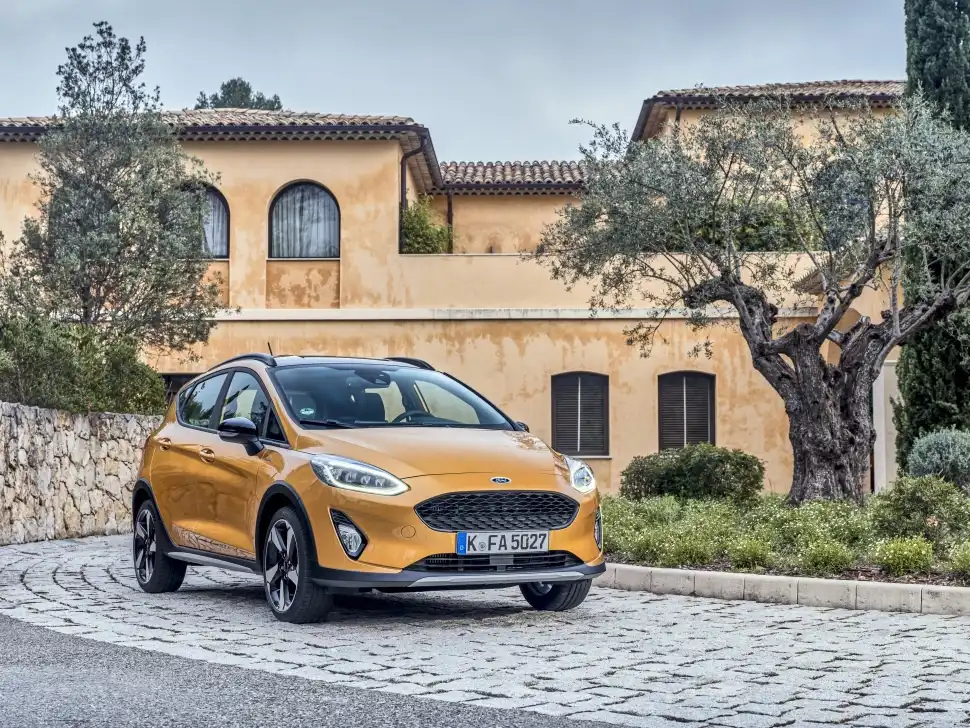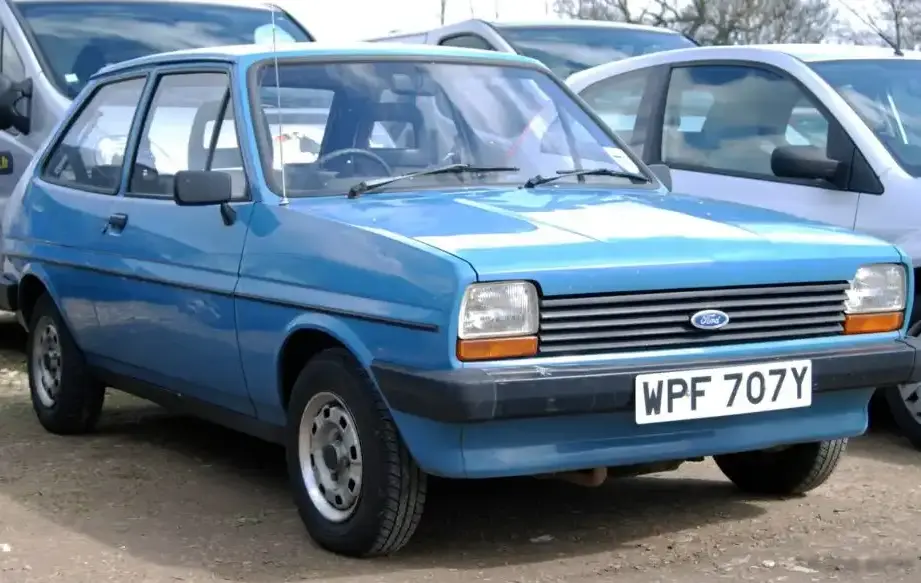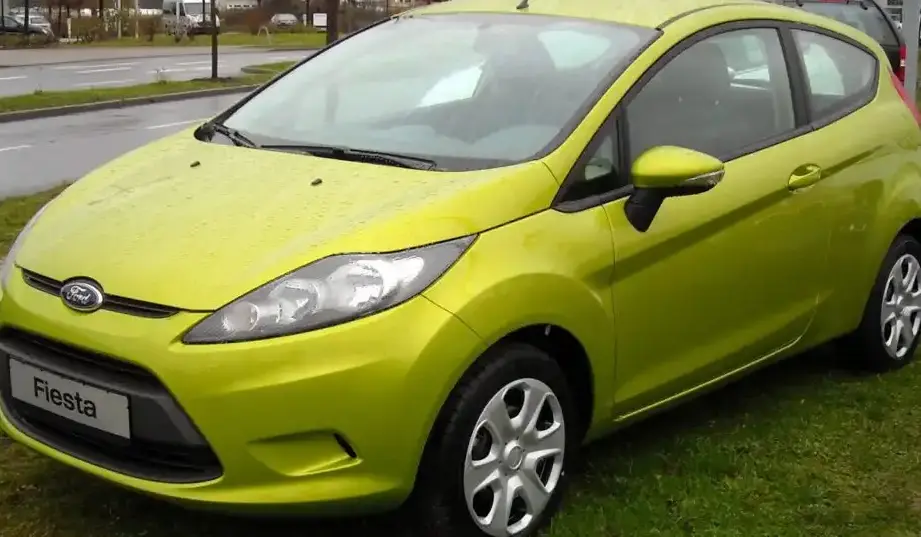
The Ford Fiesta Mk7, produced from 2008 to 2019, represented a significant leap forward for Ford’s supermini. The 3-door 1.4 TDCi variant, available primarily between 2011 and 2012, was positioned as an entry-level offering focused on fuel efficiency and affordability. It served as a key model in European markets, where smaller, economical cars are highly valued. This particular configuration aimed to provide a practical and cost-effective option for urban commuters and first-time car buyers. It sat below the more powerful petrol and diesel variants in the Fiesta lineup, offering a balance between running costs and usability.
Technical Specifications
| Brand | Ford |
| Model | Fiesta |
| Generation | Fiesta VII (Mk7) 3 door |
| Type (Engine) | 1.4 TDCi (70 Hp) |
| Start of production | 2011 year |
| End of production | 2012 year |
| Powertrain Architecture | Internal Combustion engine |
| Body type | Hatchback |
| Seats | 5 |
| Doors | 3 |
| Fuel consumption (economy) – urban | 4.8 l/100 km (49 US mpg, 58.9 UK mpg, 20.8 km/l) |
| Fuel consumption (economy) – extra urban | 3.6 l/100 km (65.3 US mpg, 78.5 UK mpg, 27.8 km/l) |
| Fuel consumption (economy) – combined | 4.1 l/100 km (57.4 US mpg, 68.9 UK mpg, 24.4 km/l) |
| CO2 emissions | 107 g/km |
| Fuel Type | Diesel |
| Acceleration 0 – 100 km/h | 14.8 sec |
| Acceleration 0 – 62 mph | 14.8 sec |
| Acceleration 0 – 60 mph | 14.1 sec |
| Maximum speed | 162 km/h (100.66 mph) |
| Emission standard | Euro 5 |
| Weight-to-power ratio | 15.7 kg/Hp, 63.6 Hp/tonne |
| Weight-to-torque ratio | 6.9 kg/Nm, 145.5 Nm/tonne |
| Power | 70 Hp @ 4000 rpm |
| Power per litre | 50 Hp/l |
| Torque | 160 Nm @ 1750-2500 rpm (118.01 lb.-ft. @ 1750-2500 rpm) |
| Engine layout | Front, Transverse |
| Engine Model/Code | KVJA |
| Engine displacement | 1399 cm3 (85.37 cu. in.) |
| Number of cylinders | 4 |
| Engine configuration | Inline |
| Cylinder Bore | 73.7 mm (2.9 in.) |
| Piston Stroke | 82 mm (3.23 in.) |
| Compression ratio | 18:1 |
| Fuel injection system | Diesel Commonrail |
| Engine aspiration | Turbocharger, Intercooler |
| Valvetrain | DOHC |
| Kerb Weight | 1100 kg (2425.08 lbs.) |
| Max. weight | 1550 kg (3417.17 lbs.) |
| Max load | 450 kg (992.08 lbs.) |
| Trunk (boot) space – minimum | 295 l (10.42 cu. ft.) |
| Trunk (boot) space – maximum | 979 l (34.57 cu. ft.) |
| Fuel tank capacity | 45 l (11.89 US gal | 9.9 UK gal) |
| Max. roof load | 50 kg (110.23 lbs.) |
| Permitted trailer load with brakes (12%) | 750 kg (1653.47 lbs.) |
| Permitted trailer load without brakes | 550 kg (1212.54 lbs.) |
| Length | 3950 mm (155.51 in.) |
| Width | 1722 mm (67.8 in.) |
| Width including mirrors | 1973 mm (77.68 in.) |
| Height | 1481 mm (58.31 in.) |
| Wheelbase | 2489 mm (97.99 in.) |
| Front track | 1493 mm (58.78 in.) |
| Rear (Back) track | 1480 mm (58.27 in.) |
| Minimum turning circle (turning diameter) | 10.2 m (33.46 ft.) |
| Drivetrain Architecture | The Internal combustion engine (ICE) drives the front wheels of the vehicle. |
| Drive wheel | Front wheel drive |
| Number of gears and type of gearbox | 5 gears, manual transmission |
| Front suspension | Independent, type McPherson with coil spring and anti-roll bar |
| Rear suspension | Coil spring, Torsion |
| Front brakes | Ventilated discs |
| Rear brakes | Drum |
| Assisting systems | ABS (Anti-lock braking system) |
| Steering type | Steering rack and pinion |
| Power steering | Electric Steering |
| Tires size | 175/65 R14 |
| Wheel rims size | 5.5J x 14 |
INTRODUCTION
The Ford Fiesta Mk7 1.4 TDCi 3-door, produced from 2011-2012, was a key component of Ford’s strategy to offer a diverse range of Fiesta models. Built on the global B-platform (also known as the 1HX0/A3 platform), it aimed to deliver exceptional fuel economy and low running costs. This variant was particularly popular in Europe, where diesel engines and smaller cars are favored due to tax incentives and congested urban environments. The 3-door configuration further emphasized its appeal to younger drivers and those seeking a more sporty aesthetic.
Powertrain & Engine Architecture
At the heart of this Fiesta variant lies the 1.4-liter Duratorq TDCi engine, specifically the KVJA engine code. This engine is a four-cylinder, inline diesel utilizing a common-rail direct injection system. The common-rail system, operating at very high pressures, ensures precise fuel delivery for optimized combustion. The engine also features a turbocharger with an intercooler, which enhances power output and efficiency. The valvetrain employs a double overhead camshaft (DOHC) configuration, contributing to improved engine breathing. The 1.4 TDCi produces 70 horsepower at 4000 rpm and 160 Nm (118 lb-ft) of torque between 1750 and 2500 rpm. This engine was paired with a five-speed manual transmission, chosen for its simplicity and efficiency. While an automatic transmission was available on other Fiesta models, it wasn’t offered with this specific engine and power output.
Driving Characteristics
The 1.4 TDCi 3-door Fiesta offered a practical, if not particularly exhilarating, driving experience. Acceleration from 0 to 60 mph took around 14.1 seconds, and top speed was limited to 100.66 mph. The engine’s torque delivery was relatively flat, providing adequate pulling power for everyday driving situations. However, it lacked the punch of the higher-powered petrol or diesel variants. The five-speed manual transmission was well-matched to the engine’s characteristics, with gear ratios optimized for fuel efficiency. Compared to the 1.6-liter petrol versions, the 1.4 TDCi offered significantly better fuel economy but less overall performance. The manual gearbox also provided a more engaging driving experience than the automatic transmissions available on other Fiesta trims.
Equipment & Trim Levels
The 1.4 TDCi 3-door typically came with a basic level of equipment, reflecting its entry-level positioning. Standard features generally included power steering, ABS, front airbags, and a basic audio system. Interior upholstery was typically cloth, and the dashboard featured a functional, if somewhat spartan, design. Optional extras included air conditioning, alloy wheels, electric windows, and a more advanced audio system. Higher trim levels, such as Zetec, offered additional features like sports suspension, fog lights, and upgraded interior trim. The 3-door configuration itself was a stylistic choice, often appealing to younger buyers who prioritized aesthetics over rear passenger space.
Chassis & Braking
The Fiesta Mk7 utilized a McPherson strut front suspension and a torsion beam rear suspension. This setup provided a good balance between ride comfort and handling. The front brakes were ventilated discs, offering adequate stopping power, while the rear brakes were drums, a cost-saving measure common in entry-level models. The electric power steering provided light and precise steering feel. The chassis was relatively lightweight, contributing to the car’s fuel efficiency and agility. Stabilizer bars were fitted to both the front and rear axles to reduce body roll during cornering.
Market Reception & Comparison
The 1.4 TDCi 3-door Fiesta was generally well-received by critics for its fuel economy and affordability. However, its performance was often criticized as being underwhelming. Compared to the 1.6-liter petrol versions, the 1.4 TDCi offered significantly better fuel economy (around 57.4 US mpg combined) but slower acceleration. The 1.6 TDCi offered a compromise between performance and economy, but at a higher price point. Reliability was generally good, although the diesel particulate filter (DPF) could be prone to clogging if the car was primarily used for short journeys. The Fiesta’s overall package, however, made it a competitive offering in the supermini segment.
Legacy
The 1.4 TDCi engine, while not known for its outright performance, proved to be a reliable and durable unit. Many examples are still on the road today, testament to its robust construction. In the used car market, the 1.4 TDCi 3-door Fiesta represents an affordable and economical option for those seeking a practical city car. However, potential buyers should be aware of the potential for DPF issues and ensure that the car has been properly maintained. The Fiesta Mk7, as a whole, established Ford as a leader in the supermini segment, and the 1.4 TDCi variant played a crucial role in broadening its appeal to a wider range of buyers.