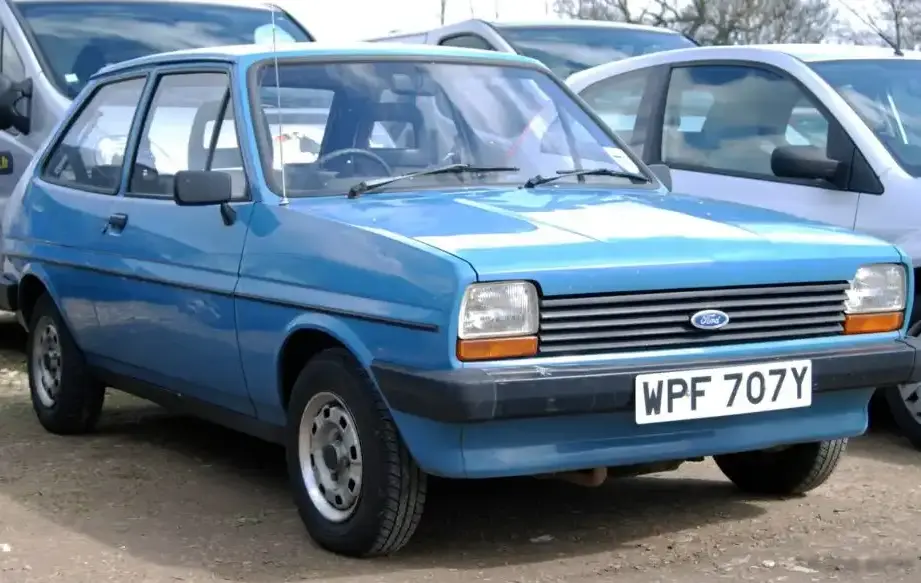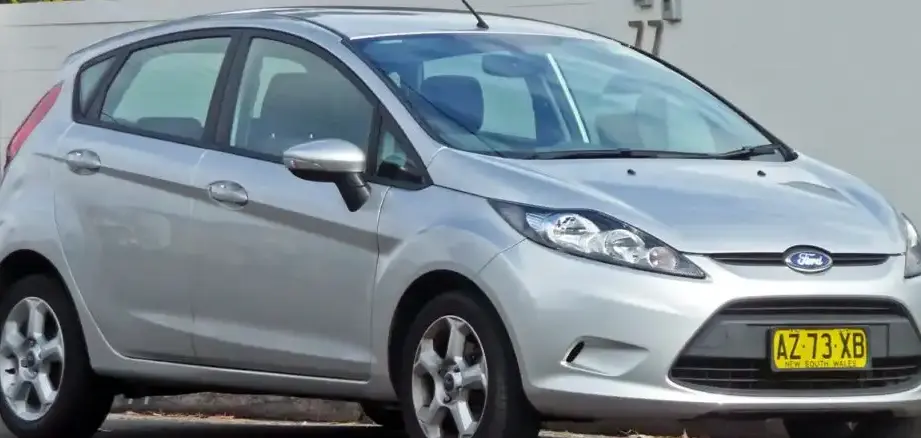
The Ford Fiesta Mk7, produced from 2008 to 2019, marked a substantial advancement for Ford’s supermini lineup. The 1.4-liter (96 horsepower) five-door variant, primarily available during the early production years (2008-2010), served as the entry point into the Mk7 range, balancing affordability with practicality. Positioned below the more potent 1.6-liter models and the diesel options, this version catered to buyers prioritizing economical transportation for daily commutes and urban driving. It was a key model in the European market, consistently ranking among the best-selling vehicles in its class. This particular configuration, with its focus on cost-effectiveness, played a vital role in making the Mk7 Fiesta accessible to a wider range of customers.
Technical Specifications
| Brand | Ford |
| Model | Fiesta |
| Generation | Fiesta VII (Mk7) 5 door |
| Type (Engine) | 1.4 (96 Hp) |
| Start of production | 2008 |
| End of production | 2010 |
| Powertrain Architecture | Internal Combustion engine |
| Body type | Hatchback |
| Seats | 5 |
| Doors | 5 |
| Fuel consumption (urban) | 7.5 l/100 km (31.4 US mpg) |
| Fuel consumption (extra urban) | 4.6 l/100 km (51.1 US mpg) |
| Fuel consumption (combined) | 5.7 l/100 km (41.3 US mpg) |
| CO2 emissions | 133 g/km |
| Fuel Type | Petrol (Gasoline) |
| Acceleration 0 – 100 km/h | 12.2 sec |
| Acceleration 0 – 62 mph | 12.2 sec |
| Acceleration 0 – 60 mph | 11.6 sec |
| Maximum speed | 175 km/h (108.74 mph) |
| Emission standard | Euro 4 |
| Weight-to-power ratio | 10.2 kg/Hp |
| Weight-to-torque ratio | 7.8 kg/Nm |
| Power | 96 Hp @ 5750 rpm |
| Torque | 125 Nm @ 4200 rpm (92.2 lb.-ft. @ 4200 rpm) |
| Engine layout | Front, Transverse |
| Engine displacement | 1392 cm3 (84.95 cu. in.) |
| Number of cylinders | 4 |
| Engine configuration | Inline |
| Cylinder Bore | 77.2 mm (3.04 in.) |
| Piston Stroke | 74.3 mm (2.93 in.) |
| Compression ratio | 8.5:1 |
| Number of valves per cylinder | 2 |
| Fuel injection system | Single-point injection |
| Engine aspiration | Naturally aspirated |
| Valvetrain | OHC |
| Engine oil capacity | 3.8 l (4.02 US qt | 3.34 UK qt) |
| Coolant capacity | 5.5 l (5.81 US qt | 4.84 UK qt) |
| Kerb Weight | 979 kg (2158.33 lbs.) |
| Max. weight | 1495 kg (3295.91 lbs.) |
| Max load | 516 kg (1137.59 lbs.) |
| Trunk (boot) space – minimum | 295 l (10.42 cu. ft.) |
| Trunk (boot) space – maximum | 979 l (34.57 cu. ft.) |
| Fuel tank capacity | 45 l (11.89 US gal | 9.9 UK gal) |
| Length | 3950 mm (155.51 in.) |
| Width | 1722 mm (67.8 in.) |
| Width including mirrors | 1973 mm (77.68 in.) |
| Height | 1481 mm (58.31 in.) |
| Wheelbase | 2489 mm (97.99 in.) |
| Front track | 1493 mm (58.78 in.) |
| Rear track | 1480 mm (58.27 in.) |
| Minimum turning circle | 10.2 m (33.46 ft.) |
| Drivetrain | Front wheel drive |
| Number of gears | 5 |
| Gearbox type | Manual transmission |
| Front suspension | Independent, McPherson with coil spring and anti-roll bar |
| Rear suspension | Coil spring, Torsion |
| Front brakes | Ventilated discs |
| Rear brakes | Drum |
| Assisting systems | ABS (Anti-lock braking system) |
| Steering type | Steering rack and pinion |
| Power steering | Electric |
| Tires size | 175/65 R14 |
| Wheel rims size | 5.5J x 14 |
Powertrain & Engine Architecture
The 1.4-liter engine, often identified by engine codes like RTQA, is a naturally aspirated, inline-four cylinder petrol engine. It employs a single-point fuel injection system, a relatively straightforward and cost-effective technology for its time. The engine features an overhead camshaft (OHC) valvetrain with two valves per cylinder. This design prioritized fuel efficiency and smooth operation over peak performance. The 96 horsepower output is reached at 5750 rpm, while maximum torque of 125 Nm (92.2 lb-ft) is delivered at 4200 rpm. The engine’s relatively low compression ratio of 8.5:1 further enhances its fuel economy. While a five-speed manual transmission was the standard pairing, a four-speed automatic transmission was also available, albeit less frequently chosen. The automatic gearbox was engineered for smooth gear changes and ease of driving, prioritizing comfort over a sporty driving experience.
Driving Characteristics
The 1.4-liter Fiesta, when equipped with the manual transmission, provided adequate performance for typical daily driving. Acceleration from 0-60 mph took approximately 11.6 seconds, with a top speed around 108.74 mph. However, the automatic version demonstrated noticeably slower acceleration, with a 0-60 mph time closer to 12.2 seconds. The automatic transmission’s gear ratios were tuned for fuel efficiency rather than quick acceleration. The engine felt somewhat strained when pushed to its limits, especially when carrying a full load or tackling inclines. The steering was light and precise, making it easy to maneuver in city traffic. The suspension delivered a comfortable ride, effectively absorbing bumps and road imperfections.
Equipment & Trim Levels
The 1.4-liter Fiesta typically included standard features such as power steering, central locking, electric front windows, and an ABS anti-lock braking system. Air conditioning was frequently offered as an optional upgrade. Interior upholstery was generally cloth, with a simple and functional dashboard layout. Higher trim levels, like Style or Zetec, added features such as alloy wheels, body-colored bumpers, and enhanced interior trim. Optional extras included a CD player with an auxiliary input, heated mirrors, and parking sensors.
Chassis & Braking
The Fiesta Mk7 utilized a McPherson strut front suspension and a torsion beam rear suspension. This configuration struck a balance between ride comfort and handling. The front brakes were ventilated discs, providing good stopping power, while the rear brakes were drums, a cost-saving measure implemented in the entry-level models. Electric power steering offered a light and responsive steering feel. The car’s relatively low weight (around 979 kg or 2158 lbs) helped to compensate for the engine’s modest power output.
Market Reception & Comparison
The 1.4-liter Fiesta was generally well-received as an affordable and practical supermini. Reviewers praised its fuel economy and comfortable ride, but acknowledged its lack of significant performance. Compared to the 1.6-liter models, the 1.4 offered considerably less power and acceleration. However, it provided better fuel efficiency and lower insurance costs. The diesel versions offered even greater fuel economy but came with a higher purchase price. The 1.4-liter automatic was often criticized for its sluggish performance and the dated four-speed transmission.
Legacy
The 1.4-liter Fiesta Mk7 continues to be a popular choice in the used car market, particularly for first-time drivers or those seeking an economical vehicle. The engine is generally reliable, provided regular maintenance is performed. Common issues include occasional oil leaks and potential problems with the fuel injection system. The automatic transmission, while comfortable, is generally less durable than the manual gearbox. Overall, the 1.4-liter Fiesta Mk7 represents a dependable and solid supermini that continues to offer affordable transportation for many years to come. Its simplicity and relatively low running costs make it an attractive option for budget-conscious buyers.