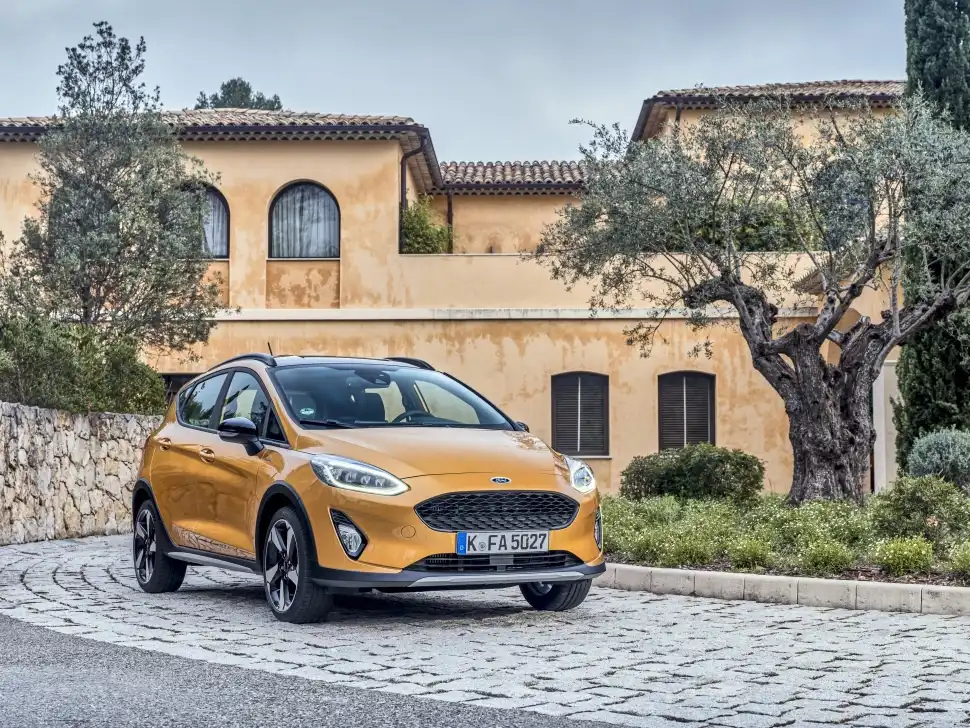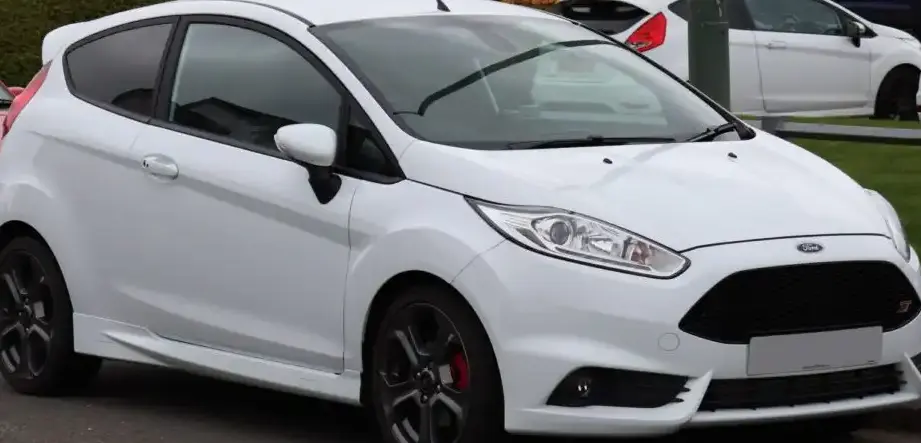
The Ford Fiesta VII, specifically the three-door model equipped with the 1.0-liter Duratec 80 horsepower engine and Start&Stop technology, was a key offering in Ford’s European and, to a lesser extent, North American small car lineup from 2013 to 2017. This variant represented an entry point into the Mk7 Fiesta range, appealing to buyers prioritizing fuel efficiency and affordability. It sat below the more powerful EcoBoost variants and the diesel options in terms of performance and price, targeting urban commuters and first-time car owners. The facelifted Mk7, introduced in 2013, brought revised styling and updated technology to the Fiesta platform, building upon the success of the Mk6 generation.
Technical Specifications
| Brand | Ford |
| Model | Fiesta |
| Generation | Fiesta VII (Mk7, facelift 2013) 3 door |
| Type (Engine) | 1.0 Duratec (80 Hp) Start&Stop |
| Start of production | 2013 |
| End of production | 2017 |
| Powertrain Architecture | Internal Combustion engine |
| Body type | Hatchback |
| Seats | 5 |
| Doors | 3 |
| Fuel consumption (urban) | 5.1 l/100 km (46.1 US mpg, 55.4 UK mpg, 19.6 km/l) |
| Fuel consumption (extra urban) | 3.8 l/100 km (61.9 US mpg, 74.3 UK mpg, 26.3 km/l) |
| Fuel consumption (combined) | 4.3 l/100 km (54.7 US mpg, 65.7 UK mpg, 23.3 km/l) |
| CO2 emissions | 99 g/km |
| Fuel Type | Petrol (Gasoline) |
| Acceleration 0 – 100 km/h | 14.9 sec |
| Acceleration 0 – 62 mph | 14.9 sec |
| Acceleration 0 – 60 mph | 14.2 sec |
| Maximum speed | 165 km/h (102.53 mph) |
| Emission standard | Euro 5 |
| Weight-to-power ratio | 12.1 kg/Hp, 82.5 Hp/tonne |
| Weight-to-torque ratio | 9.2 kg/Nm, 108.2 Nm/tonne |
| Power | 80 Hp @ 6300 rpm |
| Power per litre | 80.2 Hp/l |
| Torque | 105 Nm @ 4100 rpm (77.44 lb.-ft. @ 4100 rpm) |
| Engine layout | Front, Transverse |
| Engine Model/Code | P4JA, P4JB, P4JC, P4JD |
| Engine displacement | 998 cm3 (60.9 cu. in.) |
| Number of cylinders | 3 |
| Engine configuration | Inline |
| Number of valves per cylinder | 4 |
| Fuel injection system | Direct injection |
| Engine aspiration | Naturally aspirated engine, Intercooler |
| Engine oil capacity | 4.1 l (4.33 US qt | 3.61 UK qt) |
| Coolant | 5.8 l (6.13 US qt | 5.1 UK qt) |
| Kerb Weight | 970 kg (2138.48 lbs.) |
| Max. weight | 1525 kg (3362.05 lbs.) |
| Max load | 555 kg (1223.57 lbs.) |
| Trunk (boot) space – minimum | 281 l (9.92 cu. ft.) |
| Trunk (boot) space – maximum | 965 l (34.08 cu. ft.) |
| Fuel tank capacity | 42 l (11.1 US gal | 9.24 UK gal) |
| Permitted trailer load with brakes (8%) | 750 kg (1653.47 lbs.) |
| Permitted trailer load with brakes (12%) | 650 kg (1433 lbs.) |
| Permitted trailer load without brakes | 520 kg (1146.4 lbs.) |
| Length | 3969 mm (156.26 in.) |
| Width | 1722 mm (67.8 in.) |
| Width with mirrors folded | 1787 mm (70.35 in.) |
| Width including mirrors | 1973 mm (77.68 in.) |
| Height | 1495 mm (58.86 in.) |
| Wheelbase | 2489 mm (97.99 in.) |
| Minimum turning circle | 10.2 m (33.46 ft.) |
| Drivetrain | Front wheel drive |
| Number of gears | 5 gears, manual transmission |
| Front suspension | Independent, type McPherson with coil spring and anti-roll bar |
| Rear suspension | Coil spring, Torsion |
| Front brakes | Ventilated discs |
| Rear brakes | Drum |
| Tires size | 175/65 R14; 195/55 R15 |
| Wheel rims size | 5.5J x 14; 6J x 15 |
INTRODUCTION
The Ford Fiesta Mk7, launched in 2008 and facelifted in 2013, was a significant model for Ford in Europe, representing a move towards a more globalized platform. The three-door 1.0 Duratec 80 hp variant, introduced with the facelift, was designed to appeal to budget-conscious buyers and those seeking low running costs. The “Start&Stop” system, standard on this model, further enhanced its fuel efficiency. This trim level was positioned as the entry-level offering, providing a basic but well-equipped package for urban driving.
Powertrain & Engine Architecture
The heart of this Fiesta variant is the 1.0-liter Duratec three-cylinder engine, specifically utilizing engine codes P4JA, P4JB, P4JC, or P4JD depending on the specific production year and market. This engine is notable for its compact size and surprisingly sophisticated technology. It features direct fuel injection, which improves combustion efficiency and power output. The engine also incorporates a variable valve timing system to optimize performance across the rev range. The 80 horsepower output is achieved at 6300 rpm, with a torque figure of 105 Nm (77.44 lb.-ft.) delivered at 4100 rpm. The engine is paired with a five-speed manual transmission, chosen for its simplicity and efficiency. While an automatic transmission was offered on other Fiesta variants, it wasn’t available with this specific engine and power output.
Driving Characteristics
The 1.0-liter Fiesta is not a performance car. Acceleration from 0-60 mph takes around 14.2 seconds, and its top speed is 165 km/h (102.53 mph). However, it’s surprisingly capable in urban environments. The engine is willing and responsive enough for city driving, and the light weight of the Fiesta (around 970 kg or 2138.48 lbs) helps to mitigate the relatively low power output. The five-speed gearbox is well-matched to the engine, with gear ratios designed to maximize fuel efficiency. Compared to the more powerful EcoBoost variants, this 80 hp version feels noticeably slower, particularly when overtaking or climbing hills. However, it offers a more relaxed and economical driving experience.
Equipment & Trim Levels
The base-level 1.0-liter Fiesta typically came equipped with features such as air conditioning, power steering, electric front windows, and a basic audio system with USB connectivity. Safety features included ABS brakes, electronic stability control, and multiple airbags. Higher trim levels added features like alloy wheels, a more advanced audio system, and upgraded interior trim. Optional extras included parking sensors, a trip computer, and a quick-clear heated windscreen. Interior upholstery was typically cloth, with a functional and durable design.
Chassis & Braking
The Fiesta Mk7 utilizes a McPherson strut front suspension and a torsion beam rear suspension. This setup provides a good balance between ride comfort and handling. The front brakes are ventilated discs, while the rear brakes are drums. This configuration was chosen to keep costs down while providing adequate stopping power for the vehicle’s weight and performance. The steering is electrically assisted, providing a light and precise feel.
Market Reception & Comparison
The 1.0-liter Fiesta was generally well-received by critics for its fuel efficiency and affordability. It was praised for its nimble handling and surprisingly spacious interior. However, some reviewers noted its lack of power, particularly when compared to the EcoBoost variants. In terms of fuel economy, the 1.0-liter Fiesta consistently outperformed the larger-engined models, achieving combined fuel consumption figures of around 4.3 l/100 km (54.7 US mpg). Reliability was generally good, although some owners reported minor issues with the engine’s timing belt. Compared to competitors like the Volkswagen Polo and Opel Corsa, the Fiesta offered a compelling combination of value, efficiency, and driving enjoyment.
Legacy
The 1.0-liter Duratec engine proved to be a reliable and durable powerplant. Even today, well-maintained examples of the Fiesta Mk7 1.0 are relatively common on the used car market. The engine’s simplicity and robust construction contribute to its longevity. While not a particularly exciting car, the 1.0-liter Fiesta remains a practical and economical choice for those seeking a small, affordable hatchback. Its fuel efficiency and low running costs continue to appeal to budget-conscious buyers, making it a popular option in the used car market.