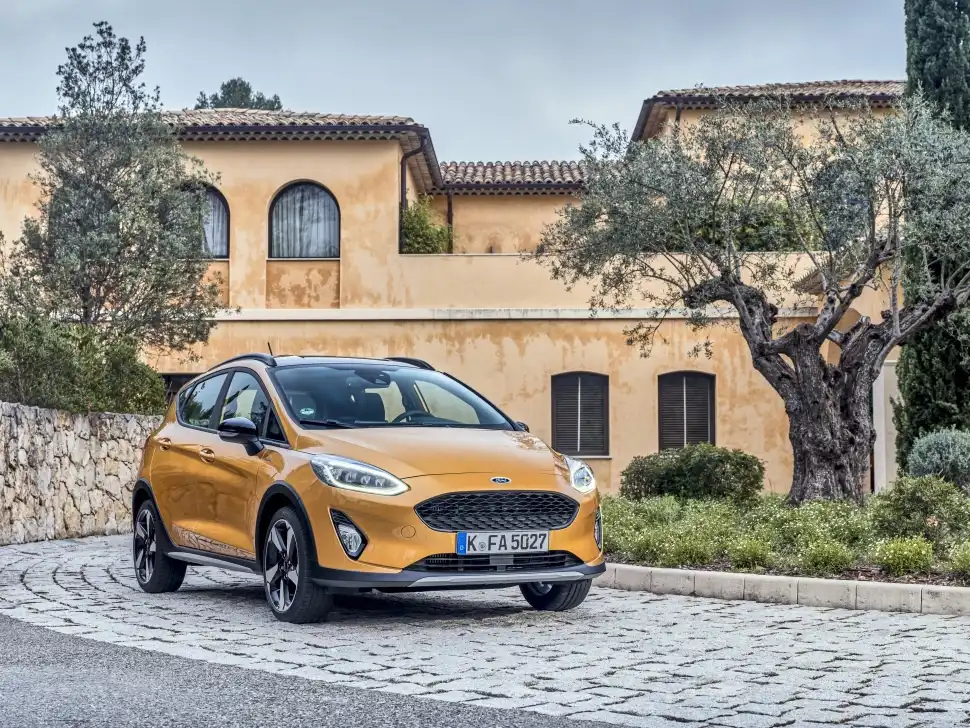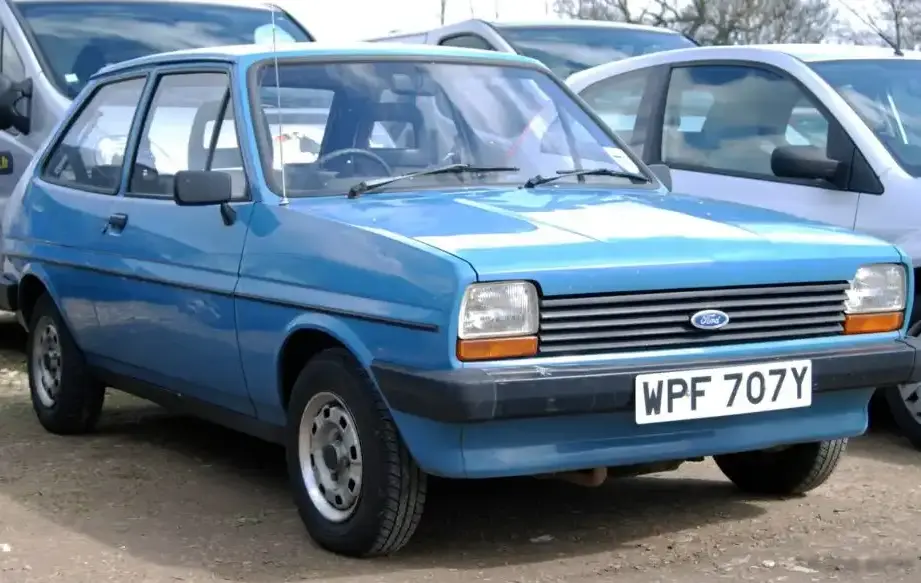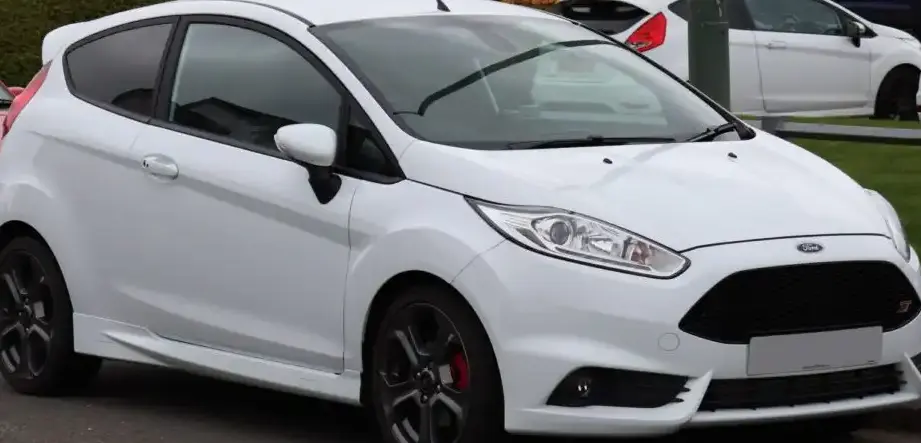
The Ford Fiesta VII, specifically the facelifted model produced from 2013 to 2017, represented a significant evolution of Ford’s popular supermini. Within this generation, the three-door 1.25 Duratec variant, producing 60 horsepower, served as the entry point to the Fiesta range. This model occupied a crucial position in the European market, where smaller, fuel-efficient vehicles are highly sought after. While not sold in significant numbers in the US, the Fiesta was a mainstay in Ford’s global lineup, and this particular engine/body style combination was designed for affordability and practicality. It was built on the B2E platform, also known as the global Fiesta platform.
Technical Specifications
| Brand | Ford |
| Model | Fiesta |
| Generation | Fiesta VII (Mk7, facelift 2013) 3 door |
| Type (Engine) | 1.25 Duratec (60 Hp) |
| Start of production | 2013 |
| End of production | 2017 |
| Powertrain Architecture | Internal Combustion engine |
| Body type | Hatchback |
| Seats | 5 |
| Doors | 3 |
| Fuel consumption (urban) | 6.9 l/100 km (34.1 US mpg, 40.9 UK mpg, 14.5 km/l) |
| Fuel consumption (extra urban) | 4.2 l/100 km (56 US mpg, 67.3 UK mpg, 23.8 km/l) |
| Fuel consumption (combined) | 5.2 l/100 km (45.2 US mpg, 54.3 UK mpg, 19.2 km/l) |
| CO2 emissions | 120 g/km |
| Fuel Type | Petrol (Gasoline) |
| Acceleration 0 – 100 km/h | 16.9 sec |
| Acceleration 0 – 62 mph | 16.9 sec |
| Acceleration 0 – 60 mph | 16.1 sec |
| Maximum speed | 152 km/h (94.45 mph) |
| Emission standard | Euro 5 |
| Weight-to-power ratio | 16.2 kg/Hp, 61.9 Hp/tonne |
| Weight-to-torque ratio | 8.9 kg/Nm, 112.4 Nm/tonne |
| Power | 60 Hp @ 6000 rpm |
| Power per litre | 48.3 Hp/l |
| Torque | 109 Nm @ 3600 rpm (80.39 lb.-ft. @ 3600 rpm) |
| Engine layout | Front, Transverse |
| Engine Model/Code | STJA, STJB, STJC, STJD |
| Engine displacement | 1242 cm3 (75.79 cu. in.) |
| Number of cylinders | 4 |
| Engine configuration | Inline |
| Number of valves per cylinder | 4 |
| Fuel injection system | Multi-port manifold injection |
| Engine aspiration | Naturally aspirated engine |
| Engine oil capacity | 4 l (4.23 US qt | 3.52 UK qt) |
| Coolant capacity | 5.5 l (5.81 US qt | 4.84 UK qt) |
| Kerb Weight | 970 kg (2138.48 lbs.) |
| Max. weight | 1525 kg (3362.05 lbs.) |
| Max load | 555 kg (1223.57 lbs.) |
| Trunk (boot) space – minimum | 281 l (9.92 cu. ft.) |
| Trunk (boot) space – maximum | 965 l (34.08 cu. ft.) |
| Fuel tank capacity | 42 l (11.1 US gal | 9.24 UK gal) |
| Permitted trailer load with brakes (8%) | 900 kg (1984.16 lbs.) |
| Permitted trailer load with brakes (12%) | 500 kg (1102.31 lbs.) |
| Permitted trailer load without brakes | 500 kg (1102.31 lbs.) |
| Length | 3969 mm (156.26 in.) |
| Width | 1722 mm (67.8 in.) |
| Width with mirrors folded | 1787 mm (70.35 in.) |
| Width including mirrors | 1973 mm (77.68 in.) |
| Height | 1495 mm (58.86 in.) |
| Wheelbase | 2489 mm (97.99 in.) |
| Minimum turning circle | 10.2 m (33.46 ft.) |
| Drivetrain Architecture | Front wheel drive |
| Number of gears | 5 |
| Gearbox type | Manual transmission |
| Front suspension | Independent, type McPherson with coil spring and anti-roll bar |
| Rear suspension | Coil spring, Torsion |
| Front brakes | Ventilated discs |
| Rear brakes | Drum |
| Assisting systems | ABS (Anti-lock braking system) |
| Steering type | Steering rack and pinion |
| Power steering | Electric Steering |
| Tires size | 175/65 R14; 195/55 R15 |
| Wheel rims size | 5.5J x 14; 6J x 15 |
INTRODUCTION
The 1.25 Duratec 60 hp Fiesta, produced from 2013-2017, was a key component of the Mk7 Fiesta’s success. Positioned as the entry-level trim, it offered an affordable and economical option for buyers prioritizing fuel efficiency and low running costs. The facelift in 2013 brought revised styling, improved interior materials, and updated technology, enhancing the Fiesta’s appeal. This three-door variant specifically targeted younger drivers and those seeking a compact city car. It was a common sight on European roads, offering a practical and reliable transportation solution.
Powertrain & Engine Architecture
At the heart of this Fiesta variant lies the 1.25-liter Duratec engine, specifically the STJA, STJB, STJC, or STJD engine code depending on the specific market and year. This engine is a naturally aspirated, inline-four cylinder unit utilizing a multi-port fuel injection system. The Duratec engine family was known for its simplicity and reliability. The 1.25L engine features a single overhead camshaft (SOHC) design with four valves per cylinder. The engine’s modest output of 60 horsepower at 6000 rpm and 109 Nm (80.39 lb-ft) of torque at 3600 rpm is achieved through a relatively conservative engine tune, prioritizing fuel economy over outright performance. The engine is paired with a five-speed manual transmission, chosen for its cost-effectiveness and efficiency. While an automatic transmission was offered on other Fiesta trims, it wasn’t available with this base engine.
Driving Characteristics
The driving experience in the 1.25L Fiesta is best described as practical and undemanding. Acceleration is leisurely, taking approximately 16.9 seconds to reach 62 mph (100 km/h). The five-speed manual transmission is light and easy to use, but requires frequent shifting to maintain momentum, especially when overtaking or climbing hills. The gear ratios are geared towards maximizing fuel efficiency rather than providing sporty performance. Compared to higher-output Fiesta variants like the 1.0 EcoBoost or the 1.6 Ti-VCT, the 1.25L feels significantly slower. However, its light weight (around 970 kg or 2138 lbs) helps to mitigate the lack of power, making it reasonably nimble in city traffic. The steering is precise and well-weighted, providing a confident feel.
Equipment & Trim Levels
The 1.25L Fiesta typically came with a basic but functional equipment list. Standard features generally included power steering, ABS brakes, front airbags, and a basic audio system with USB connectivity. Interior upholstery was typically cloth, with a simple dashboard layout. Air conditioning was often an optional extra, as were features like alloy wheels, electric windows, and remote central locking. Trim levels varied slightly depending on the market, but generally followed a progressive structure, with higher trims adding more comfort and convenience features. The base model focused on providing essential transportation at an affordable price point.
Chassis & Braking
The Fiesta Mk7 utilized a McPherson strut front suspension and a torsion beam rear suspension. This setup provided a good balance between ride comfort and handling. The front brakes were ventilated discs, offering adequate stopping power, while the rear brakes were drums, a cost-saving measure for the entry-level model. Stabilizer bars were fitted to both the front and rear axles, helping to reduce body roll during cornering. The suspension tuning was geared towards providing a comfortable ride on typical European roads, rather than offering a particularly sporty driving experience.
Market Reception & Comparison
The 1.25L Fiesta was generally well-received by critics as a sensible and economical city car. It was praised for its fuel efficiency, low running costs, and ease of driving. However, it was often criticized for its lack of power, particularly when fully loaded or driving on motorways. Compared to other trims in the Fiesta lineup, such as the 1.0 EcoBoost, the 1.25L offered significantly lower performance but also a lower purchase price and potentially lower insurance costs. Its main competitors included the Volkswagen Polo, Renault Clio, and Peugeot 208, all of which offered similar levels of practicality and economy.
Legacy
The 1.25 Duratec engine, while not known for its performance, proved to be a reliable and durable unit. Fiesta models equipped with this engine have generally held up well over time, with many examples still on the road today. In the used car market, these models are often sought after by first-time drivers or those looking for an affordable and economical runabout. Maintenance costs are relatively low, and parts are readily available. While not a particularly collectible model, the 1.25L Fiesta represents a significant part of Ford’s history and its commitment to providing accessible and practical transportation to a wide range of customers.