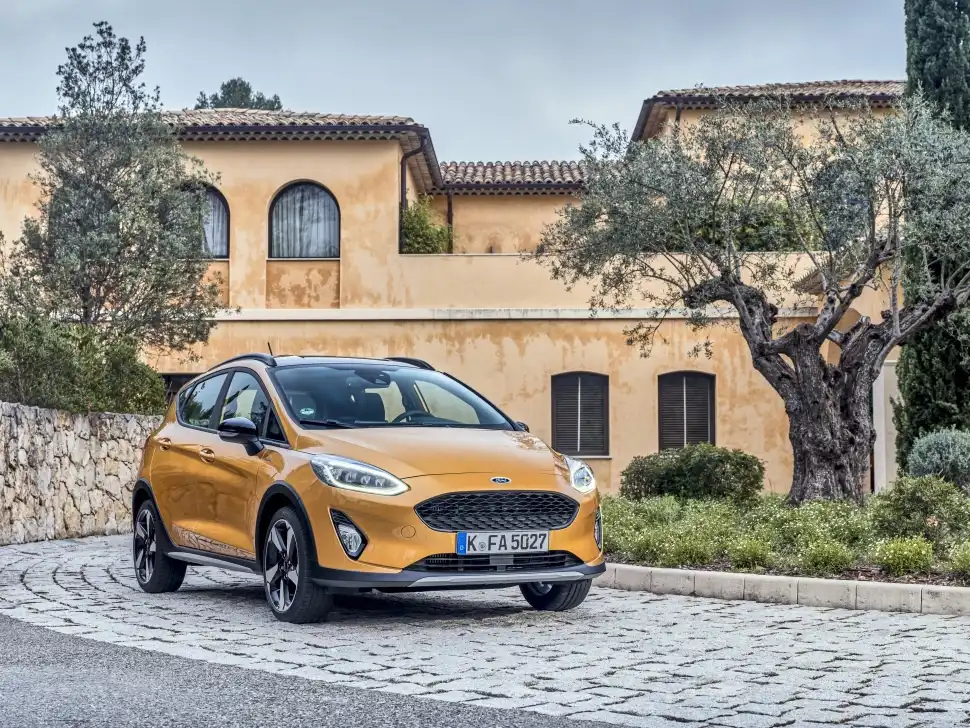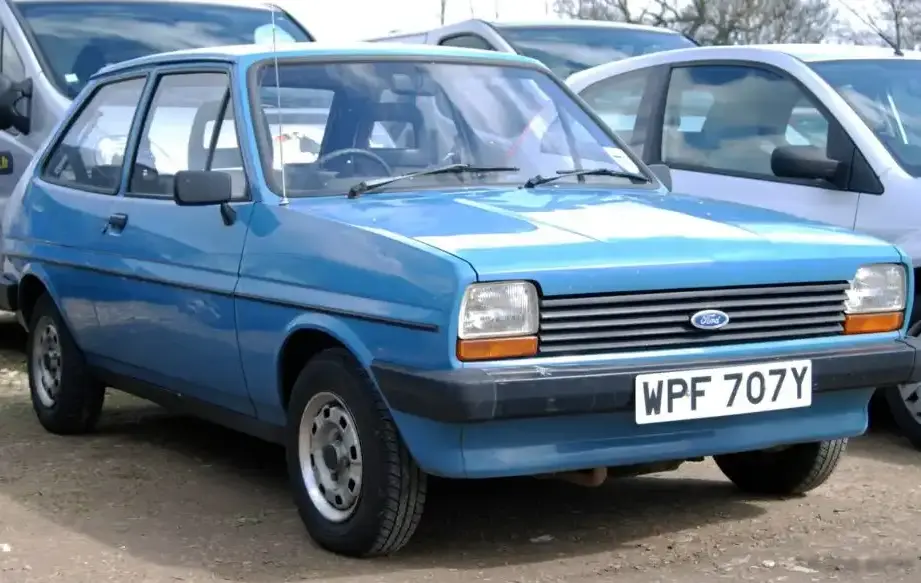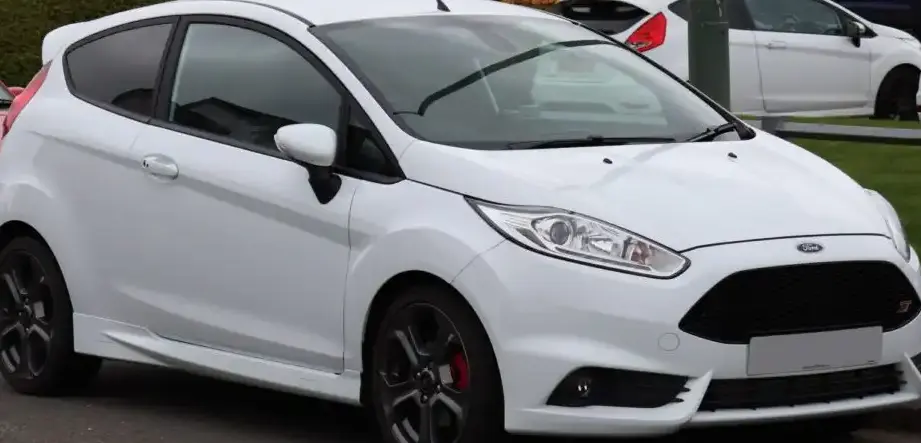
The Ford Fiesta VII, specifically the facelifted model introduced in 2013, represented a significant evolution of Ford’s popular subcompact car. The three-door 1.5 TDCi variant, producing 75 horsepower, was offered from 2013 through 2017. This model occupied the entry-level position within the Fiesta range, focusing on fuel efficiency and affordability. It was primarily marketed in Europe, where smaller, economical cars are highly sought after, and served as a gateway into the Fiesta lineup for budget-conscious buyers. The Mk7 Fiesta, built on the B2E platform, aimed to balance practicality, style, and driving dynamics in a competitive segment.
Technical Specifications
| Brand | Ford |
| Model | Fiesta |
| Generation | Fiesta VII (Mk7, facelift 2013) 3 door |
| Type (Engine) | 1.5 TDCi (75 Hp) |
| Start of production | 2013 |
| End of production | 2017 |
| Powertrain Architecture | Internal Combustion engine |
| Body type | Hatchback |
| Seats | 5 |
| Doors | 3 |
| Fuel consumption (urban) | 4.4 l/100 km (53.5 US mpg, 64.2 UK mpg, 22.7 km/l) |
| Fuel consumption (extra urban) | 3.3 l/100 km (71.3 US mpg, 85.6 UK mpg, 30.3 km/l) |
| Fuel consumption (combined) | 3.7 l/100 km (63.6 US mpg, 76.3 UK mpg, 27 km/l) |
| CO2 emissions | 98 g/km |
| Fuel Type | Diesel |
| Acceleration 0 – 100 km/h | 13.5 sec |
| Acceleration 0 – 62 mph | 13.5 sec |
| Acceleration 0 – 60 mph | 12.8 sec |
| Maximum speed | 167 km/h (103.77 mph) |
| Emission standard | Euro 5 |
| Weight-to-power ratio | 13.8 kg/Hp, 72.6 Hp/tonne |
| Weight-to-torque ratio | 5.6 kg/Nm, 179.1 Nm/tonne |
| Power | 75 Hp @ 4000 rpm |
| Power per litre | 50 Hp/l |
| Torque | 185 Nm @ 1700-2000 rpm (136.45 lb.-ft. @ 1700-2000 rpm) |
| Engine layout | Front, Transverse |
| Engine Model/Code | UGJC |
| Engine displacement | 1499 cm3 (91.47 cu. in.) |
| Number of cylinders | 4 |
| Engine configuration | Inline |
| Fuel injection system | Diesel Commonrail |
| Engine aspiration | Turbocharger, Intercooler |
| Engine oil capacity | 3.85 l (4.07 US qt, 3.39 UK qt) |
| Coolant capacity | 5.5 l (5.81 US qt, 4.84 UK qt) |
| Kerb Weight | 1033 kg (2277.38 lbs) |
| Max. weight | 1570 kg (3461.26 lbs) |
| Max load | 537 kg (1183.88 lbs) |
| Trunk (boot) space – minimum | 281 l (9.92 cu. ft.) |
| Trunk (boot) space – maximum | 965 l (34.08 cu. ft.) |
| Fuel tank capacity | 40 l (10.57 US gal, 8.8 UK gal) |
| Permitted trailer load with brakes (12%) | 750 kg (1653.47 lbs) |
| Permitted trailer load without brakes | 550 kg (1212.54 lbs) |
| Length | 3969 mm (156.26 in) |
| Width | 1722 mm (67.8 in) |
| Width with mirrors folded | 1787 mm (70.35 in) |
| Width including mirrors | 1973 mm (77.68 in) |
| Height | 1495 mm (58.86 in) |
| Wheelbase | 2489 mm (97.99 in) |
| Minimum turning circle | 10.2 m (33.46 ft) |
| Drivetrain Architecture | Front wheel drive |
| Number of gears and type of gearbox | 5 gears, manual transmission |
| Front suspension | Independent, type McPherson with coil spring and anti-roll bar |
| Rear suspension | Coil spring, Torsion |
| Front brakes | Ventilated discs |
| Rear brakes | Drum |
| Assisting systems | ABS (Anti-lock braking system) |
| Steering type | Steering rack and pinion |
| Power steering | Electric Steering |
| Tires size | 195/55 R15 |
| Wheel rims size | 6J x 15 |
Powertrain & Engine Architecture
The heart of this Fiesta variant is the 1.5-liter TDCi diesel engine, specifically the UGJC engine code. This engine is a four-cylinder, inline configuration, utilizing a common-rail direct fuel injection system. The common-rail system, operating at high pressure, ensures precise fuel delivery for optimized combustion and efficiency. A turbocharger with an intercooler is employed to boost power output and improve torque across a wider rev range. The engine features a single overhead camshaft (SOHC) valvetrain. The 75 horsepower and 185 Nm (136 lb-ft) of torque are delivered between 1700-2000 rpm, prioritizing low-end grunt over peak power. The engine is transversely mounted in the front of the vehicle, driving the front wheels. The five-speed manual transmission was the standard offering, chosen for its simplicity and contribution to fuel economy.
Driving Characteristics
The 1.5 TDCi 75 hp Fiesta offered a practical and economical driving experience. Acceleration was modest, with a 0-60 mph time around 12.8 seconds. The focus was on fuel efficiency rather than outright performance. The gear ratios in the five-speed manual transmission were geared towards maximizing fuel economy, meaning the engine needed to be revved to achieve brisk acceleration. Compared to higher-output Fiesta variants, such as those with the 1.0 EcoBoost engine, this version felt noticeably slower. However, the readily available torque at low RPMs made it suitable for everyday driving and urban commutes. The manual transmission provided a more engaging driving experience than an automatic would have, allowing the driver to maintain control over the engine’s power band.
Equipment & Trim Levels
The 1.5 TDCi 75 hp Fiesta typically came with a basic level of equipment, reflecting its position as the entry-level model. Standard features generally included power steering, ABS, front airbags, and a basic audio system. Interior upholstery was typically cloth, and the dashboard featured a functional, if somewhat spartan, design. Optional extras included air conditioning, alloy wheels, electric windows, and a more advanced audio system. Trim levels varied slightly depending on the market, but generally offered incremental upgrades in terms of comfort and convenience features. The three-door body style itself was considered a more sporty option, appealing to younger buyers or those prioritizing a more compact footprint.
Chassis & Braking
The Fiesta Mk7 utilized a McPherson strut front suspension and a torsion beam rear suspension. This setup provided a good balance between ride comfort and handling. The front suspension incorporated a stabilizer bar to reduce body roll during cornering. Braking consisted of ventilated discs on the front wheels and drum brakes on the rear. ABS (Anti-lock Braking System) was standard, enhancing safety by preventing wheel lockup during hard braking. The relatively lightweight nature of the car, at around 1033 kg (2277 lbs), contributed to its nimble handling characteristics.
Market Reception & Comparison
The 1.5 TDCi 75 hp Fiesta was well-received in markets where fuel economy and affordability were paramount. Critics praised its low running costs and practicality. However, some reviewers noted its lack of outright performance compared to competitors and higher-spec Fiesta models. Compared to the 1.0 EcoBoost variants, the TDCi offered significantly more torque at lower RPMs, making it easier to drive in urban environments. However, the EcoBoost engines provided superior acceleration and a more refined driving experience. The TDCi also offered better fuel economy than the gasoline engines, making it a popular choice for high-mileage drivers.
Legacy
The 1.5 TDCi engine, in various iterations, proved to be a relatively reliable powertrain. While diesel engines are generally more complex than their gasoline counterparts, the UGJC engine code is known for its durability when properly maintained. In the used car market, these Fiesta variants represent an affordable and economical option. However, potential buyers should be aware of the potential for diesel particulate filter (DPF) issues, particularly on vehicles that have primarily been used for short journeys. Regular servicing and the use of quality diesel fuel are crucial for maintaining the long-term reliability of this powertrain. The Fiesta Mk7, as a whole, remains a popular choice for first-time car buyers and those seeking a practical and affordable city car.