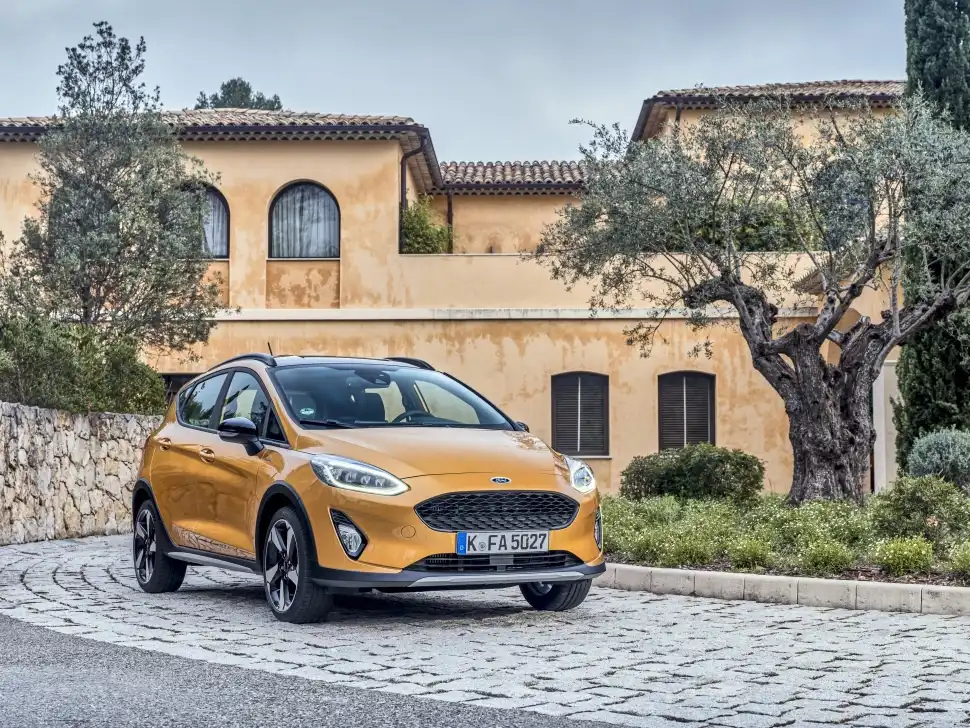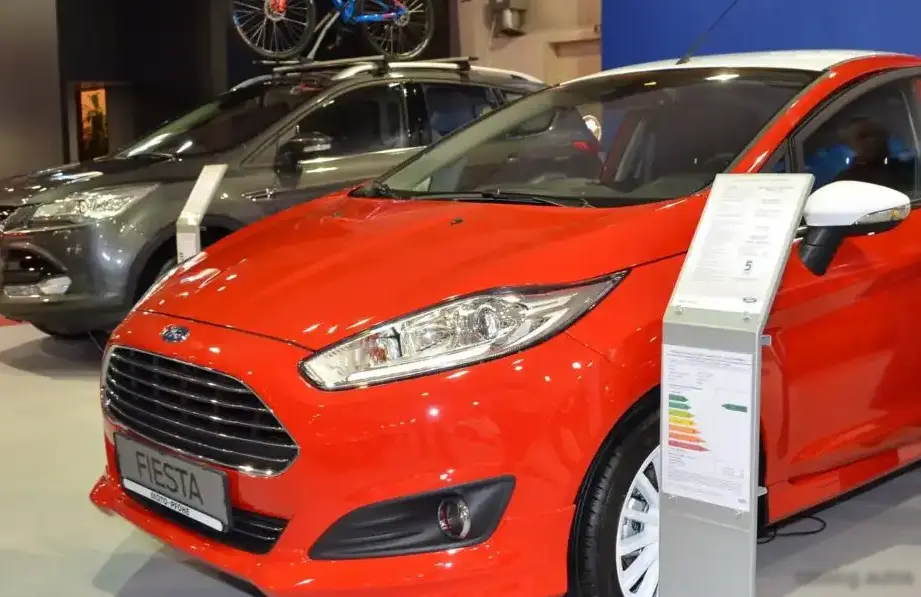
The Ford Fiesta VII, specifically the facelifted model produced from 2013 to 2017, represented a significant evolution of Ford’s popular subcompact hatchback. Within this generation, the 1.0-liter 65 horsepower variant, offered with a five-speed manual transmission, served as the entry point into the Fiesta range. This model was primarily aimed at buyers prioritizing fuel efficiency and affordability, particularly in European markets where smaller displacement engines were favored due to taxation and fuel costs. It occupied the base trim level, offering essential features while providing a practical and economical transportation solution.
Technical Specifications
| Brand | Ford |
| Model | Fiesta |
| Generation | Fiesta VII (Mk7, facelift 2013) 5 door |
| Type (Engine) | 1.0 (65 Hp) |
| Start of production | 2013 |
| End of production | 2017 |
| Powertrain Architecture | Internal Combustion engine |
| Body type | Hatchback |
| Seats | 5 |
| Doors | 5 |
| Fuel consumption (urban) | 5.1 l/100 km (46.1 US mpg, 55.4 UK mpg, 19.6 km/l) |
| Fuel consumption (extra urban) | 3.8 l/100 km (61.9 US mpg, 74.3 UK mpg, 26.3 km/l) |
| Fuel consumption (combined) | 4.3 l/100 km (54.7 US mpg, 65.7 UK mpg, 23.3 km/l) |
| CO2 emissions | 99 g/km |
| Fuel Type | Petrol (Gasoline) |
| Acceleration 0 – 100 km/h | 16.8 sec |
| Acceleration 0 – 62 mph | 16.8 sec |
| Acceleration 0 – 60 mph | 16 sec |
| Maximum speed | 155 km/h (96.31 mph) |
| Emission standard | Euro 5 |
| Weight-to-power ratio | 14.9 kg/Hp, 67 Hp/tonne |
| Weight-to-torque ratio | 9.2 kg/Nm, 108.2 Nm/tonne |
| Power | 65 Hp @ 4500-6300 rpm |
| Power per litre | 65.1 Hp/l |
| Torque | 105 Nm @ 4100 rpm (77.44 lb.-ft. @ 4100 rpm) |
| Engine layout | Front, Transverse |
| Engine Model/Code | XMJD |
| Engine displacement | 998 cm3 (60.9 cu. in.) |
| Number of cylinders | 3 |
| Engine configuration | Inline |
| Number of valves per cylinder | 4 |
| Fuel injection system | Direct injection |
| Engine aspiration | Turbocharger, Intercooler |
| Engine oil capacity | 4.1 l (4.33 US qt | 3.61 UK qt) |
| Coolant | 5.8 l (6.13 US qt | 5.1 UK qt) |
| Kerb Weight | 970 kg (2138.48 lbs.) |
| Max. weight | 1530 kg (3373.07 lbs.) |
| Max load | 560 kg (1234.59 lbs.) |
| Trunk (boot) space – minimum | 281 l (9.92 cu. ft.) |
| Trunk (boot) space – maximum | 965 l (34.08 cu. ft.) |
| Fuel tank capacity | 42 l (11.1 US gal | 9.24 UK gal) |
| Permitted trailer load with brakes (8%) | 750 kg (1653.47 lbs.) |
| Permitted trailer load with brakes (12%) | 650 kg (1433 lbs.) |
| Permitted trailer load without brakes | 525 kg (1157.43 lbs.) |
| Length | 3969 mm (156.26 in.) |
| Width | 1722 mm (67.8 in.) |
| Width with mirrors folded | 1787 mm (70.35 in.) |
| Width including mirrors | 1973 mm (77.68 in.) |
| Height | 1495 mm (58.86 in.) |
| Wheelbase | 2489 mm (97.99 in.) |
| Minimum turning circle | 10.2 m (33.46 ft.) |
| Drivetrain Architecture | Front wheel drive |
| Number of gears and type of gearbox | 5 gears, manual transmission |
| Front suspension | Independent, type McPherson with coil spring and anti-roll bar |
| Rear suspension | Coil spring, Torsion |
| Front brakes | Ventilated discs |
| Rear brakes | Drum |
| Assisting systems | ABS (Anti-lock braking system) |
| Steering type | Steering rack and pinion |
| Power steering | Electric Steering |
| Tires size | 175/65 R14; 195/55 R15 |
| Wheel rims size | 5.5J x 14; 6J x 15 |
Powertrain & Engine Architecture
The heart of this Fiesta variant is the 998cc ‘EcoBoost’ three-cylinder engine, designated XMJD. This engine utilized a combination of direct fuel injection and a turbocharger with an intercooler to deliver a reasonable level of performance from its small displacement. The engine’s architecture featured a lightweight aluminum block and cylinder head, contributing to overall vehicle efficiency. The direct injection system allowed for precise fuel delivery, optimizing combustion and reducing emissions. The engine employed a timing belt to drive the camshaft, a component requiring periodic replacement as part of scheduled maintenance. The five-speed manual transmission was chosen for its simplicity and cost-effectiveness, providing a direct connection between the engine and the front wheels.
Driving Characteristics
The 65 horsepower output of this Fiesta resulted in modest acceleration. The 0-60 mph time of around 16 seconds reflects its focus on economy rather than outright speed. However, the turbocharger did provide a noticeable boost in power at higher engine speeds, making overtaking maneuvers possible, albeit requiring careful planning. The gear ratios were tuned for fuel efficiency, with taller gearing in the upper gears. This meant that the engine could comfortably cruise at highway speeds, but required downshifting for quicker acceleration. Compared to higher-output Fiesta variants, such as those equipped with the 1.0-liter 125 hp engine, this version felt noticeably slower, but offered a more relaxed and economical driving experience.
Equipment & Trim Levels
The base-level Fiesta 1.0 65 hp typically came equipped with essential features such as power steering, ABS, front airbags, and a basic audio system. Air conditioning was often an optional extra. Interior upholstery was typically cloth, with a functional but basic dashboard layout. Higher trim levels added features like alloy wheels, upgraded audio systems, and more sophisticated interior trim. The focus of this variant was on providing a practical and affordable package, with buyers often opting for air conditioning and perhaps an upgraded audio system as key extras.
Chassis & Braking
The Fiesta VII utilized a McPherson strut front suspension and a torsion beam rear suspension. This setup provided a good balance between ride comfort and handling. The front brakes were ventilated discs, offering adequate stopping power, while the rear brakes were drums, a cost-saving measure for the base model. The electric power steering provided light and easy steering, making it ideal for urban driving. Stabilizer bars were fitted to both the front and rear axles to reduce body roll during cornering.
Market Reception & Comparison
The 1.0-liter 65 hp Fiesta was generally well-received by critics as a sensible and economical choice. Its fuel efficiency was a major selling point, and it proved popular with drivers who primarily used the car for commuting or short trips. Compared to the more powerful Fiesta variants, it offered lower running costs but sacrificed performance. The 1.0-liter engine was also praised for its refinement, despite being a three-cylinder unit. Reliability was generally good, although the turbocharger did require regular maintenance to ensure longevity.
Legacy
The 1.0-liter EcoBoost engine, in its various iterations, became a mainstay of the Ford lineup, proving to be a reliable and efficient powerplant. The Fiesta 1.0 65 hp variant remains a popular choice on the used car market, particularly for first-time drivers or those seeking an affordable and economical runabout. While not the most exciting Fiesta variant, it represents a practical and well-engineered solution for everyday transportation. Its continued presence on the roads is a testament to its durability and fuel efficiency.